
Stichting Building the Bridge Foundation : Dutch Foreign Policy Think Tank Urges Trump, Xi, Putin to Open Crisis Talks Now
Source: PR Newswire
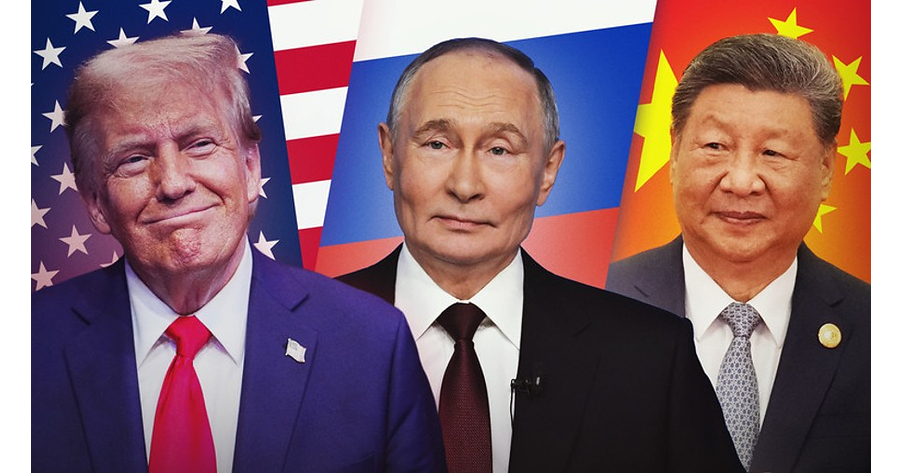
The Hague-based Building the Bridge Foundation urged Trump, Xi and Putin to launch immediate crisis talks and establish a permanent Great-Power Bridge Forum for Peace. The proposed channel would restore military and nuclear-risk hotlines, restart arms-control, cyber-stability and AI-risk discussions, and support humanitarian corridors and prisoner exchanges. The foundation also warned that conflict, sanctions, protectionism and supply-chain bottlenecks are raising costs and eroding trust, but the announcement is an advocacy statement rather than a policy action.
Analysis
This is not a policy signal: it carries no authority over sanctions, tariffs, export controls, or military posture. The base case is therefore zero near-term earnings impact, and any risk-on interpretation in European cyclicals, China proxies, or defense should be faded absent confirmation from official White House, Chinese MFA, Kremlin, or treaty-negotiation channels.
The useful implication is as a reminder of asymmetric geopolitical optionality. A credible reopening of major-power risk-reduction channels would most quickly compress embedded disruption premia in freight, energy, semiconductors and European industrial supply chains; beneficiaries would include global cyclicals such as CAT, DE, CMI, HON and semiconductor equipment names with China revenue exposure such as ASML and AMAT. Conversely, a durable détente could modestly weaken the relative scarcity premium supporting defense primes LMT, RTX, NOC and GD, though multi-year procurement backlogs make this a 6-18 month valuation issue rather than an immediate revenue reversal.
Over the next 1-3 months, the investable catalyst is not dialogue rhetoric but observable policy: licensing changes for advanced chips, sanctions waivers, shipping-insurance normalization, restoration of formal military hotlines, or reduced tariff escalation. The contrarian point is that markets often overprice symbolic engagement after a tense period; even genuine talks can coexist with export-control tightening and elevated defense budgets. Treat any broad geopolitical risk rally as tactical until trade flows, customs data and official restrictions confirm a change in operating conditions.
AllMind Terminal
AI-powered research, real-time alerts, and portfolio analytics for institutional investors.
Request TrialMarket Sentiment
Overall Sentiment
mixed
Sentiment Score
-0.05
Key Decisions for Investors
- No directional trade on this release. Set event alerts for official US-China export-control revisions, Russia-related sanctions changes, and verified leader-level meeting announcements; only reassess upon a binding policy action.
- If an official US-China de-escalation package includes semiconductor licensing relief, consider a 1-3 month long ASML / short ITA pair: ASML has direct China-revenue and multiple-expansion upside, while defense exposure should retain a higher geopolitical-risk premium. Exit if restrictions are re-tightened or ASML guidance does not improve.
- For portfolios overweight defense, use a confirmed détente headline rally to review LMT, RTX, NOC and GD position sizing rather than short outright; backlog visibility limits downside, but 6-18 month terminal-multiple compression is plausible if threat perceptions and emergency procurement fade.
- Monitor Baltic Dry, container spot rates, Brent volatility, and European manufacturing PMIs as verification indicators. A sustained decline in transport/energy risk premia without improved trade volumes would signal rhetoric rather than an investable normalization.
More News
- US to send third aircraft carrier towards Iran: US official to Al Jazeera
- Dollar at 17-month high as global bond rout hits euro
- Trump says US may ask Europe to release diesel reserves
- Trump launches midterms campaign blitz amid record low approval ratings
- Latest Oil Market News and Analysis for Oct. 2
- US borrowing costs hit 24-year high as global bond sell-off intensifies
From AllMind Research
- Anthropic IPO Preview: Valuation, Timing, and What to Watch
- Shein After the IPO: Venue, Valuation, and What Must Be Proved
- What AI Research Tools Should a Small Hedge Fund Buy First?
- How to Search Earnings Call Transcripts With AI
- What a Concept From Nature Tells Us About How C-Suite Executives Actually Think About AI