
Stock Selloff Eases After $3 Trillion Rout
Source: youtube.com
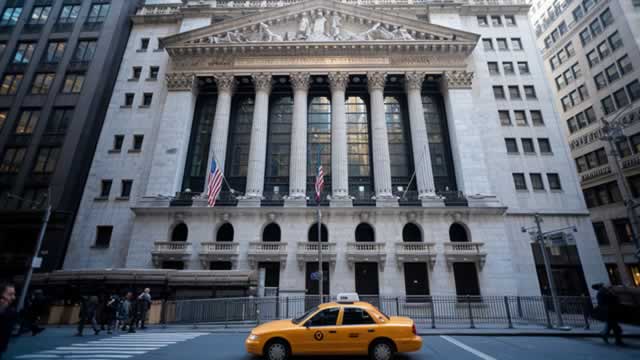
US equity futures rose 0.6% as dip buyers supported the AI trade after the S&P 500's steepest drop in more than a year. Concerns about tighter regulation of data centers had contributed to a roughly $3 trillion loss in index value in the prior session.
Analysis
The rebound is a positioning signal, not evidence that the regulatory risk has cleared. After a sharp drawdown, short covering and systematic re-risking can lift the index before investors know whether tighter data-center rules would delay projects, raise power/interconnection costs, or merely add compliance expense. The key transmission is through expected AI infrastructure returns: weaker project economics can defer capacity orders and eventually pressure suppliers, even if near-term chip demand and earnings remain intact.
The initial selloff may also have overgeneralized the exposure. A rule aimed at data-center siting or power use would not affect every AI-linked business equally; firms with diversified demand or existing permitted capacity may be relatively insulated, while projects dependent on new grid connections could face greater uncertainty. Conversely, constraints could shift bargaining power toward operators with access to power and approved sites. These are conditional effects, not yet established outcomes.
Over days, watch whether breadth and trading volume confirm the bounce or whether it is concentrated in the largest AI names. Over 1–3 months, regulatory text, permitting timelines, and hyperscaler capex commentary matter more than headline volatility. Over 6–18 months, persistent delays or higher delivered-power costs could change infrastructure spending plans and supplier growth expectations. The contrarian risk is treating a policy possibility as a realized earnings shock; the opposite risk is assuming dip buying has resolved a structural constraint.
AllMind Terminal
AI-powered research, real-time alerts, and portfolio analytics for institutional investors.
Request TrialMarket Sentiment
Overall Sentiment
mixed
Sentiment Score
0.10
Key Decisions for Investors
- Do not chase the index rebound on its own. Treat it as tactical until market breadth improves and AI-linked companies’ capex outlooks remain intact.
- If the rebound fails and regulatory proposals become more specific or restrictive, consider a defined-risk 1–3 month QQQ put spread rather than an outright short. Keep risk limited to premium; close or reassess if the index regains the breakdown area and policy language remains nonbinding.
- Track data-center permitting and grid-interconnection timelines, power-cost allocation, and hyperscaler capex guidance before positioning in infrastructure suppliers or power-related names. A confirmed delay or capex reduction would strengthen the downside thesis; no measurable project or spending impact would weaken it.
- Avoid treating all AI exposure as equivalent. Reassess relative positions only after company disclosures distinguish businesses tied to new data-center construction from those with diversified demand or already-secured capacity.
More News
- Further turmoil could be in store for tech stocks. What to watch in the week ahead
- Tech stock rout, driven by US AI fears, continues in Asian trading
- Asian Markets Tally Losses From Worsening Global Rout
- AI’s Grip on Financial Markets Was Never Clearer on the Way Down
- Elon Musk once said the Cybertruck would be Tesla’s ‘best product ever.’ Now he’s winding down production
- AI stocks hammered by midterm shock as data center buildout becomes a 'war of attrition'