
Envision Energy stellt Offshore-Windkraftanlage EN-252/16.7 vor - für hohe Leistung und Zuverlässigkeit bei starkem Wind
Source: PR Newswire
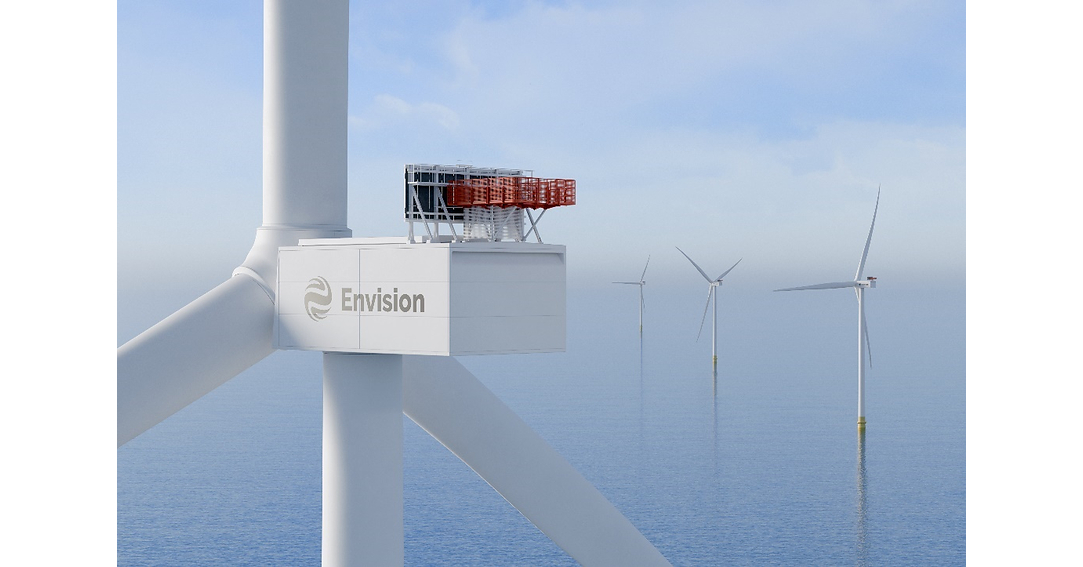
Envision Energy launched its EN-252/16.7 offshore wind turbine, rated at 16.7 MW and designed for high-wind international offshore sites. For gigawatt-scale projects, the company estimates 1–2% higher annual energy production, roughly 10% fewer turbines, and a 2–4% reduction in levelized cost of electricity versus currently available models. The turbine also incorporates Galileo AI monitoring, which provides component-failure warnings approximately one to six months in advance to reduce unplanned maintenance and lifecycle OPEX.
Analysis
The relevant market signal is not the incremental turbine specification but a potential shift in European offshore procurement leverage. A credible Chinese alternative at the high-power end would pressure bid pricing and service-contract economics for Vestas (VWS.CO) and GE Vernova (GE), especially in projects where developers prioritize capex certainty over local-content preferences. The first-order benefit accrues to developers—Ørsted (ORSTED.CO), RWE (RWE.DE), and Iberdrola (IBE.MC)—only if equipment competition translates into delivered-project pricing rather than being absorbed by tariffs, certification delays, financing constraints, or bankability discounts.
The second-order effect is mixed for the offshore supply chain. Fewer installed units per GW can reduce demand for towers, transition pieces, inter-array cables, and maintenance visits on a unit basis, challenging volume assumptions for suppliers such as Prysmian (PRY.MI) and Cadeler (CADLR.CO); however, larger nacelles and blades increase lift, port, vessel, and installation-complexity requirements. Near term, specialized installation capacity remains the binding constraint, so vessel owners may retain pricing power despite lower turbine counts.
This is a low-immediacy equity catalyst: a product launch does not establish European orders, certification, warranty terms, or lender acceptance. Over the next 1-3 months, watch for named European EPC/developer partnerships, type-certification progress, and tender qualification; over 6-18 months, actual contract wins could force incumbent OEMs to trade margin for backlog. The key contrarian point is that larger rotor platforms have historically created costly reliability and warranty problems, so claimed lifecycle savings should not be capitalized until independently evidenced by availability guarantees and insurance underwriting.
European policy is the decisive swing factor. Trade-defense actions, security restrictions, and local-content rules could protect VWS.CO and GE from direct share loss while still leaving offshore developers exposed to elevated project costs. Conversely, a meaningful Chinese order book would likely compress incumbent OEM valuation multiples before revenue displacement becomes visible, because offshore backlog is valued on long-duration service-margin assumptions.
AllMind Terminal
AI-powered research, real-time alerts, and portfolio analytics for institutional investors.
Request TrialMarket Sentiment
Overall Sentiment
moderately positive
Sentiment Score
0.48
Key Decisions for Investors
- No direct Envision trade: it is not a listed liquid proxy, and the announcement alone is insufficient to alter earnings estimates for public OEMs.
- Maintain a 1-3 month watch short on VWS.CO versus long RWE.DE or ORSTED.CO only upon evidence of a European tender prequalification or binding order. Target a 8-12% relative move if Chinese competition resets OEM bid margins; stop if EU trade restrictions or local-content requirements exclude Chinese turbines.
- Avoid adding to offshore installation names CADLR.CO and DEME.BR solely on the lower-turbine-count narrative. Reassess after 2027 vessel utilization and day-rate disclosures; heavier turbine classes may increase, rather than reduce, scarce-vessel pricing power.
- For GE, treat any European offshore order loss as a sentiment risk rather than a standalone earnings short: grid equipment and electrification remain the dominant earnings drivers. A tradeable bearish signal would require management to cut offshore backlog margin or service-revenue guidance.
- Set alerts for EU anti-subsidy proceedings, certification milestones, and developer financing terms. A requirement for materially higher warranty reserves, insurance premiums, or financing spreads would falsify the claimed project-economics advantage.
More News
- US 30-Year Yield Hits Highest Since 2004
- Oil falls amid optimism over potential diplomatic solution to the Iran conflict
- SEBI Allows Portfolio Managers to Invest Overseas, Short Equity Options
- Trump-Xi summit: Four key takeaways from the Washington, DC, meeting
- Trump, Xi Address AI, Taiwan During State Visit
- Oracle Japan shares surge 7% after record fiscal first quarter, bucking selloff of U.S. parent