
History Shows Fed Will Deliver Rate Hike Markets Have Locked In
Source: Bloomberg
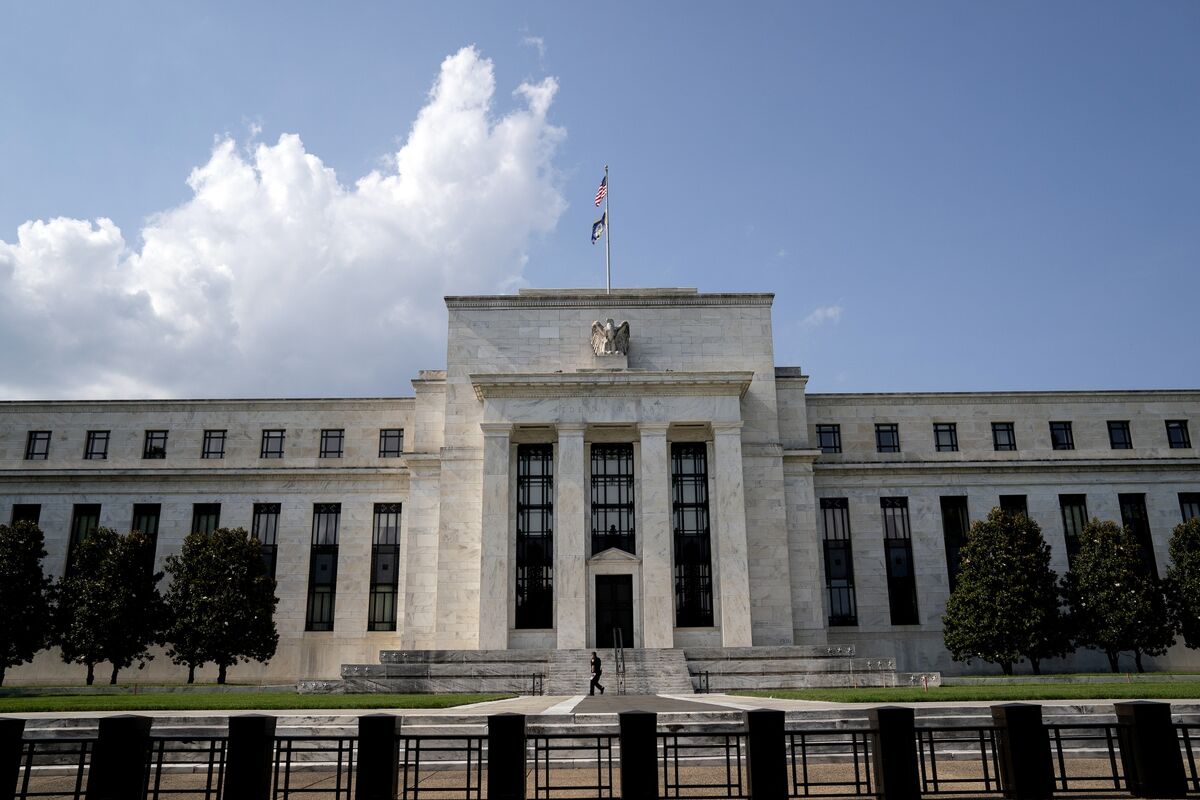
Interest-rate swaps imply more than a 90% probability that the Federal Reserve will raise its policy rate by 25bps at Wednesday's meeting, from the current 3.50%-3.75% range. Bond markets have priced roughly 23bps of tightening, signaling broad conviction in a move that could influence Treasury yields and rate-sensitive assets, though the decision appears largely anticipated.
Analysis
With the policy move effectively embedded in front-end rates, the tradable outcome is the statement, dots, and Chair guidance relative to the implied terminal-path—not the decision itself. A delivered hike accompanied by data-dependence should produce a modest bull-steepening as the market removes residual near-term tightening premium; a signal that policy remains restrictive for longer would instead pressure 2-year notes and high-duration equities. The immediate asymmetry favors selling event volatility rather than outright positioning, because a 25bp outcome alone has little incremental information content.
The more consequential transmission is through financing-sensitive balance sheets over the next 1-3 months. Small caps, regional banks, REITs and unprofitable technology are vulnerable if real yields rise or credit spreads widen, while cash-rich mega-cap technology is relatively insulated operationally but remains exposed to duration-multiple compression. Contrarian risk: consensus may be underestimating the possibility that a hike is framed as a one-and-done risk-management action; that outcome would reward a tactical long in rate-sensitive assets even if the longer-run rate regime remains restrictive. Falsify the hawkish-duration thesis if the 2-year Treasury yield falls materially after the meeting and subsequent inflation or labor data fail to reaccelerate.
AllMind Terminal
AI-powered research, real-time alerts, and portfolio analytics for institutional investors.
Request TrialMarket Sentiment
Overall Sentiment
neutral
Sentiment Score
-0.10
Key Decisions for Investors
- Do not initiate a directional Fed-decision trade solely on the expected hike; the residual repricing opportunity is in guidance, not the rate action.
- Ahead of the meeting, express a hawkish-surprise hedge via a 1-3 month long IEF / short TLT-duration-risk proxy only if the 2-year yield breaks its pre-meeting high; target a 20-30bp further front-end yield increase, with stop if the post-meeting 2-year yield closes below its pre-meeting level.
- For a 1-3 month relative-value trade, favor long QQQ / short IWM if restrictive guidance lifts real yields: large-cap quality has stronger funding resilience than small-cap borrowers. Exit if high-yield spreads remain contained and IWM outperforms QQQ by 5% after the meeting, signaling growth optimism rather than financial-condition tightening.
- Use a tactical long IWM or KRE only after a dovish implementation signal—specifically, a post-meeting decline in 2-year yields and narrowing bank credit-default-risk indicators. This is an event-reversal trade, not a structural long; take profits into the next inflation release because renewed inflation pressure would quickly restore rate sensitivity.
More News
- The Fed has to walk a fine line Wednesday. How the stock market may react, according to JPMorgan
- Is the two-decade era of low interest rates over? The Fed has to decide.
- US 10-Year Yield Rises to Highest Since 2007 as Fed Looms
- Oil’s next test: Saudi Arabia races to restore a key safety valve for prices
- Traders and Central Bankers at Odds on ECB Rate-Hike Predictions in Europe
- US 10-Year Yield Rises to Highest Since '07, Trump Says AI Fears a 'Hoax'