
Greer to Join Bessent in Talks With Chinese Officials on Sunday
Source: Bloomberg
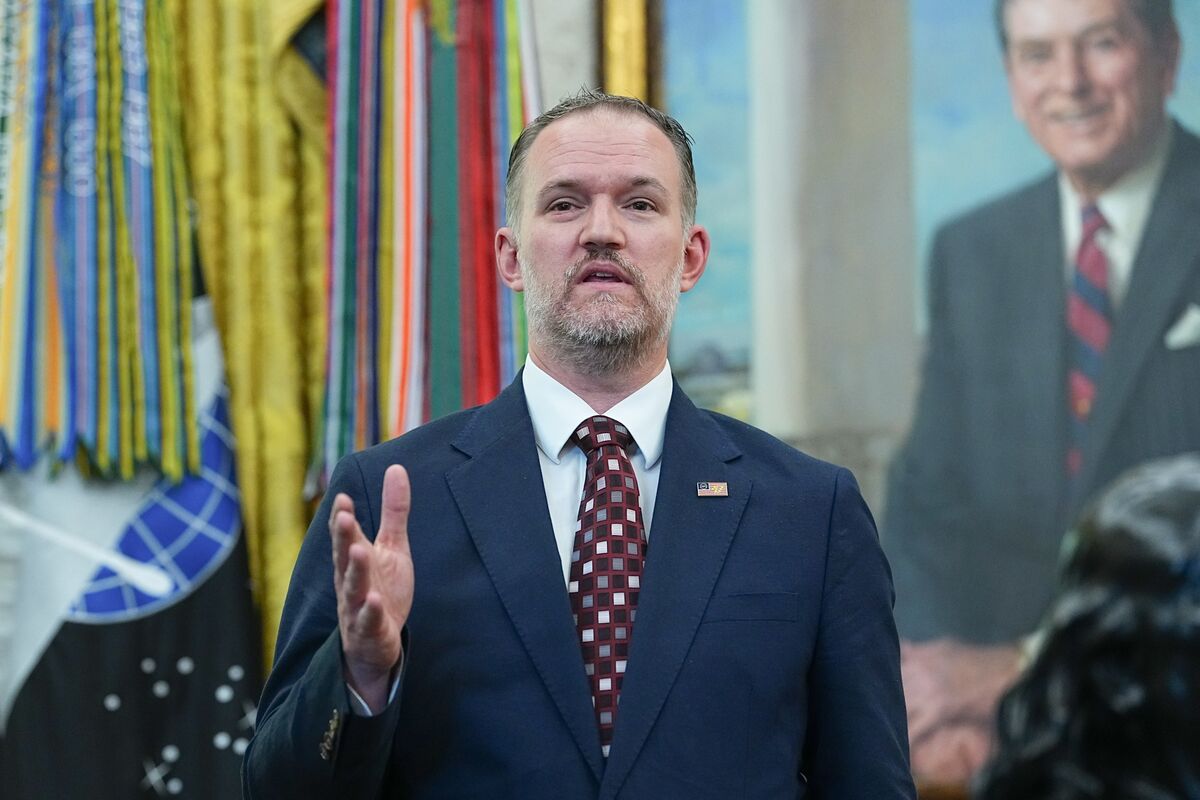
US Trade Representative Jamieson Greer will join Treasury Secretary Scott Bessent and Chinese Vice Premier He Lifeng in New York on Sunday to prepare for a Trump-Xi meeting scheduled for Sept. 24 in Washington. The talks signal continued high-level US-China engagement following Bessent and He's meeting near Seoul roughly four months earlier, but the article provides no specific trade concessions, policy decisions, or economic measures.
Analysis
The market implication is less the meeting itself than whether negotiators establish a credible process that prevents tariff escalation around the presidential summit. Semiconductors, consumer electronics and industrial automation carry the highest near-term headline beta: SMH, AAPL, QCOM, AMAT, CAT and DE are likely to outperform on any signal of reduced export-control or tariff risk, while the USD/CNH cross and China-sensitive cyclicals will provide the cleaner real-time read. Without concrete language on implementation, however, an initial relief rally should be viewed as positioning-cover rather than an earnings revision catalyst.
The key second-order risk is that bilateral de-escalation can be selectively negative for supply-chain diversification beneficiaries. Mexico- and Southeast Asia-exposed manufacturing/logistics narratives—such as PAC, KEX and, more indirectly, regional industrial real-estate demand—have embedded a persistent China-plus-one premium; a durable thaw could compress that premium over 6-18 months even if production migration is not reversed. Conversely, a process that preserves broad tariffs while granting narrow exemptions would favor incumbent US importers and hardware assemblers over companies investing heavily in redundant capacity.
Consensus is likely to overprice a binary "deal" outcome ahead of the summit. Structural disputes over technology controls and strategic supply chains are unlikely to be resolved on a diplomatic timetable, so the more probable outcome is a temporary risk ceiling rather than a broad reopening of trade flows. Thesis falsification for a cautious stance would be a jointly verified framework with dated tariff rollbacks, explicit licensing relief, or a sustained CNH rally alongside falling implied volatility; absent those, the 1-3 month risk/reward in high-beta China proxies is not compelling.
AllMind Terminal
AI-powered research, real-time alerts, and portfolio analytics for institutional investors.
Request TrialMarket Sentiment
Overall Sentiment
neutral
Sentiment Score
0.10
Key Decisions for Investors
- No directional pre-meeting trade in broad China beta; maintain alerts on CNH, KWEB and SMH for a coordinated risk-on move only if negotiators announce dated, verifiable implementation steps rather than an intent to continue talks.
- For a defined-risk event expression, consider a small 1-2 month long SMH / short XLI pair only after constructive language is released: semicap multiples should respond more directly to reduced policy-tail risk than domestic industrials. Exit if export-control language remains unchanged or SMH underperforms XLI by 5% after the headline.
- Avoid adding to China-plus-one beneficiaries solely on this event. Reassess PAC and KEX if a summit outcome includes broad tariff reductions; their valuation premium is more exposed over 6-18 months than near-term operating results, creating a potential relative short versus IYT or XLI.
- If markets rally sharply before the summit without concrete policy text, favor trimming high-beta exposures such as KWEB and QCOM into strength. The asymmetric risk is a procedural communiqué that leaves earnings assumptions untouched, producing a reversal within days.
More News
- Trump signs sweeping Russia sanctions over Ukraine war
- Bolivia’s Congress approves $1.9bn IMF loan amid protest threats
- Saudi Oil Cuts Tied to War Hit Europe: Evening Briefing Americas
- Trump says U.S. to build a 'large Military presence' in Greenland as part of a security deal with it and Denmark
- Stocks face a key hurdle in next week’s U.S.-China summit. Here’s what’s at stake
- Houthis accuse Saudi Arabia of launching 26 strikes in 24 hours
From AllMind Research
- Anthropic IPO Preview: Valuation, Timing, and What to Watch
- Shein After the IPO: Venue, Valuation, and What Must Be Proved
- What AI Research Tools Should a Small Hedge Fund Buy First?
- AI in Asset Management: 2026 Statistics That Hold Up
- What is Broker Research and RMS Systems (And How to Actually Use Them)