
Farm Tour Takes Collaborative Approach to Endangered Species
Source: PR Newswire
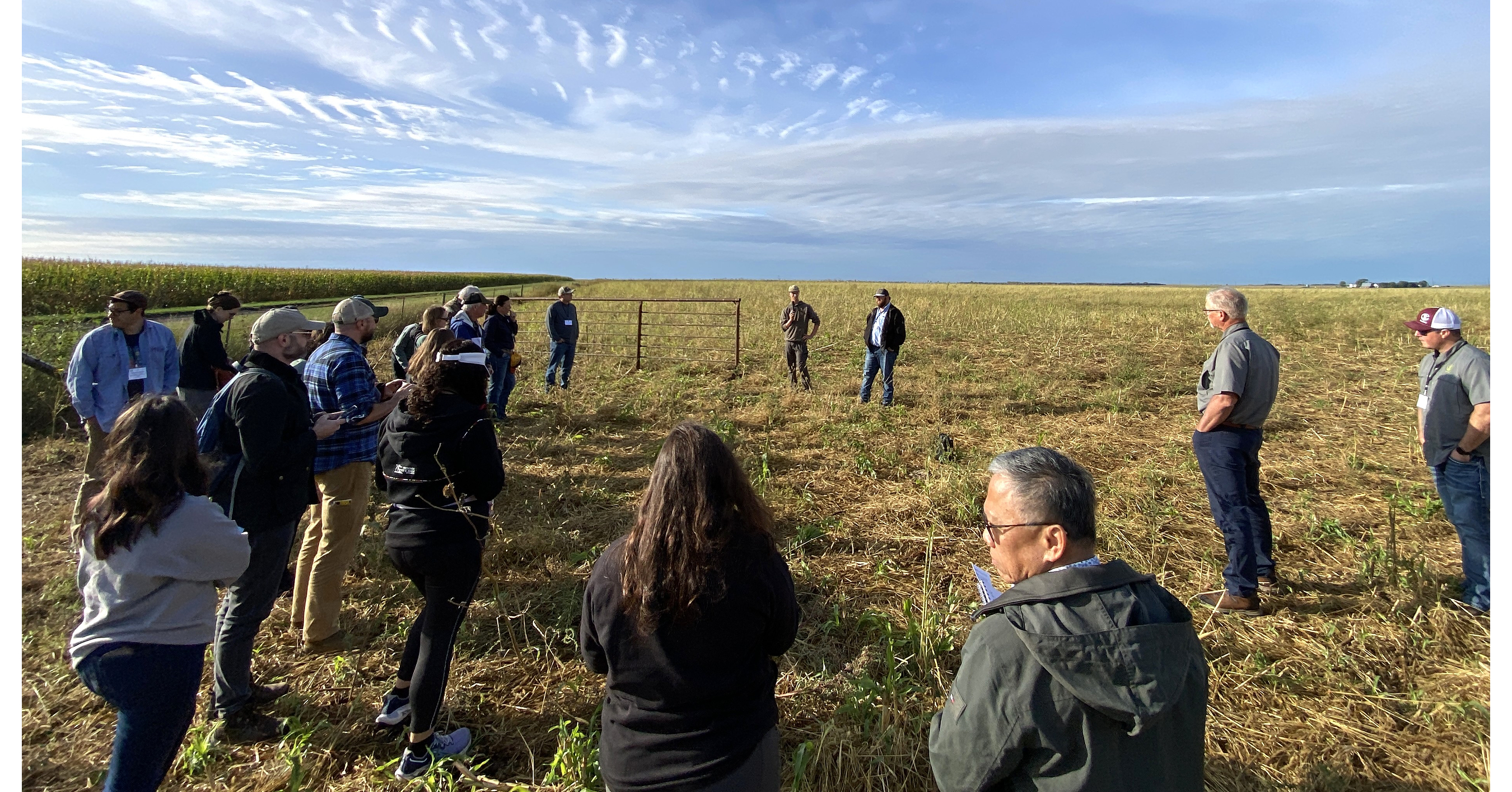
Approximately 40 agricultural, conservation, technology and federal-agency stakeholders attended the third annual ESA Farm Tour across Minnesota and South Dakota on September 14-16. Discussions focused on implementing new pesticide-related Endangered Species Act requirements through conservation practices, precision agriculture, integrated pest management and aerial-application mapping. The event signals constructive regulatory-industry collaboration but does not present a material near-term financial catalyst.
Analysis
This is not a near-term earnings event, but it reinforces a multi-year shift from blanket pesticide use toward documented, location-specific compliance. The economic burden initially falls on growers and custom applicators through mapping, recordkeeping, buffer zones and potential lost acreage; the better-positioned intermediaries are precision-ag vendors and crop-consulting platforms that turn compliance into recurring software and service revenue. Deere (DE), Trimble (TRMB) and Ag Leader/Hexagon proxy Hexagon AB (HEXA-B.ST) have indirect upside if ESA implementation accelerates demand for variable-rate and geofenced application workflows.
The more material second-order risk is for crop-protection suppliers: restrictions can raise adoption friction and reduce treated acres for certain active ingredients, particularly where Pesticide Use Limitation Areas overlap with intensive row-crop regions. Corteva (CTVA), Bayer and FMC (FMC) should be assessed on product-specific exposure rather than broad agriculture beta; suppliers with biologicals, seed traits, or integrated weed-management offerings can defend revenue per acre even if conventional chemical volumes soften. Sugar-beet and other low-residue crop systems may face disproportionate cost pressure because rotation and mechanical alternatives are less readily substitutable.
Over the next 1-3 months, the relevant catalyst is EPA issuance of final species-specific pesticide label mitigations and implementation guidance, not stakeholder outreach. Over 6-18 months, compliance costs could support precision-ag equipment utilization but remain too diffuse to change consensus estimates absent enforceable acreage restrictions. The contrarian view is that regulatory collaboration could lower litigation and implementation risk, reducing the probability of abrupt product withdrawals; this may be modestly supportive for incumbents versus a consensus focused solely on cost inflation.
AllMind Terminal
AI-powered research, real-time alerts, and portfolio analytics for institutional investors.
Request TrialMarket Sentiment
Overall Sentiment
mildly positive
Sentiment Score
0.12
Key Decisions for Investors
- No standalone directional trade on this event; treat it as a regulatory-monitoring signal rather than an investable catalyst.
- Add DE and TRMB to an ESA-compliance watchlist for a 6-18 month thematic long basket. Upgrade only if dealer commentary or reported precision-ag subscriptions show measurable growth tied to application mapping, variable-rate spraying, or compliance workflows; invalidate if farm-income pressure materially curtails technology spending.
- Monitor FMC and CTVA for EPA final label language affecting major herbicide/insecticide active ingredients and high-intensity Midwest acreage. A product-specific restriction with limited substitution would be a 1-3 month downside catalyst for exposed chemical volumes; do not short before the affected products, acres, and mitigation requirements are identified.
- Potential relative-value expression after verified regulatory tightening: long DE or TRMB versus short FMC, sized small, on the premise that compliance shifts spending from chemical intensity toward application precision. Exit if EPA mitigation relies primarily on voluntary practices or if crop prices fall enough to compress growers' capital budgets.
More News
- U.S. market regulator seeks to make it easier for funds, advisers to hold crypto
- Trump says US may ask Europe to release diesel reserves
- SoftBank completes final phase of $30 billion investment in OpenAI
- Latest Oil Market News and Analysis for Oct. 2
- Trump launches midterms campaign blitz amid record low approval ratings
- Amazon seeks to offload $8 billion of Nvidia chips to investors, FT reports
From AllMind Research
- Anthropic IPO Preview: Valuation, Timing, and What to Watch
- Shein After the IPO: Venue, Valuation, and What Must Be Proved
- What AI Research Tools Should a Small Hedge Fund Buy First?
- How to Track Guidance Changes Across a Coverage List With AI
- Stop Treating AI Like a Chatbot: What Are Agents, SubAgents, MCP, and Skills, and How Do They Actually Work?