
Beyond the Hotspot: Choosing a 5G Cellular Router for Business
Source: Newswire
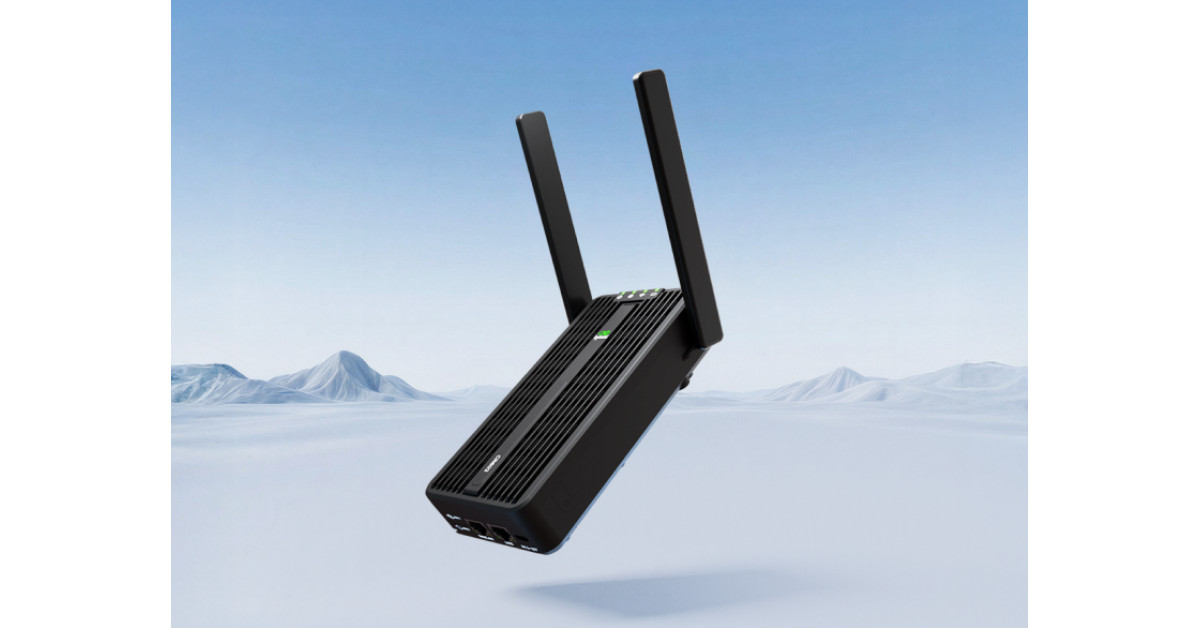
InHand Networks promoted its CR602 business 5G cellular router, featuring 3GPP Release 16 5G, Wi-Fi 7, dual 2.5GbE WAN/LAN ports, dual Nano-SIMs and a pre-provisioned eSIM. The device is certified for Verizon, AT&T, T-Mobile and FirstNet, supports up to 32 Wi-Fi clients, and has a 10,000mAh battery rated for up to 15 hours of 5G operation. The announcement is primarily a product-marketing update focused on network resiliency, remote management and failover capabilities for distributed business sites.
Analysis
This is not a carrier-revenue catalyst; it is a modest validation of fixed-wireless/5G failover use cases at distributed sites. The economically relevant constraint is operational resilience rather than radio throughput: enterprises will pay for redundant SIMs, priority-service plans and managed connectivity only where downtime costs exceed the recurring carrier premium. TMUS is relatively best positioned in price-sensitive retail and temporary-site deployments, while VZ/FirstNet has the stronger procurement angle in public safety, utilities and field operations where coverage certification and priority access matter more than headline speed.
The second-order implication is that multi-carrier hardware lowers customer switching friction and weakens any single carrier's ability to monetize captive router deployments. That favors carriers with demonstrably superior local coverage and enterprise support, but creates margin pressure if competitive pricing becomes the primary selection criterion. For VZ and T, the opportunity is more likely indirect—higher-value mobility, security and managed-network bundles—rather than meaningful standalone data-plan growth.
Near term, there is no investable earnings impact from a single private-vendor launch. Over 6-18 months, monitor whether enterprise fixed-wireless adoption converts into higher postpaid business net-adds and ARPU, versus merely cannibalizing legacy wireline connectivity at lower margins. The thesis turns constructive only if carrier disclosures show business FWA additions accelerating without elevated churn, promotional expense, or pressure on broadband ARPU.
AllMind Terminal
AI-powered research, real-time alerts, and portfolio analytics for institutional investors.
Request TrialMarket Sentiment
Overall Sentiment
mildly positive
Sentiment Score
0.20
Ticker Sentiment
Key Decisions for Investors
- No directional trade on this release; impact is below the threshold for a carrier earnings revision.
- Maintain TMUS-over-T pair exposure only if upcoming quarterly results show business postpaid net-add outperformance and stable service-revenue growth; target a 3-6 month horizon, with exit if TMUS business churn rises or FWA net additions decelerate for two consecutive quarters.
- Use VZ as the watchlist beneficiary for public-sector/field-connectivity demand: become constructive only following evidence of FirstNet/enterprise wireless growth or improving Business segment service-revenue trends. Falsifier: continued enterprise revenue contraction despite wireless subscriber growth.
- Track carrier reporting for business FWA versus consumer FWA mix, enterprise ARPU, and promotional intensity. A rising multi-carrier-router installed base without corresponding business ARPU growth would indicate commoditization, not a monetizable 5G catalyst.
More News
- US official says upcoming spectrum auctions could generate more than $100 billion
- Snap Shares More Details About $2,195 Specs AR Glasses, Plus Verizon Partnership
- Snap tries to make the case again for its $2,200 smart glasses
- Lagging sector looks poised for a rebound. Here's how Mike Khouw is trading it
- Japan has a problematic age gap: 100,000-plus residents are over 100 and the pension system is buckling
- Japan’s corporate leaders sound alarm over weak yen — even dollar-earners are voicing concerns