
Huawei Releases Intelligent WAN Target Architecture for ISPs
Source: PR Newswire
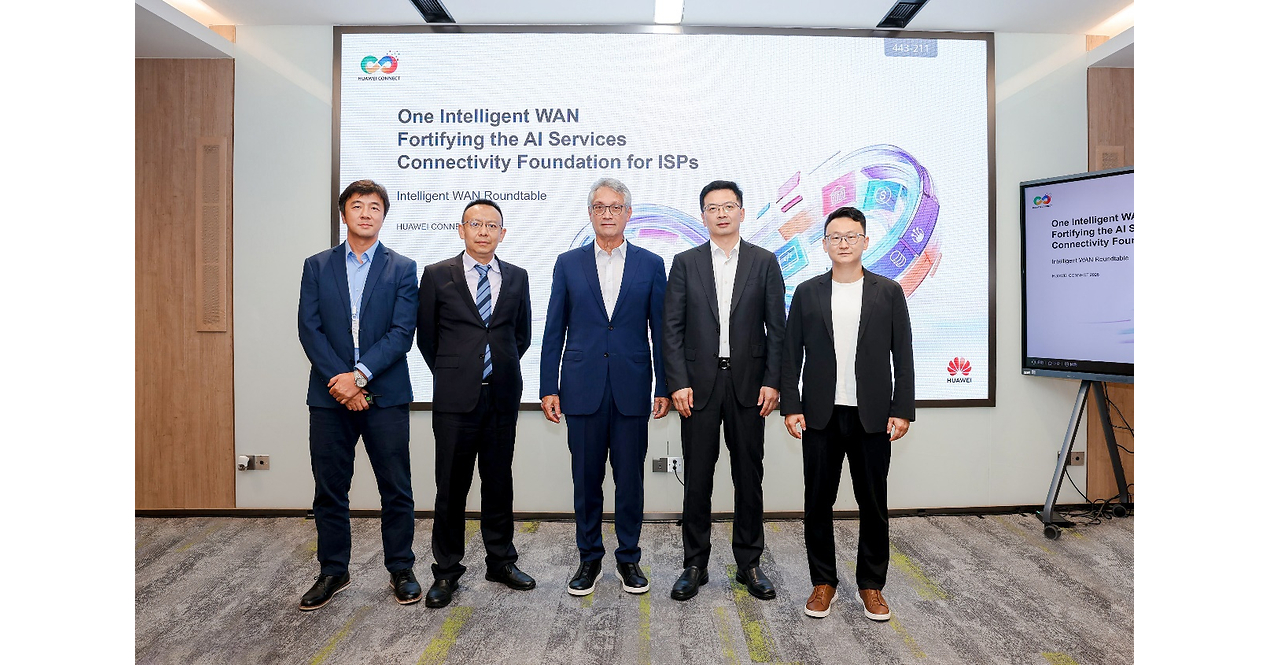
Huawei unveiled an Intelligent WAN Target Architecture for internet service providers at HUAWEI CONNECT 2026, positioning converged IP+Optical networks, service-aware connectivity and AI-driven operations as foundations for ISP AI-service monetization. The company said agentic AI will shift network demand toward agent-to-agent connections, heavier uplink traffic and end-to-end workflow assurance. Huawei highlighted digital network maps, fault-location agents and AI assistants as tools to reduce ISP operating costs and improve network operations efficiency, but disclosed no financial targets, contracts or revenue impact.
Analysis
This is strategically relevant but not yet investable: architecture announcements do not establish operator budgets, purchase orders, or deployment timing. The monetization bottleneck for telecom carriers remains willingness to pay for latency, SLA, and edge-compute services; absent measurable ARPU uplift, AI-related WAN spending is likely to displace legacy routing capex rather than expand total capex. The near-term implication is therefore more competitive than demand-accretive, particularly in Huawei-accessible markets where pricing pressure can constrain gross margins for Nokia (NOK), Ciena (CIEN), and Cisco (CSCO).
The more actionable second-order signal is a potential shift toward uplink-heavy, distributed traffic, which raises the value of optical transport, edge aggregation, and network automation rather than traditional downlink-centric access equipment. CIEN, Coherent (COHR), and Lumentum (LITE) have greater operating leverage if carrier orders translate into higher coherent-optics port density over the next 6-18 months; Arista (ANET) is better positioned in enterprise and AI data-center fabrics, but has less direct exposure to carrier WAN refreshes. Huawei's restricted access to leading-edge U.S. components limits direct beneficiary read-through for U.S. suppliers and makes any apparent global demand signal less clean.
Consensus may overestimate the speed at which carrier AI-service narratives convert into revenue. Operators have repeatedly struggled to monetize network quality beyond wholesale connectivity, while automation-driven OPEX savings can reduce equipment spending needs as readily as it funds upgrades. A credible positive catalyst would be disclosed multi-year IP/optical capex commitments, edge-service revenue targets, or coherent-optics order acceleration; without these, this remains a watch item rather than a sector-wide rerating trigger.
AllMind Terminal
AI-powered research, real-time alerts, and portfolio analytics for institutional investors.
Request TrialMarket Sentiment
Overall Sentiment
mildly positive
Sentiment Score
0.35
Key Decisions for Investors
- No immediate directional trade on this release; treat it as an alert for carrier-capex confirmation rather than evidence of incremental demand.
- Monitor CIEN quarterly orders, backlog and service-provider revenue over the next 1-3 months. Upgrade to a tactical long only if management identifies carrier optical demand acceleration and guides revenue above consensus; falsifier is continued flat-to-down service-provider spending.
- Use a relative-value watchlist of long CIEN or COHR versus short NOK if emerging-market carrier tenders show Huawei-driven price compression. Enter only after tender data or Nokia margin guidance confirms share/price pressure; target 10-15% relative return over 6-12 months, with stop on Nokia margin resilience or Huawei procurement restrictions tightening.
- For ANET, avoid extrapolating this into a carrier-WAN thesis. Maintain exposure only on AI data-center switching fundamentals; a broad carrier capex revival would be incremental upside, not a base-case earnings driver.
More News
- Taiwan benchmark Taiex rises to record intraday high as tech stocks advance
- AMD joins the $1 trillion club as chip rally surges - our AI Strategy saw it early
- Jamie Dimon says hyperscaler AI spending could hit $1 trillion next year
- Factbox-Key issues for this week’s Trump-Xi summit in Washington
- Latest Oil Market News and Analysis for Sept. 22
- Oil Settles Near $100 as Hormuz Flows Stunt Rally