
Disrupting Freight Finance: Todd Ziegler Takes Aim at Costly Invoice Factoring
Source: PR Newswire
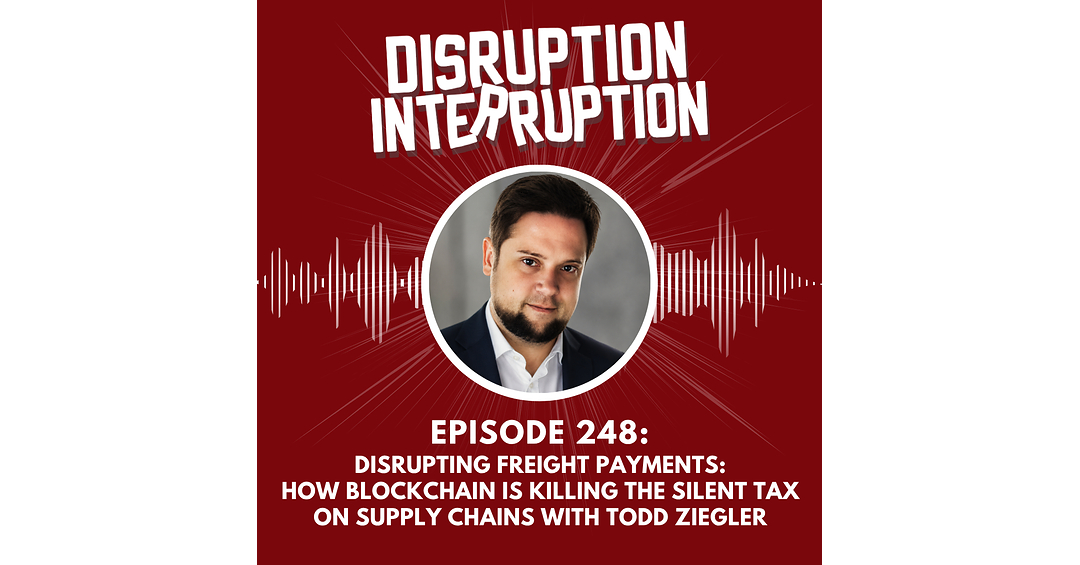
TCS Blockchain says its blockchain-based freight-settlement platform can pay carrier invoices the same day or next business day and charge 50%-90% less than traditional invoice factoring. The company targets a major working-capital issue for small trucking operators, which typically wait 30-45 days for payment and may face factoring costs equivalent to roughly 36% annualized interest on a 3% monthly fee. The claims, presented by founder Todd Ziegler in a sponsored podcast release, suggest potential cost savings for freight carriers but do not provide financial results, adoption metrics, or independently verified performance data.
Analysis
This is not investable validation of a listed blockchain beneficiary; it is a promotional claim with no disclosed transaction volume, loss rates, funding source, customer concentration, or unit economics. The relevant public-market read-through is modestly negative for specialty-finance platforms exposed to small-carrier receivables—especially eCapital (ECAP, private), Triumph Financial (TBK), and regional banks with transportation factoring books—but only if a new entrant can both underwrite broker/shipper credit and overcome carrier workflow inertia. Faster settlement reduces carriers’ financing expense, yet it also transfers credit, fraud, chargeback, and payment-dispute risk to the settlement provider or its capital partners.
Over the next 1-3 months, no directional trade is warranted: adoption evidence should be measured by disclosed funded invoice volume, repeat-carrier retention, average days-to-pay, loss reserves, and cost of warehouse funding—not claimed fee savings. A credible scaled platform could pressure factoring take rates and improve small-fleet survival, which would marginally support freight intermediaries such as CHRW and RXO through greater carrier capacity; the offset is that easier liquidity can delay capacity exits, prolonging weak spot-rate conditions. Over 6-18 months, the structural opportunity is more likely in embedded payments and underwriting data than blockchain itself; incumbents with broker TMS/payment integration and cheap funding retain a substantial moat.
Contrarian view: the apparent 50%-90% savings may be economically unsustainable once credit losses, disputes, KYC/AML, reserve requirements, and carrier acquisition costs are fully loaded. Freight invoices are not frictionless digital assets: settlement speed does not eliminate a shipper’s ability to contest service, a broker default, or double-brokering fraud. The thesis is falsified positively by independently audited volume growth and loss-adjusted funding economics competitive with conventional factors; negatively by rising reserve balances, delayed collections, or reliance on token liquidity rather than committed bank facilities.
AllMind Terminal
AI-powered research, real-time alerts, and portfolio analytics for institutional investors.
Request TrialMarket Sentiment
Overall Sentiment
mildly positive
Sentiment Score
0.32
Key Decisions for Investors
- No immediate position. Create an event-driven watchlist on TBK and public transportation-payment proxies; require evidence of material TCS-funded volume or announced bank/large-broker partnerships before treating this as a competitive threat.
- Monitor TBK quarterly: transportation-finance yield, factoring/receivables growth, net charge-offs, reserve build, and funding costs. Consider a 3-6 month short only if take-rate compression coincides with deteriorating credit metrics; avoid a thesis based solely on blockchain-disruption headlines.
- For freight-cycle exposure, prefer long CHRW or RXO only after spot rates stabilize: lower carrier financing costs could preserve capacity and cap brokerage margin recovery, so this development is not itself a catalyst to own brokers.
- Watch regional-bank and specialty-credit spreads for stress rather than adoption headlines. If small-carrier delinquencies rise while payment terms remain extended, factoring incumbents with disciplined underwriting may gain share despite nominal fee pressure.
More News
- Oil falls amid optimism over potential diplomatic solution to the Iran conflict
- Trump, Xi Address AI, Taiwan During State Visit
- Oracle Japan shares surge 7% after record fiscal first quarter, bucking selloff of U.S. parent
- China's Xi urges U.S. to cooperate on AI
- Trump Hosts China’s Xi With Trade, AI, Taiwan in Focus
- Here’s the Tesla Semi… again