
Enstructure, Diamond State Port Corporation and Stakeholders Celebrate Groundbreaking of the Delaware Container Terminal
Source: PR Newswire
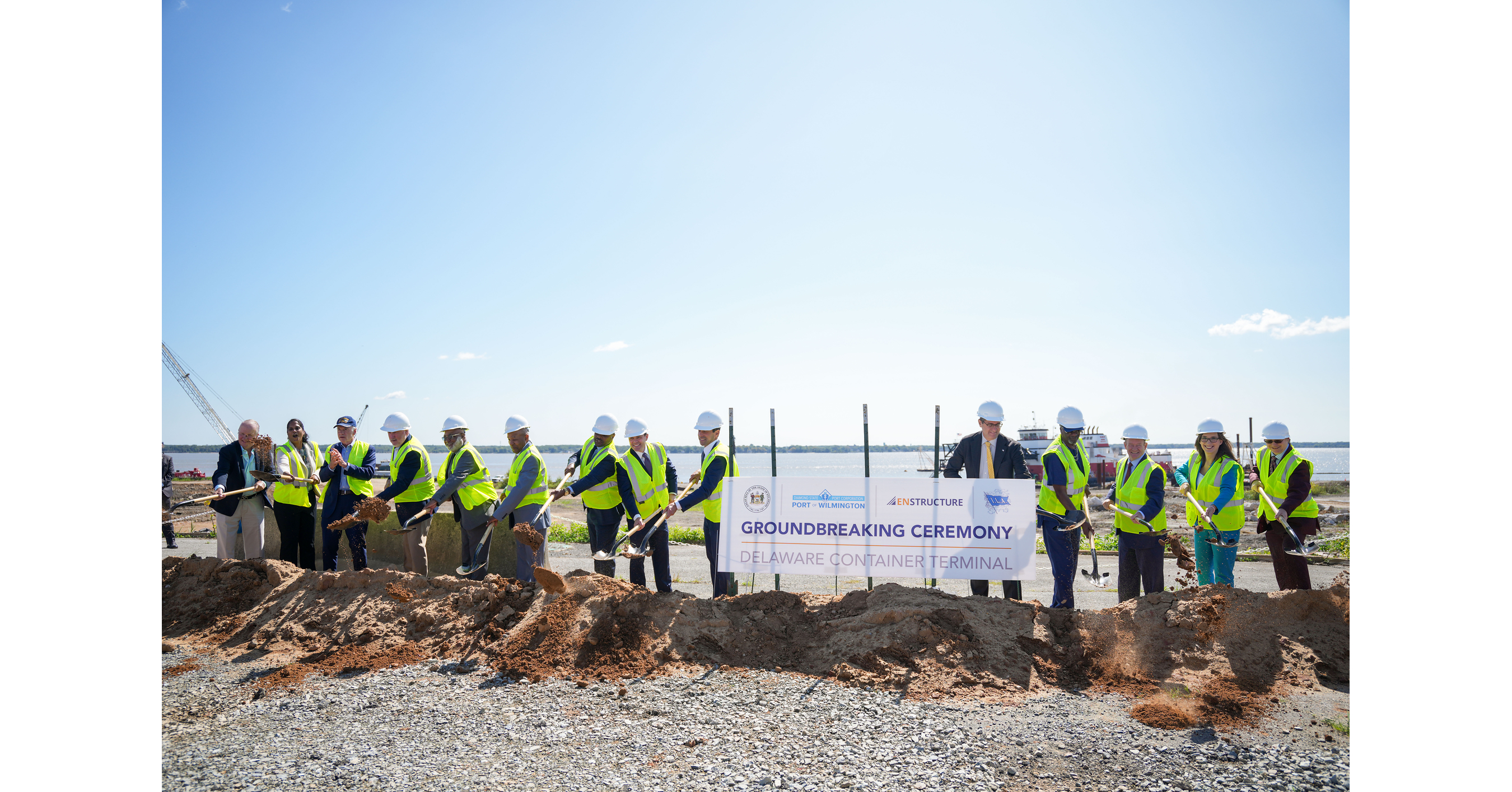
Enstructure and Delaware broke ground on the $669 million Delaware Container Terminal, a public-private project expected to be completed in 2029. The terminal is designed to handle 1.2 million TEUs annually, nearly doubling Delaware River port-complex capacity, with 2,700 feet of quay, 45-foot depth and capacity for vessels up to 16,000 TEUs. Funding includes $225 million from Enstructure, $325 million from Delaware and $119 million in federal DOT and EPA grants for zero-emission equipment; the project is projected to create thousands of maritime, construction and logistics jobs.
Analysis
The investable read-through is limited because Enstructure is private and the project’s cash flows will not be visible in public markets for several years. The more important mechanism is competitive: added Mid-Atlantic berth capacity can reduce the scarcity premium earned by incumbent regional gateways and increase shippers’ bargaining leverage in annual carrier, drayage, warehouse, and intermodal contracts. That is modestly negative for private Philadelphia-area terminal operators and potentially for Baltimore throughput economics, but unlikely to move listed ocean-carrier earnings or U.S. rail volumes on its own.
Federal support for electrified cargo handling materially lowers the terminal’s initial capital burden and may establish a procurement template for zero-emission port equipment. Konecranes (KCR.HE), ABB (ABBN.SW), and charging/electrification vendors are the most logical equipment beneficiaries, but no awarded supplier, equipment value, or construction schedule has been disclosed; this is an order-intake watch item rather than a current earnings trade. For construction materials, the project is too small relative to aggregates producers such as VMC and MLM to be a standalone catalyst.
Over the next 1-3 months, the relevant catalyst is carrier commitments or a disclosed rail-servicing agreement, not groundbreaking publicity. A meaningful anchor-customer commitment would validate volume utilization and make regional warehouse/industrial development around northern Delaware more credible; absent that, the principal risk is a 2029 opening into a softer container cycle, leaving utilization below the level needed to pressure competing ports. Over 6-18 months, tariff-driven East Coast cargo rerouting and any future disruption at Baltimore/New York-New Jersey would increase the strategic option value of incremental Delaware capacity, though the benefit accrues primarily to private infrastructure owners rather than listed equities.
The consensus-positive infrastructure framing misses that capacity additions generally transfer economics from terminals to cargo owners unless local congestion becomes binding. The key falsifier of the competitive-pressure thesis is evidence that regional import growth, carrier alliances, or displaced Baltimore/New York cargo is sufficient to absorb the new capacity without discounting terminal services; watch announced long-term volume guarantees and regional port pricing rather than job-creation projections.
AllMind Terminal
AI-powered research, real-time alerts, and portfolio analytics for institutional investors.
Request TrialMarket Sentiment
Overall Sentiment
strongly positive
Sentiment Score
0.72
Key Decisions for Investors
- No directional public-equity trade on the announcement: the principal economic beneficiary is private, and completion/utilization risk places material cash-flow impact beyond the next 3 years.
- Create an event-driven watchlist for KCR.HE and ABBN.SW; consider a 6-12 month long only after disclosed crane, automation, or charging awards with contract value large enough to affect backlog. Exit or avoid if procurement is delayed, rebid, or funded equipment is sourced from unlisted suppliers.
- Monitor CSX and NSC for a named intermodal-service agreement and minimum-volume commitment. Do not initiate on speculative rail access; a commitment that adds identifiable annual loads would be required to overcome immateriality versus each network’s existing volume base.
- For investors with exposure to Mid-Atlantic logistics real estate, treat carrier commitments as a positive signal for nearby industrial/warehouse demand, but require leasing and rent-growth evidence before adding exposure through broad industrial REIT proxies such as PLD; generic port-capacity headlines alone do not justify a multiple re-rating.
More News
- Budget 2026 speech
- The UK cuts energy bills, taxes banks and boosts defense in high-stakes budget
- KION Q3 adjusted EBIT misses forecast as weak truck orders prompt guidance cut
- Can Southeast Asia pitch itself as an ‘all-in-one’ chip hub?
- Alphabet Disappoints as Microsoft’s Cloud Brightens
- FedEx's soft holiday-quarter outlook doesn't change our view on the stock