
Amazon seeks to offload about $8 billion of Nvidia chips
Source: proactiveinvestors.com
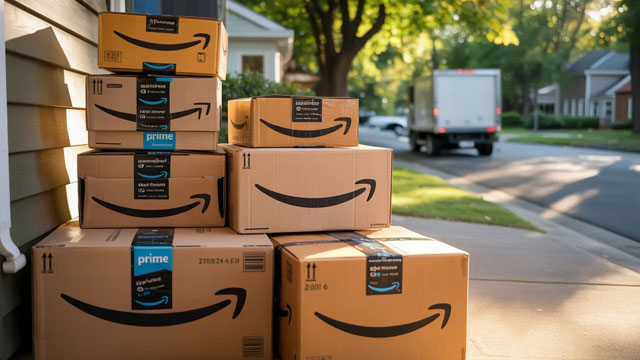
Amazon is reportedly exploring a sale-and-leaseback transaction involving about $8 billion of advanced Nvidia chips, seeking external investors while retaining access to the hardware. The proposed structure could help Amazon fund capital-intensive AI infrastructure expansion and potentially unlock balance-sheet capacity, though the discussions remain preliminary. The news is moderately relevant for Amazon’s AI-capex financing strategy and Nvidia’s data-center demand outlook.
Analysis
If executed, this is less an AI-demand signal than a capital-intensity signal: AWS is testing whether investors will fund depreciating GPU infrastructure off balance sheet while AWS retains operating control. The accounting treatment, lease term and residual-value guarantees matter more than the headline notional; an operating-lease structure can preserve reported FCF optics near term but creates fixed obligations just as GPU useful lives may compress from roughly 4-5 years toward 2-3 years amid rapid architecture upgrades. AMZN’s multiple could benefit if the market views this as disciplined capital recycling, but could de-rate if it implies internal returns on owned GPU capacity are below its cost of capital.
NVDA is economically insulated on the initial transaction because the chips have already been purchased, but the financing precedent is strategically constructive over 6-18 months. Third-party ownership lowers hyperscalers’ near-term cash constraint and potentially broadens the buyer base to infrastructure funds, supporting GPU unit demand beyond the hyperscaler capex cycle. The offset is residual-value risk: if investors demand high yields or require NVDA/AWS support because newer platforms rapidly obsolete installed chips, financing costs rise and could expose the fragility of AI-infrastructure economics.
Consensus may overread this as either a bearish AWS liquidity warning or a clean bullish demand accelerant for NVDA. The more relevant near-term read-through is for GPU-cloud competitors: CoreWeave and smaller neoclouds lose a potential funding advantage if AWS can securitize capacity at scale, while Oracle’s and Microsoft’s capex burdens become more visible. There is no standalone trade until lease economics and any guarantees are disclosed; the catalyst path is AWS commentary at the next earnings release and evidence that private-capital pricing clears materially above investment-grade borrowing costs.
AllMind Terminal
AI-powered research, real-time alerts, and portfolio analytics for institutional investors.
Request TrialMarket Sentiment
Overall Sentiment
mixed
Sentiment Score
0.10
Ticker Sentiment
Key Decisions for Investors
- Maintain AMZN as a watch, not a directional trade, into the next earnings call: initiate only if management quantifies lower capex intensity without a corresponding increase in lease liabilities or residual-value commitments. A 1-3 month long setup requires AWS growth acceleration and AI-related operating-margin stability; abandon if management signals GPU monetization/utilization pressure.
- Retain NVDA long exposure on a 6-18 month horizon, but do not add solely on this report. Add on confirmation that asset-financing structures are repeatable across hyperscalers; reduce if disclosed financing requires meaningful vendor guarantees, which would indicate residual-value risk is migrating back to the supply chain.
- Monitor a relative-value short basket of GPU-cloud infrastructure names versus NVDA/AMZN if AWS closes a large transaction at attractive financing terms. The mechanism is lower AWS effective cost of deployed compute and tighter pricing competition; invalidate if the financing yield is high enough that AWS capacity pricing must rise rather than fall.
- Set an alert for AMZN lease commitments, useful-life assumptions and AWS capex guidance in the next 10-Q/earnings materials. Missing disclosures on term, renewal options and residual support are the key data gap; without them, the $8B figure cannot be translated into FCF, leverage or valuation impact.
More News
- Stocks remain under the thrall of higher yields and higher oil. Here's what's ahead
- Broadcom, Amazon Test Limits of Investor Demand for AI Buildout
- Paramount and Warner Bros. Discovery to Merge Into Skydance (SKYD). Will Skydance Achieve David Ellison’s "Quality Storytelling" Vision?
- Nasdaq Index: Record High as Weak Payrolls Cut Rate-Hike Bets and Yields Fall
- Nvidia's AI Chips Reach China Despite US Curbs
- Why AMD Stock Jumped 30% in September