
Public Launches AI Agents for Prediction Markets
Source: PR Newswire
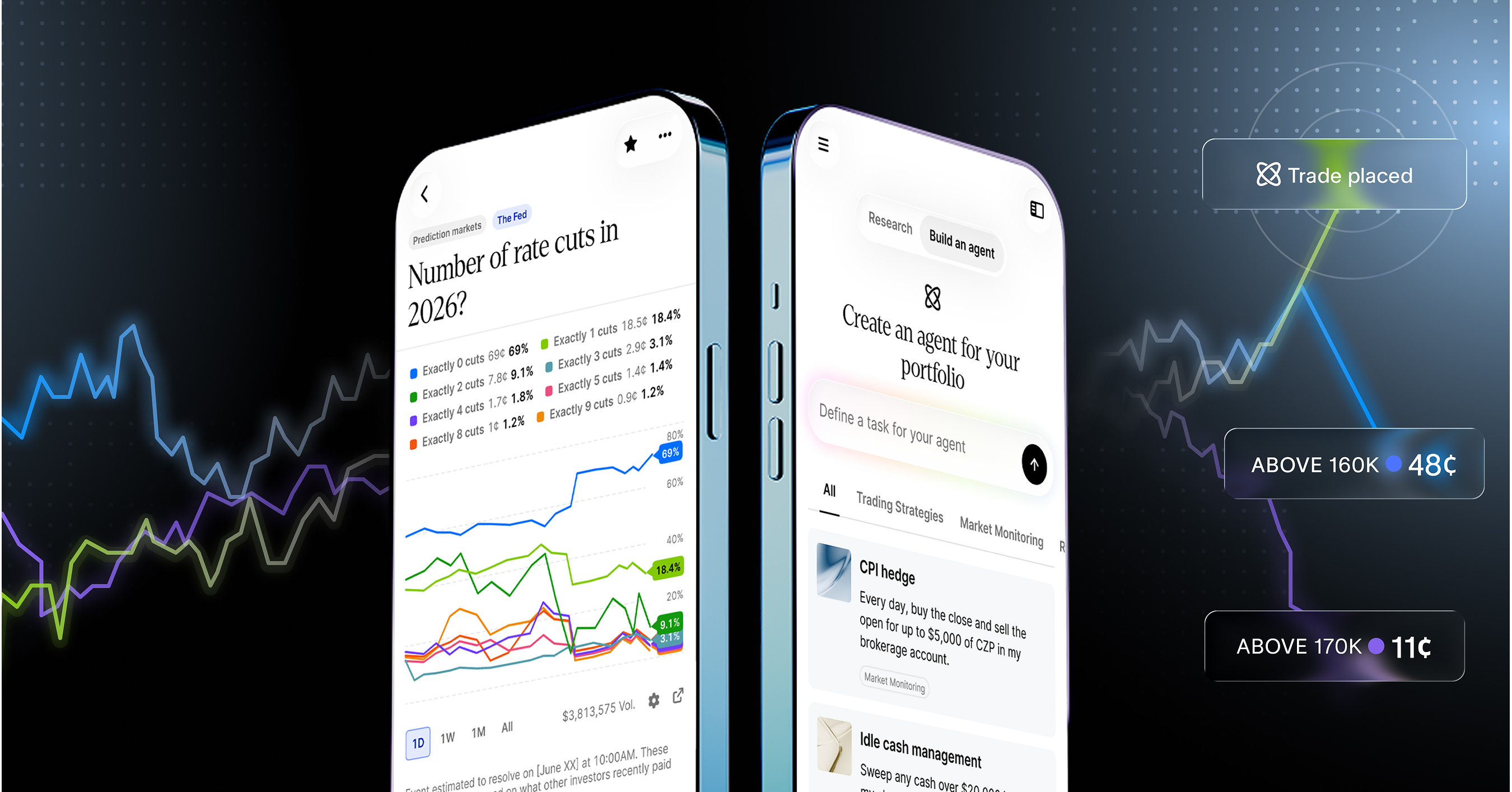
Public launched AI Agents for Prediction Markets, allowing members to trade event contracts directly or automate stock, bond, crypto and options trades using changes in prediction-market probabilities. Through a partnership with CFTC-regulated Kalshi, the platform offers markets spanning rates, corporate events, commodities, crypto, economics and elections. Illustrative automation includes a $5,000 stock purchase if FDA-approval odds exceed 75% and put-option purchases capped at $2,500 if earnings-miss odds rise above 60%.
Analysis
The investable implication is not a near-term public-equity catalyst; Public is private and the announcement provides no adoption, unit-economics, or regulatory-revenue data. The more important mechanism is distribution: embedding event-contract probabilities into retail execution can make short-dated, crowd-derived signals more reflexive, particularly around CPI, FOMC decisions, FDA rulings, earnings, and crypto catalysts. That may incrementally lift retail options turnover and volatility demand, favoring listed-market infrastructure such as CBOE and CME, while raising adverse-selection and surveillance costs for retail-facing brokers.
Near term (days to 3 months), the likely effect is promotional rather than material volume migration. Kalshi is the clearest private-market beneficiary if Public converts existing funded accounts into event-contract users; however, Public's use of automated triggers could invite heightened CFTC/FINRA scrutiny if agents create concentrated flows around sensitive corporate events or if retail users misunderstand conditional-order risk. A regulatory clarification, restrictions on event contracts, or poor early engagement would quickly invalidate the adoption thesis.
The contrarian view is that prediction probabilities are already heavily arbitraged around widely watched macro outcomes and may add little alpha after spread, fees, latency, and the endogenous impact of automated follow-on orders. The more durable opportunity is therefore the "picks-and-shovels" layer: exchanges monetize activity regardless of whether retail agents generate superior returns, while brokers face the risk that AI-driven options hedging increases customer losses, complaints, and retention costs during volatility spikes.
AllMind Terminal
AI-powered research, real-time alerts, and portfolio analytics for institutional investors.
Request TrialMarket Sentiment
Overall Sentiment
moderately positive
Sentiment Score
0.48
Key Decisions for Investors
- No directional trade in Public-related exposure: treat this as a watch item until Public/Kalshi disclose funded-user conversion, contracts per user, and 90-day retention; the current signal is insufficient for a standalone position.
- Add CBOE to a 1-3 month watchlist for retail-derivatives volume upside, but only initiate on evidence of sustained U.S. options ADV acceleration versus 2026 baseline. Thesis is exchange operating leverage; falsifier is flat retail options ADV despite broader event-market adoption.
- Monitor HOOD versus IBKR as a relative-risk indicator over the next 6-12 months: broad retail adoption of automated event-triggered options would likely benefit HOOD engagement but carries greater conduct and loss-rate risk than IBKR's more sophisticated client base. Do not initiate without platform-level evidence that automation is driving options activity.
- For macro books, avoid using retail prediction-market probability changes as an independent Fed signal. Require confirmation from SOFR futures and Treasury rate volatility; a divergence is more likely a liquidity/sentiment artifact than actionable information.
More News
- US 30-Year Yield Hits Highest Since 2004
- SEBI Allows Portfolio Managers to Invest Overseas, Short Equity Options
- History shows financial calamities occur when rates rise rapidly like this: 'Something always breaks'
- Trump, Xi Address AI, Taiwan During State Visit
- Oracle Japan shares surge 7% after record fiscal first quarter, bucking selloff of U.S. parent
- China's Xi urges U.S. to cooperate on AI