
Snow Secure snow storage shows its performance in Aspen - 85 % snow retention over the summer
Source: PR Newswire
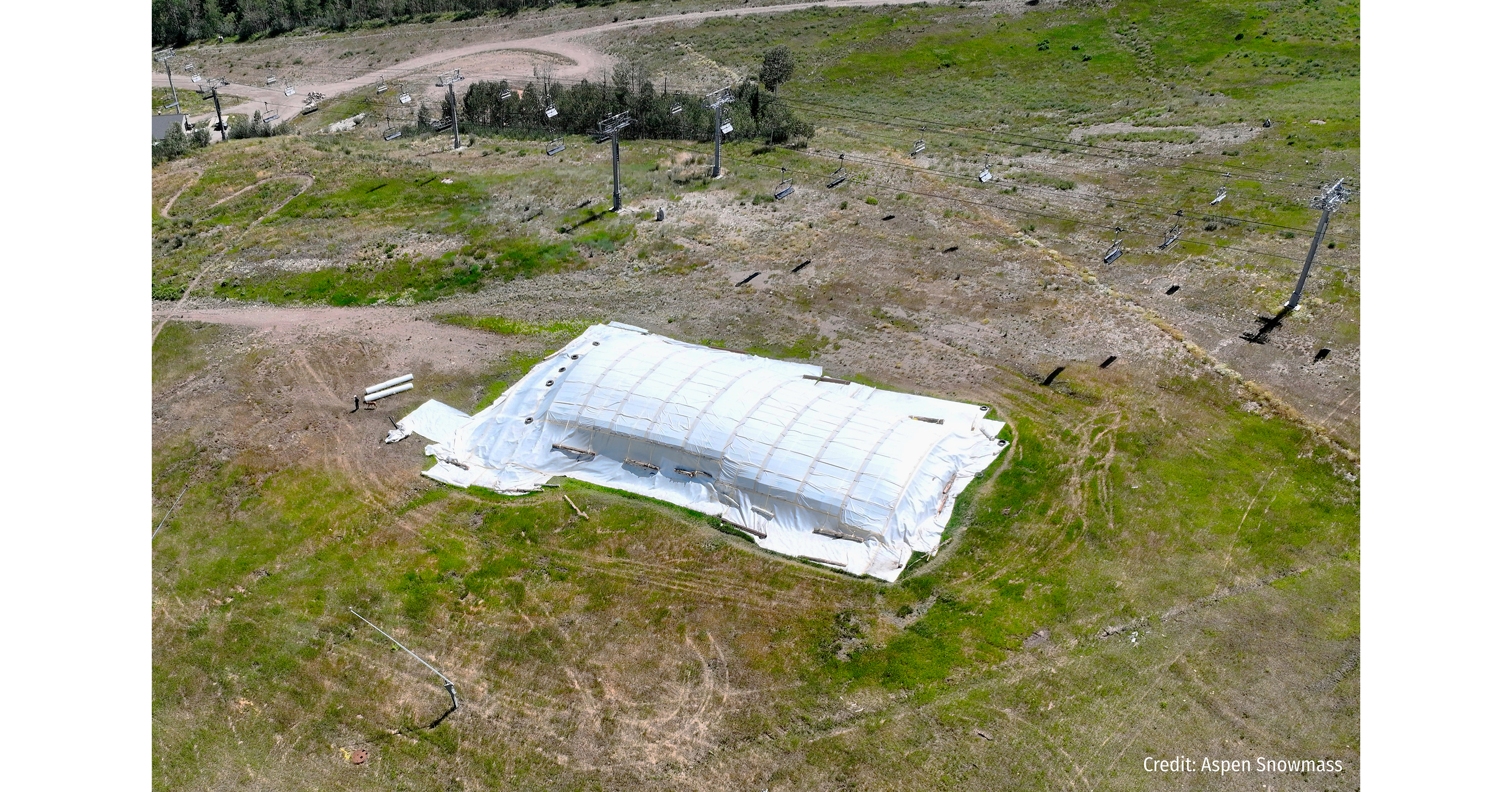
Snow Secure's Aspen Snowmass pilot retained 85% of stored snow volume through the Colorado summer, despite surface temperatures averaging 61.8°F and peaking at 118°F. Temperature beneath the insulation averaged 33.6°F, supporting the company's claim that its mats can reduce ski resorts' reliance on early-season snowmaking, water, and energy use. Aspen Snowmass will use the pilot results to assess broader deployment, while Snow Secure says more than 10 North American resorts have adopted its system over the past two seasons.
Analysis
This is a potentially important operating tool for destination resorts, but not yet a public-equity earnings event. The economic value is concentrated in avoiding the high-cost, low-probability early-season outcome: delayed terrain openings can impair holiday-period lodging, ski-school and ancillary spending disproportionately relative to lost lift-ticket revenue. For Vail Resorts (MTN), a more reliable opening-date narrative could modestly support pass retention and reduce weather-related volatility, but material impact requires deployment across enough acreage to change available terrain rather than create limited symbolic runs.
The second-order beneficiary is the snowmaking ecosystem: stored snow substitutes for marginal early-season production, reducing electricity and water use when temperatures are least favorable, while potentially freeing snowmaking capacity for higher-value terrain. That creates a trade-off rather than a pure cost saving—insulated storage adds textile, site-preparation, handling and land-use costs, and its economics depend on avoided snowmaking costs, water constraints and the revenue value of guaranteed opening terrain. The release's volume-retention metric is not sufficient to establish unit economics because it does not disclose stored-area scale, total installed cost, labor intensity, usable snow quality or an independently controlled comparison.
Near term, this is principally an ESG/resilience signal for privately held destination operators, not a reason to chase MTN. Over 6-18 months, repeated deployments could create a structural advantage for high-elevation resorts with scarce water rights and premium holiday demand, while lower-elevation operators face a more expensive climate-adaptation burden. The contrarian view is that this technology may be economically viable only for small, high-visibility opening areas; if storage requires substantial acreage and annual manual handling, the avoided snowmaking benefit may not clear resort hurdle rates except in unusually warm years.
AllMind Terminal
AI-powered research, real-time alerts, and portfolio analytics for institutional investors.
Request TrialMarket Sentiment
Overall Sentiment
moderately positive
Sentiment Score
0.42
Key Decisions for Investors
- No immediate directional trade in MTN: the disclosed information lacks acreage, installed-cost and operating-cost data needed to translate resilience claims into EBITDA. Treat any weather-resilience-driven rally as sentiment rather than a modeled earnings catalyst.
- Set a 1-3 month diligence alert on MTN and other public leisure proxies for disclosed early-season terrain availability, snowmaking expense and season-pass renewal commentary. A demonstrable reduction in weather-related opening disruptions across multiple seasons—not a single pilot—would support a modest MTN multiple premium.
- Monitor water-permitting and power-price pressure in Colorado, Utah and the Pacific Northwest over 6-18 months. Tighter water access or elevated peak electricity pricing would improve stored-snow economics and favor premium destination resorts with balance-sheet capacity; relaxed water constraints or cheap power would weaken the adoption thesis.
- Thesis falsifier: evidence that deployed systems remain limited to promotional acreage, or that annual handling/storage costs exceed avoided snowmaking and holiday-period revenue protection. Conversely, a disclosed resort-wide rollout with quantified capex payback below 3-5 years would warrant revisiting MTN as a climate-resilience beneficiary.
More News
- Trump, Xi Address AI, Taiwan During State Visit
- Oracle Japan shares surge 7% after record fiscal first quarter, bucking selloff of U.S. parent
- China's Xi urges U.S. to cooperate on AI
- Trump Hosts China’s Xi With Trade, AI, Taiwan in Focus
- Here’s the Tesla Semi… again
- Trump praises US-China friendship at state dinner with Xi Jinping