
Tunkillia Infill Drilling Confirms New High-grade Mineralisation Within Shallow Zone of Existing High-value 'Starter Pit' Outlines
Source: Newswire
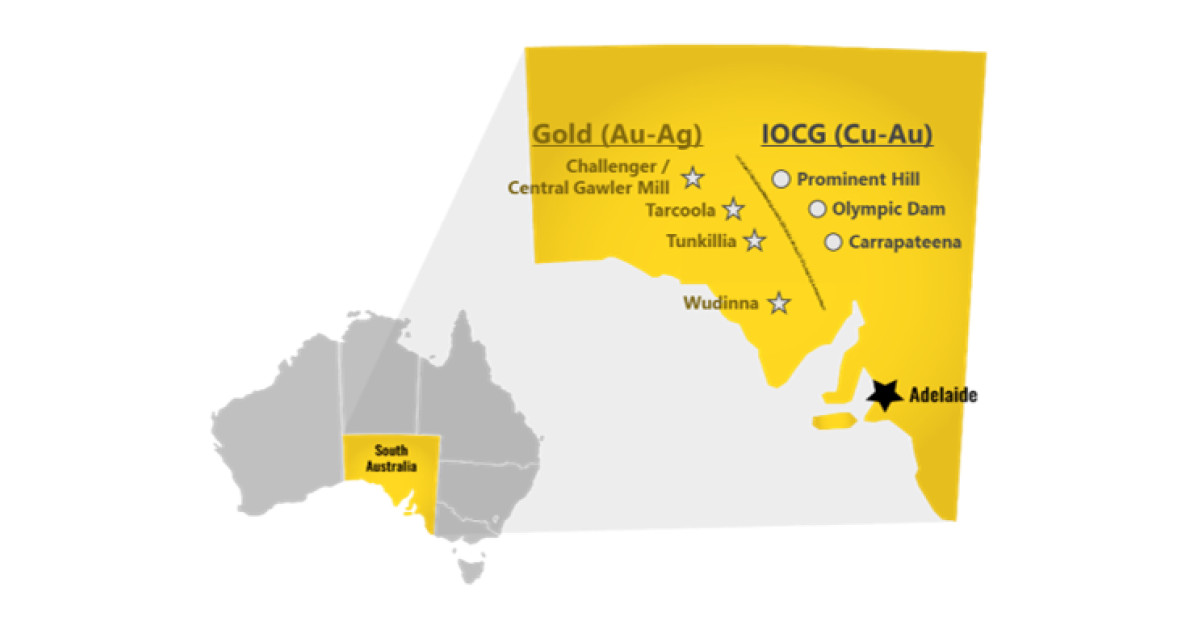
Barton Gold reported Phase 2 infill RC drilling results at its Tunkillia Gold Project, delivering multiple shallow, high-grade gold intercepts (e.g., 1m at 32.4 g/t Au within 6m at 6.61 g/t Au; 2m at 24.7 g/t Au within 11m at 5.51 g/t Au; and 1m at 19.0 g/t Au within 7m at 4.10 g/t Au). Management said the new assays could materially boost early economics of the ‘Starter Pits’ that are modeled to generate A$1.8bn operating profit over the first 2.5 years, and it expects one final Phase 2 assay batch plus gold and silver JORC Mineral Resource upgrades before completing the PFS and submitting a Mining Lease application (PFS targeted for Q1 CY27). Final Phase 2 assay batches and updated JORC resource numbers are pending, but the disclosed grades support a positive re-rating of the project’s resource potential.
Analysis
This is less about a single drill hole and more about whether Barton can convert a large, low-grade resource into a financeable, front-end cash generator. The market should care because shallow, high-grade continuity inside the starter pits changes the funding stack: better early-year cash flow lowers perceived dilution risk, improves debtability, and can expand the pool of strategic bidders who only buy projects with payback inside a single commodity cycle. The cleanest second-order winner is BGDFF itself; the indirect loser is the broader junior gold cohort, where capital tends to rotate toward names with credible near-term production optionality and away from "resource only" stories.
The key risk is that assay strength does not automatically translate into mineable ounces. Over the next 1-3 months, the catalyst path is the remaining assays and the resource update; over 6-18 months, the PFS will decide whether this is a rerate or just a better-shaped paper resource. Watch for the usual failure points: continuity breaks between sections, a strip-ratio increase that eats the grade uplift, or metallurgy/dilution assumptions that prevent the high-grade zones from making the pit shell in a material way. If that happens, the market will likely fade the headline and re-anchor on execution risk rather than geology.
Contrarian view: the move may be partly overdone because this is still pre-PFS, pre-mining lease, and pre-financing. The valuation gap between "good starter pit" and "bankable project" is where juniors get trapped; until Barton shows a funding plan with limited equity leakage, the stock can remain a tradeable headline name rather than a durable institutional holding. If the next update confirms grade continuity and resource growth without inflating capex, the rerating can persist; if not, the stock likely mean-reverts fast.
AllMind Terminal
AI-powered research, real-time alerts, and portfolio analytics for institutional investors.
Request TrialMarket Sentiment
Overall Sentiment
strongly positive
Sentiment Score
0.55
Ticker Sentiment
Key Decisions for Investors
- Accumulate BGDFF on weakness over the next 1-3 weeks into the final assay batch; this is a high-beta, event-driven long with asymmetric upside if shallow high-grade continuity is confirmed, but size small because liquidity and financing risk remain the main overhang.
- Use a BGDFF / GDXJ pair to isolate idiosyncratic geology versus sector beta: long BGDFF, short GDXJ for 1-3 months if you want exposure to project-specific rerating while hedging gold price noise; thesis fails if gold weakens sharply or the resource update disappoints.
- Set a hard alert on the upcoming resource upgrade and PFS scope: if the update fails to lift grade and/or tonnage inside the starter pits, cut the position regardless of headline assay strength; the market will punish continuity gaps more than it rewards isolated intercepts.
- For lower-risk exposure, wait for the PFS and mining-lease progress rather than chasing the headline; the best entry may be after the next financing window if management proves the project can advance without large dilution.
More News
- CoreWeave credit default swaps hit distress levels as investors sour on AI debt
- Brian Sullivan: Why the 'real' price of oil is likely $30-$40 higher than where it is now
- Penske Automotive agrees to be taken private by Penske, Mitsui
- Latest Oil Market News and Analysis for Oct. 16
- Supermicro promised a new CFO in December 2024. A $2.5 billion smuggling case and a co-founder’s arrest later, it has one
- Blackstone President Jon Gray Bets Big on AI Boom
From AllMind Research
- Anthropic IPO Preview: Valuation, Timing, and What to Watch
- Shein After the IPO: Venue, Valuation, and What Must Be Proved
- What AI Research Tools Should a Small Hedge Fund Buy First?
- Run Cost-Controlled Financial Research in AllMind Agent Studio
- State of Public Markets, June 2026: Higher for Longer Meets the AI Supercycle