
LG ELECTRONICS UNVEILS THE NEXT EVOLUTION OF AI HOME AT IFA 2026
Source: PR Newswire
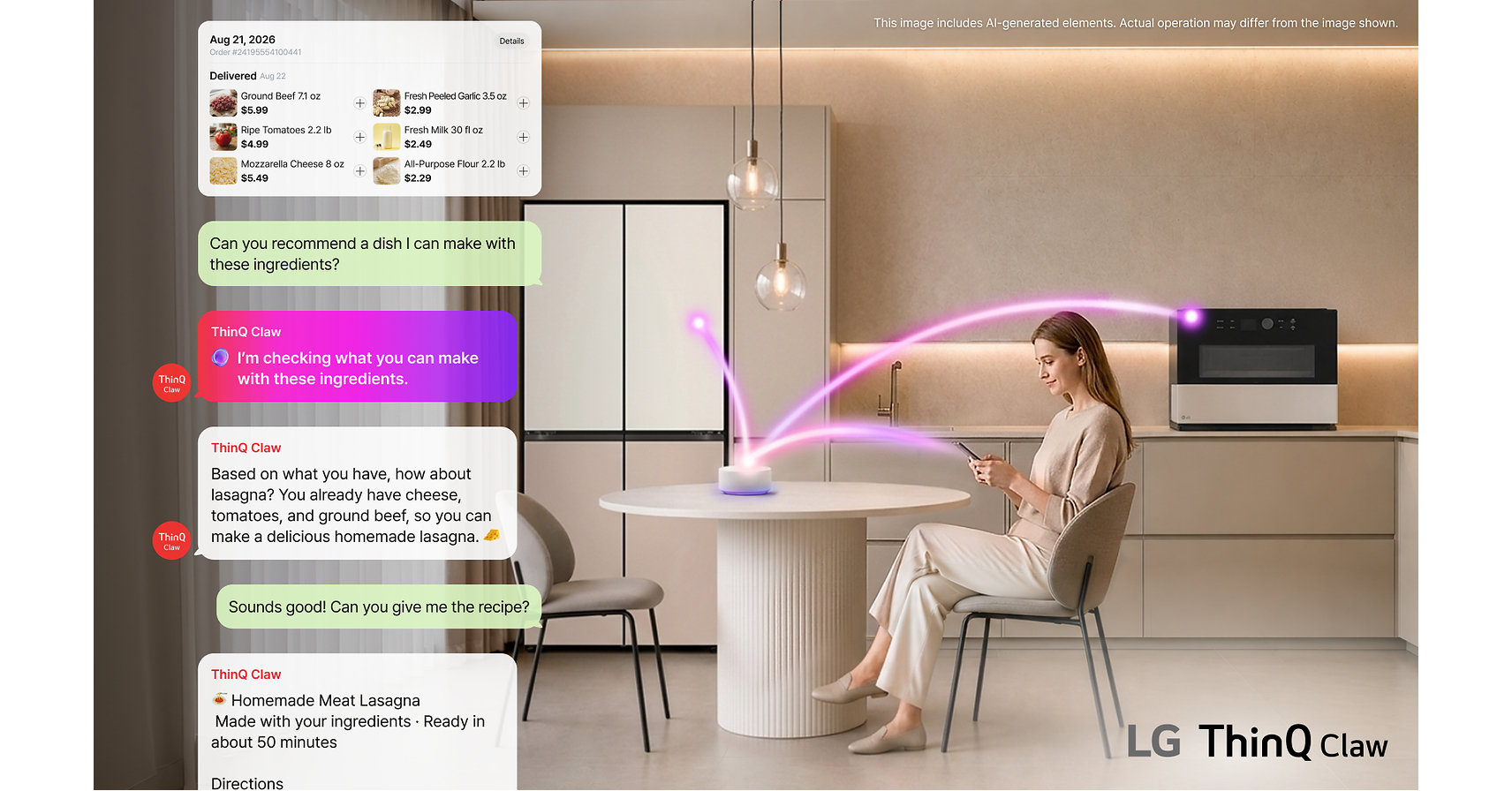
LG Electronics unveiled its next-gen AI Home at IFA 2026, anchored by a new text-chat AI agent (“ThinQ Claw”) that understands user intent/context to coordinate connected devices and services (e.g., cooking support, air-quality/temperature prep, and calendar-based planning) without complex automation rules. LG also showcased an AI-powered Home Energy Management System that orchestrates energy generation, storage, consumption, and EV charging in real time to help lower electricity bills under dynamic pricing where available. The company said ThinQ Pro will debut in Europe for multi-family residential and commercial spaces and highlighted its “LG Shield” security framework for protecting appliance/services/customer data.
Analysis
This is more of an ecosystem-defensiveness signal than a near-term earnings catalyst. For appliance OEMs, the economic upside from “AI home” is usually concentrated in retention, accessory pull-through, and service attach rates, while the hardware margin pool remains exposed to promotion and channel pressure. The biggest second-order effect is that interoperability shifts value toward the control layer and away from individual device brands, which can actually make white-goods pricing more competitive over time rather than less.
The more meaningful medium-term lever is home energy orchestration: if consumers genuinely accept automated load shifting around EV charging, storage, and dynamic tariffs, the monetizable market expands beyond appliances into energy software and grid-adjacent hardware. That creates a potential tailwind for inverter, battery, and charger ecosystems, but only if utilities and regulators keep expanding time-of-use pricing and if installation friction falls. In that sense, the prize is not the chat interface; it is whether the home becomes a managed energy node with recurring revenue attached.
Contrarian view: the market tends to overprice “AI” announcements and underprice how little consumers pay for interface upgrades. Without disclosed attach rates, service revenue, or churn improvement, this is mostly optionality, not a valuation reset. The thesis is falsified if LG cannot show measurable uplift in premium mix, software/services revenue, or retention by the next 1-2 earnings cycles; otherwise this is likely a 6-18 month strategic story rather than a tradable event.
AllMind Terminal
AI-powered research, real-time alerts, and portfolio analytics for institutional investors.
Request TrialMarket Sentiment
Overall Sentiment
mildly positive
Sentiment Score
0.15
Key Decisions for Investors
- No immediate directional trade in LG Electronics (066570 KS); treat this as a watch item until management discloses measurable software/service revenue or higher attach rates over the next 1-2 quarters.
- Relative-value idea: long home-energy platform beneficiaries like Enphase (ENPH) or SolarEdge (SEDG) versus short appliance OEMs such as Whirlpool (WHR) if you see evidence that AI-home adoption is driving demand toward energy orchestration rather than white-goods pricing power; review after the next tariff/dynamic-pricing data point.
- If LG stock rallies sharply on the demo without corresponding KPI support, consider a short-dated hedge or covered-call structure rather than a naked long; the event premium is likely to decay quickly over 2-4 weeks absent numbers.
- Set an alert for European time-of-use tariff expansion and EV-charger install data over the next 3-6 months; those are the real catalysts that would validate a durable HEMS monetization path.
- Avoid chasing the broader appliance basket on AI branding alone; wait for evidence that interoperability is improving lifetime value instead of commoditizing devices and compressing gross margin.
More News
- CoreWeave credit default swaps hit distress levels as investors sour on AI debt
- Brian Sullivan: Why the 'real' price of oil is likely $30-$40 higher than where it is now
- Treasuries Soar as Tech Slump Threatens Growth
- Latest Oil Market News and Analysis for Oct. 16
- Blackstone President Jon Gray Bets Big on AI Boom
- Suddenly, Wall Street is worried that the U.S. economy is more ‘vulnerable’ than it looks