
US-China Rivalry Fuels Fierce AI Race: Live Q&A
Source: Bloomberg
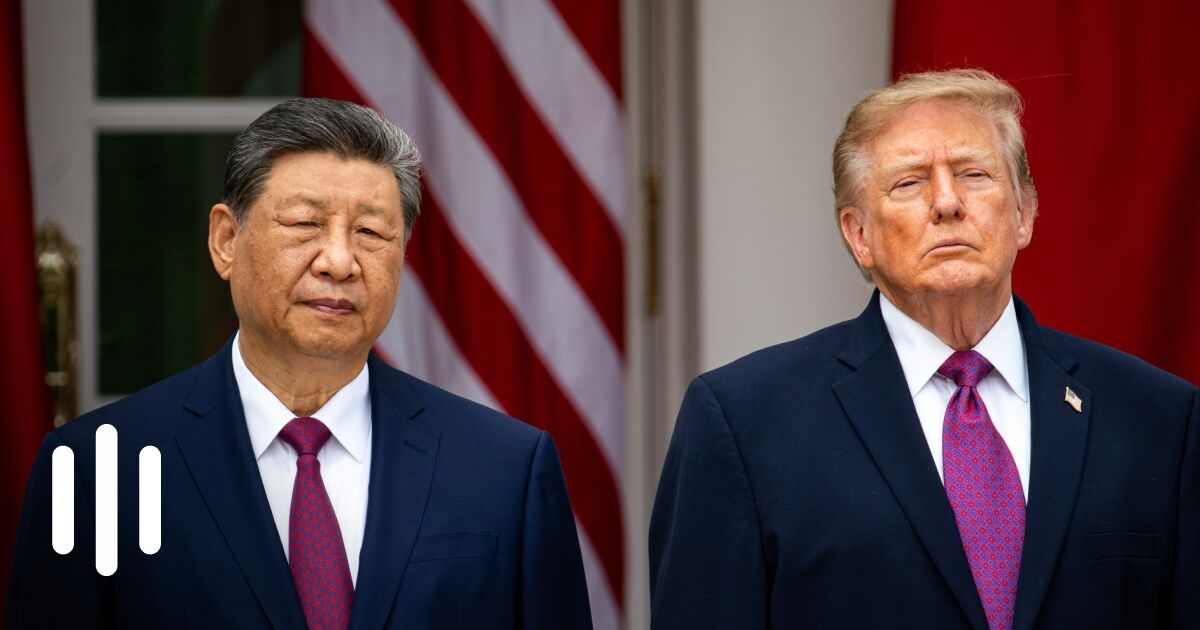
Bloomberg will host a Sept. 25 live Q&A on the US-China race for AI leadership, focused on divergent approaches to AI safety, chip geopolitics and implications for the AI investment trade. The article cites billions of dollars flowing into chips, data centers and related infrastructure, while security incidents and whistleblower disclosures elevate technology-risk concerns. It is an event announcement rather than a new policy, corporate, or market development.
Analysis
This is not a fundamental catalyst; it is an event-risk marker for an AI complex already priced around infrastructure scarcity and US technology leadership. The investable issue is whether export-control enforcement broadens from leading-edge accelerators to networking, memory, advanced packaging and cloud access. A broader regime would initially reinforce the pricing power of NVDA, AVGO, ANET and TSM, but could ultimately reduce the addressable China-related revenue pool and raise inventory/channel risk for semiconductor equipment suppliers.
Over the next 1-3 months, the highest-sensitivity names are those with material China exposure and less ability to redirect product: ASML, LRCX, KLAC, AMAT and memory suppliers MU and WDC. US hyperscalers may face a less obvious offset: tighter restrictions on overseas model access could limit Chinese competition, but escalating cyber and data-localization requirements raise compliance costs and could fragment enterprise AI deployments. PANW, CRWD and ZS are potential second-order beneficiaries if AI safety concerns translate into incremental identity, endpoint and model-security budgets.
Consensus remains too focused on accelerator unit demand and underweights the bottleneck shifting toward power, networking, packaging and regulatory permissioning. The near-term risk is that a policy headline triggers a crowded-AI de-risking without changing earnings; a durable bearish turn requires evidence of capex deferrals, China revenue-guide cuts, or a material increase in supply-chain restrictions. Treat any event-driven volatility as tactical unless it is accompanied by revised export rules or company-specific guidance.
AllMind Terminal
AI-powered research, real-time alerts, and portfolio analytics for institutional investors.
Request TrialMarket Sentiment
Overall Sentiment
neutral
Sentiment Score
0.00
Key Decisions for Investors
- No directional trade solely on the scheduled discussion; maintain an alert for formal US export-control actions affecting advanced packaging, HBM memory, networking or cloud-model access, which would create a 1-5 day repricing window.
- For existing AI-beta exposure, prefer a 1-3 month quality basket of long NVDA/AVGO/ANET versus short SMH or a China-exposed equipment basket (AMAT/LRCX/KLAC) if policy language broadens beyond GPUs; target 8-12% relative upside, with exit if no regulatory action appears within 60 days.
- Build a watchlist for long PANW or CRWD on evidence that enterprises are allocating incremental budget to AI-model governance and data security; require bookings/commentary confirmation at the next earnings cycle before initiating.
- Hedge crowded semiconductor exposure with SMH put spreads dated 2-3 months out rather than outright shorts. The thesis is invalidated by sustained hyperscaler capex guidance increases and no China-related revenue or backlog deterioration from equipment vendors.
More News
- US 30-Year Yield Hits Highest Since 2004
- Oil falls amid optimism over potential diplomatic solution to the Iran conflict
- SEBI Allows Portfolio Managers to Invest Overseas, Short Equity Options
- History shows financial calamities occur when rates rise rapidly like this: 'Something always breaks'
- Trump-Xi summit: Four key takeaways from the Washington, DC, meeting
- Trump, Xi Address AI, Taiwan During State Visit