
NCCN Models How to Tailor Cancer Care for Different Regions During 2026 World Cancer Congress
Source: PR Newswire
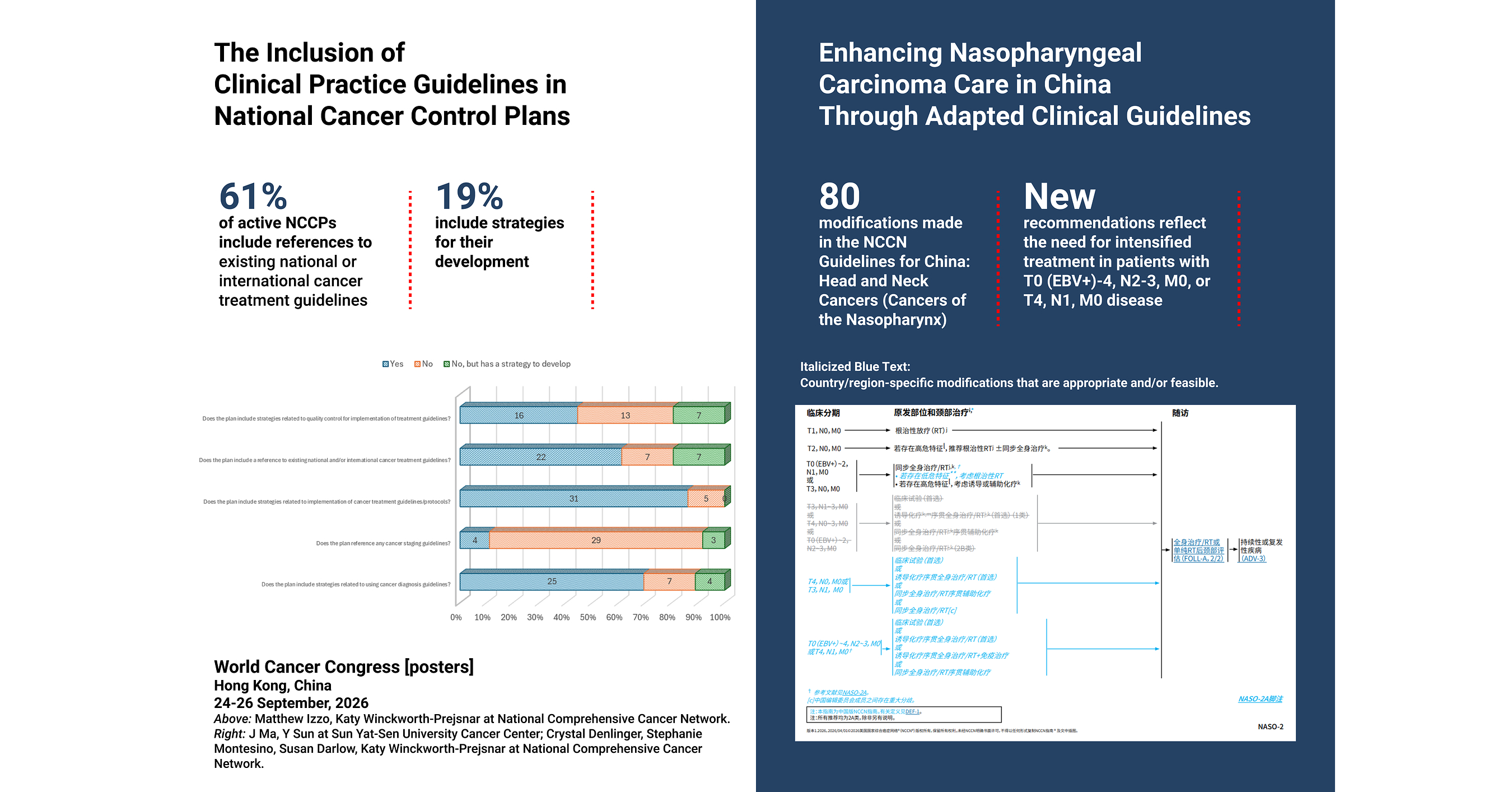
NCCN research presented at the 2026 World Cancer Congress found that 61% of active National Cancer Control Plans reference existing cancer-treatment guidelines and another 19% include strategies to develop them, although most lack systems to measure equitable implementation. NCCN also described China-specific nasopharyngeal-cancer guidelines adapted with local experts to reflect regional clinical practice, available medicines, and resource constraints. The initiative supports broader international access to standardized cancer care but is unlikely to have material near-term market implications.
Analysis
This is a policy-and-clinical-standardization signal rather than a near-term revenue event. The investment relevance is concentrated in China-exposed oncology franchises where guideline inclusion can gradually shift prescribing, tender eligibility, hospital formulary access, and reimbursement negotiations. Companies with locally approved, locally manufactured, or domestic-partnered therapies are better positioned than multinational innovators relying on premium pricing and imported supply chains.
The most plausible second-order beneficiary is China’s radiation-oncology ecosystem: broader adoption of region-specific treatment pathways can raise utilization of advanced radiotherapy planning and delivery, favoring locally entrenched equipment providers such as Varian’s Chinese operations (Siemens Healthineers, SHL.DE) and domestic competitors including Shenzhen-based medical-equipment suppliers. For systemic treatment, the direction is more ambiguous: expanded options may enlarge treated populations but also intensify substitution among PD-1, chemotherapy, and targeted-therapy regimens, pressuring price realization in centralized procurement.
Over 6-18 months, the investable catalyst is not the guideline publication itself but evidence that provincial payers, hospital networks, or national reimbursement lists operationalize recommendations. Consensus may overestimate the immediate monetization for global oncology companies: free clinical guidance does not confer reimbursement, and China’s volume-based procurement can convert higher utilization into lower unit economics. No broad healthcare trade is warranted on this release alone.
AllMind Terminal
AI-powered research, real-time alerts, and portfolio analytics for institutional investors.
Request TrialMarket Sentiment
Overall Sentiment
mildly positive
Sentiment Score
0.32
Key Decisions for Investors
- No immediate directional position; treat this as a watch item rather than a catalyst for broad oncology exposure. Reassess following Chinese NRDL updates, provincial tender decisions, or hospital-formulary adoption data over the next 6-12 months.
- For China healthcare exposure, favor locally commercialized oncology platforms over imported-drug sellers: monitor BeiGene (BGNE) and Innovent (1801.HK) for nasopharyngeal-cancer regimen references and reimbursement traction; initiate only after verified guideline-to-formulary conversion, not on publication headlines.
- Monitor Siemens Healthineers (SHL.DE) versus China domestic radiotherapy-equipment peers for tender-share changes over the next 2-4 quarters. A sustained domestic-share gain or price-led tender competition would argue against a long SHL.DE thesis despite potentially higher treatment volumes.
- Set an alert around China drug-pricing policy: any inclusion of newly recommended systemic therapies in centralized procurement without offsetting reimbursement expansion is a margin-risk signal for oncology manufacturers and would favor a relative short basket of China-exposed branded oncology revenue.
More News
- Japan approval, a 27% surge: the diagnostics stock our models picked in September
- Trump, Xi Address AI, Taiwan During State Visit
- SEBI Allows Portfolio Managers to Invest Overseas, Short Equity Options
- Exclusive-How firms linked to sanctioned Chinese cotton giant sell clothes to U.S
- U.S. government seeks to join Elon Musk in challenge against EU's fine on X
- Why we like Starbucks’ latest turnaround move — plus, two more wins for Eli Lilly