
Zendure presenteert Agentic Hems op IFA 2026: de thuisenergiehub van het AI-tijdperk
Source: PR Newswire
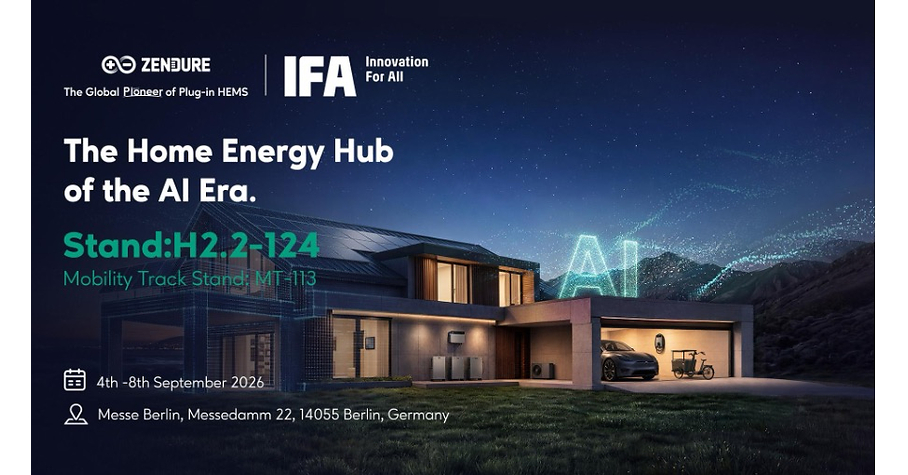
Zendure presenteert op IFA 2026 ‘Agentic HEMS’, een home energy managementsysteem dat via AI niet alleen energie aanstuurt maar ook vooruitkijkt en zelfstandig beslissingen neemt. Het combineert het ZenPulse-voorspellingsmodel met ZENKI AI Agents en een open Zen+OS-platform met open API’s, gekoppeld aan o.a. MQTT en Home Assistant. Het systeem kan automatisch inkopen op dynamische energietarieven en bijvoorbeeld zonne-energie opslaan voor een dure avondpiek en EV-laden uitstellen; daarnaast richt Zendure zich op integratie met e-mobiliteit en productlijnen zoals SolarFlow Mix en PowerHub.
Analysis
The investable point is the control layer, not the demo. If open APIs really reduce the friction of connecting batteries, chargers, heat pumps, and retail tariffs, value migrates away from pure hardware specs and toward whoever owns the software stack, customer relationships, and distribution. That is structurally better for ecosystem leaders with installed bases and worse for smaller OEMs that depend on proprietary lock-in to defend gross margin.
Near term, this is mostly a channel story, not an earnings story. We would not assign much value until there is evidence of third-party integrations, active household installs, and measurable improvement in self-consumption or battery economics; otherwise the market will likely fade the announcement within days. The real catalyst path is 1-3 months of partner adoption and sell-through data, with 6-18 month upside only if autonomous tariff arbitrage shortens payback enough to pull forward European storage demand.
The contrarian risk is that the market overestimates AI monetization and underestimates commoditization: if software becomes the differentiator, margins shift to the platform owner and away from device makers. Another underappreciated tail risk is regulatory friction around automated load shifting and dynamic pricing; if utilities or regulators view autonomous dispatch as grid-sensitive, adoption can slow abruptly. That would show up first in tariff rule changes, export constraints, or lower-than-expected installation commentary from channel partners.
AllMind Terminal
AI-powered research, real-time alerts, and portfolio analytics for institutional investors.
Request TrialMarket Sentiment
Overall Sentiment
mildly positive
Sentiment Score
0.15
Ticker Sentiment
Key Decisions for Investors
- No direct trade in FLES; treat this as a watch item until we see third-party integration KPIs or install-base data that can be independently verified.
- Relative-value expression: long ENPH / short SEDG over 3-6 months if the market starts pricing HEMS software as an ecosystem winner; thesis fails if SEDG shows two consecutive quarters of stabilizing gross margin and reaccelerating residential installs.
- Set an alert on ENPH, SEDG, and TSLA commentary for "open API," interoperability, and software attach rates in the next earnings cycle; that is the first credible read-through for monetization.
- Avoid chasing broad clean-energy beta on this headline alone; if anything, wait for a pullback and only buy sector exposure after channel checks confirm European storage demand is actually accelerating.
- Watch EU tariff and grid-rule developments over the next 6-18 months; any restrictions on autonomous load shifting or export arbitrage would be the cleanest falsifier for the bullish thesis.
More News
- Iran says two tankers catch fire after hitting mines in Strait of Hormuz
- Why Marco Rubio’s visit to Mumbai has ruffled feathers in India
- US and Iran both claim control of Strait of Hormuz amid attacks on vessels
- AI stocks plunge. Inflation heats up. Where we're still finding opportunities
- Bending Spoons wants to revive software castoffs. Berkshire is backing the plan
- AI rapidly improving, could vastly boost U.S. GDP, Anthropic's Clark tells policymakers