
PlantArcBio's Yield Increasing and Drought-Tolerance Genes Deliver Stronger Yields in First Open-Field Corn Trial
Source: PR Newswire
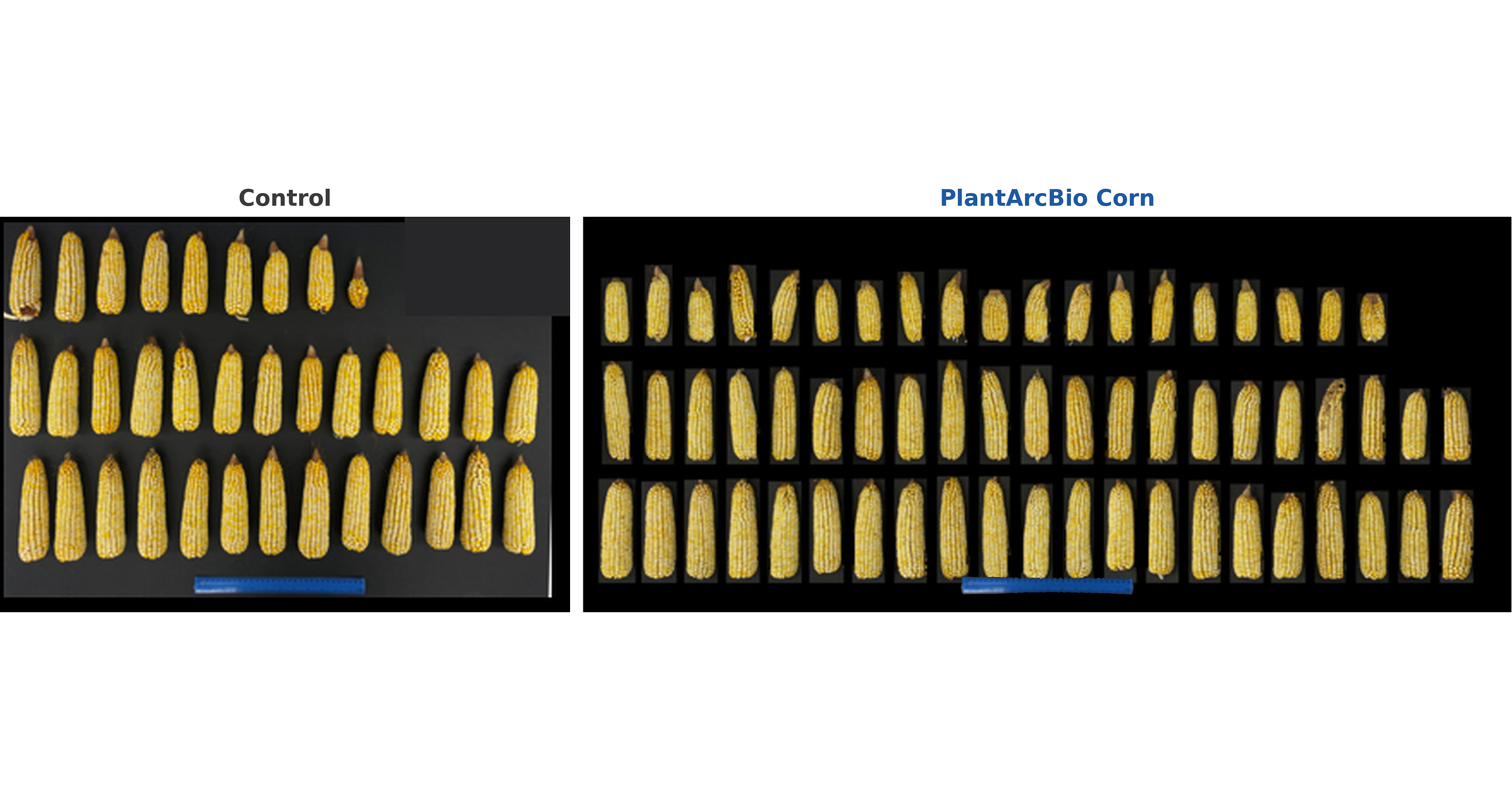
PlantArcBio reported that corn containing its lead drought-tolerance genes generated more than triple the total cob weight per plot versus untransformed controls under standard irrigation, with comparable gains under severe drought; certain hybrid gene events more than doubled drought-stressed kernel yield. The 200-plot Israeli open-field trial provides early field validation of its DIP gene-discovery platform and supports licensing discussions with seed companies. The results address a material agricultural challenge as USDA cut its 2026 U.S. corn-yield forecast to 178.5 bushels per acre, with production projected at 15.8 billion bushels, down 1.2 billion from 2025.
Analysis
This is a biological proof point, not yet a monetizable seed-trait event. The reported yield effect is unusually large relative to commercial trait economics, which makes independent multi-location replication, event stability, and elite-germplasm performance the critical gating items; single-region trials can materially overstate realized yield because genotype-by-environment effects dominate corn outcomes. No public seed company should re-rate on this release absent a disclosed license, trait identity, regulatory pathway, and evidence that the trait retains benefit without a yield drag under broad commercial conditions.
The nearer-term read-through is modestly positive for trait-platform strategics rather than commodity producers: Bayer (BAYN.DE), Corteva (CTVA), Syngenta/ChemChina and BASF (BASFY) have the distribution, breeding stacks and regulatory infrastructure needed to commercialize a validated drought trait. A successful licensing process could also pressure smaller agricultural-biotech platforms with less differentiated discovery capabilities, but commercialization is likely a 6-10 year process after introgression, field validation, deregulation and seed multiplication. For corn markets, adoption would be supply-positive only over a much longer horizon; drought-tolerant genetics reduce regional crop-volatility premia before they create enough acreage-scale output to structurally depress prices.
Consensus should resist extrapolating plot-level cob-weight gains to global production. Commercial hybrids already undergo intense selection, and seed companies typically capture only a fraction of grower value through trait royalties; regulatory scrutiny and export-market approval requirements can delay deployment even where agronomic performance holds. The key catalyst over the next 1-3 months is a named partnership with upfront economics; over 6-18 months, independently run multi-environment trials and trait-regulatory filings would be the first investable validation points.
AllMind Terminal
AI-powered research, real-time alerts, and portfolio analytics for institutional investors.
Request TrialMarket Sentiment
Overall Sentiment
strongly positive
Sentiment Score
0.70
Key Decisions for Investors
- No directional trade in public equities on this release; PlantArcBio is private and the financial beneficiary, trait construct, and prospective licensee are undisclosed.
- Place CTVA and BAYN.DE on partnership-alert status for 90 days. A disclosed exclusive license with upfront payment, milestone structure, target acreage and regulatory plan would be a modest positive for the licensee only if the trait is additive to its existing drought portfolio rather than a replacement R&D spend.
- For agricultural-input exposure, prefer a 6-12 month long CTVA / short MOS pair only if drought conditions persist and corn economics improve: Corteva has trait/seed pricing leverage, while fertilizer demand can weaken when growers respond to repeated drought by reducing input intensity. Exit if U.S. corn acreage intentions or fertilizer application guidance rises materially.
- Do not short CORN or establish a structural bearish corn view on prospective trait adoption. The thesis is falsified as a near-term commodity trade by the multi-year regulatory and seed-scale cycle; use weather, global stocks-to-use, and acreage data rather than biotechnology announcements for 2027 price positioning.
More News
- Trump Versus Xi: How Their High-Stakes Summits Compare
- Trump, Xi Address AI, Taiwan During State Visit
- Oracle Japan shares surge 7% after record fiscal first quarter, bucking selloff of U.S. parent
- China's Xi urges U.S. to cooperate on AI
- Akamai secures $11.6B cloud deal with Anthropic for AI workloads
- U.S. government seeks to join Elon Musk in challenge against EU's fine on X