
AutonomyAI Launches Autonomous Product Delivery: From Product Question to Review-Ready Pull Request
Source: PR Newswire
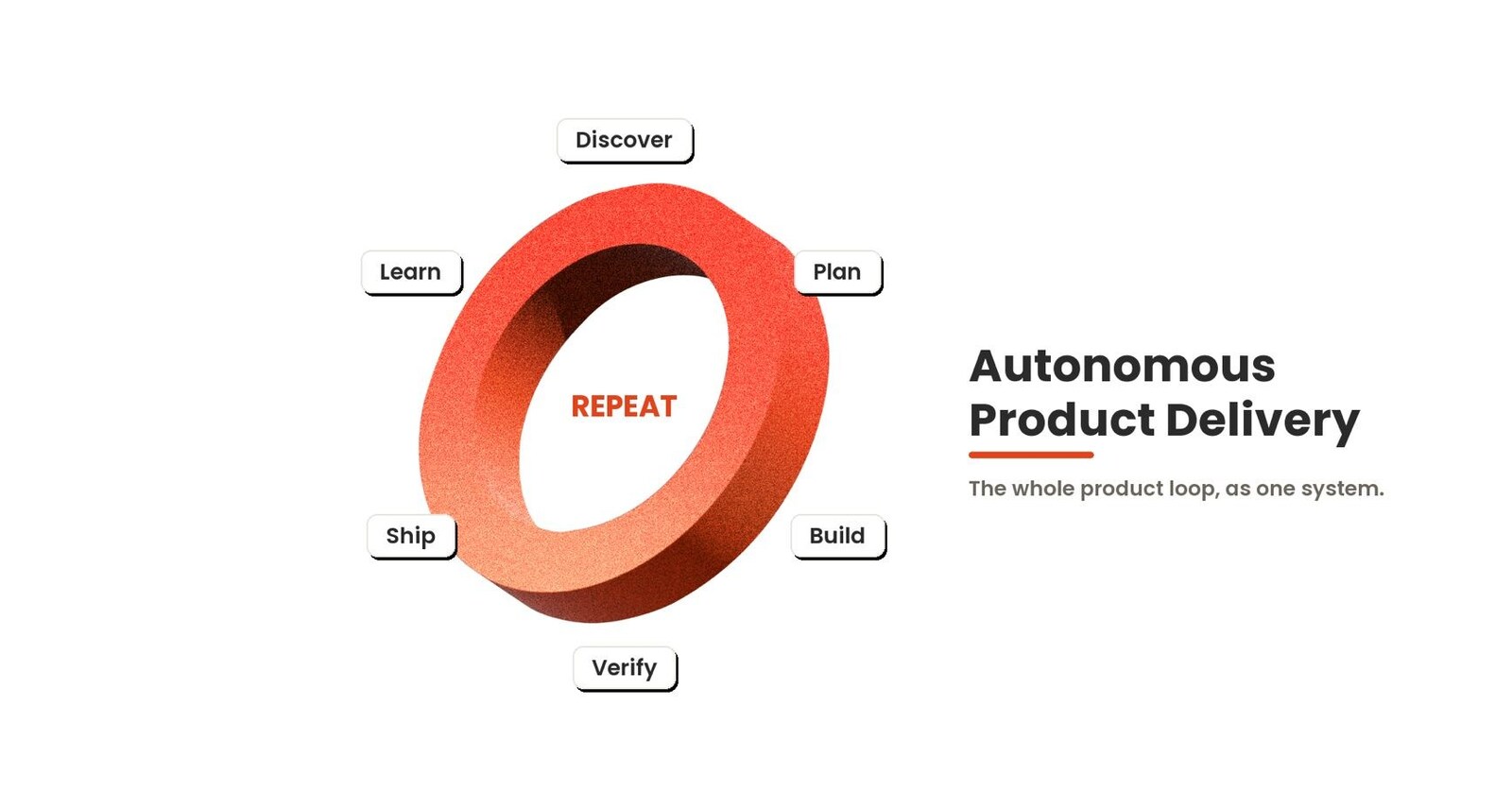
AutonomyAI launched Discover Mode, completing its Autonomous Product Delivery platform that researches product issues across internal data, creates specifications and generates review-ready code pull requests. The company says more than 170 product teams, including Datadog, Nielsen, SolarWinds and SolarEdge, use its platform; engineers retain final merge control. Founded in 2023, AutonomyAI has raised $4 million to date, but the announcement is a product launch with limited immediate public-market implications.
Analysis
This is not a tradable fundamental catalyst for DDOG or SEDG: a private vendor's customer references do not establish contract size, deployment breadth, or incremental software spend. The near-term read-through is instead a modest validation that enterprises are willing to grant AI agents access to production-adjacent workflows, provided a human remains the approval gate. That favors incumbent observability, source-control, and security platforms—DDOG, MSFT/GitHub, GTLB, CRWD—because broader agent deployment increases the value of audit trails, testing, telemetry, and permissioning rather than eliminating those control layers.
The more relevant competitive risk sits with TEAM over 6-18 months. If product discovery, specification, and code generation converge in a single agent-native interface, the value of ticket-centric workflow seats and handoff coordination could compress at the margin, particularly among smaller software teams. This is not yet a TEAM short thesis: Jira remains deeply embedded and could become the system of record for agent-generated work. The thesis is falsified if Atlassian demonstrates comparable end-to-end agent workflows with stable cloud seat growth and no degradation in paid-user expansion.
Consensus may overstate the displacement risk to engineering software vendors. Removing planning-to-code friction likely expands the volume of experiments, pull requests, monitoring events, and software changes; the bottleneck can migrate to QA, governance, incident management, and cloud-cost control. The key investable signal over the next 1-3 months is not launch publicity but whether large vendors report AI-driven increases in usage-based telemetry, security scanning, or CI/CD consumption rather than merely attaching AI features to existing seats.
AllMind Terminal
AI-powered research, real-time alerts, and portfolio analytics for institutional investors.
Request TrialMarket Sentiment
Overall Sentiment
moderately positive
Sentiment Score
0.48
Ticker Sentiment
Key Decisions for Investors
- No directional trade in DDOG or SEDG on this announcement alone; require evidence of material deployment, such as customer commentary or a measurable consumption uplift, before attributing revenue impact.
- Maintain a 6-12 month relative-value watch: long DDOG versus short TEAM only if TEAM shows weakening cloud paid-seat/net retention metrics while DDOG sustains consumption growth. Target a 10-15% relative move; exit if Atlassian reaccelerates cloud growth or launches credible integrated agentic product-delivery tooling.
- Use MSFT and GTLB as confirmation indicators for the broader thesis: stronger-than-expected GitHub Copilot monetization, CI/CD usage, or enterprise security attach would support a long software-infrastructure basket rather than a workflow-software short.
- Monitor DDOG’s next earnings for AI-related log, APM, and security consumption commentary. A lack of usage-based benefit despite broad enterprise agent adoption would invalidate the second-order observability upside.
More News
- SEBI Allows Portfolio Managers to Invest Overseas, Short Equity Options
- Trump, Xi Address AI, Taiwan During State Visit
- Oracle Japan shares surge 7% after record fiscal first quarter, bucking selloff of U.S. parent
- China's Xi urges U.S. to cooperate on AI
- Trump Hosts China’s Xi With Trade, AI, Taiwan in Focus
- Here’s the Tesla Semi… again