
L'IA passe du statut d'option à celui d'élément indispensable : les robots de service de la Foire de Canton mettront en avant leur capacité à résoudre des problèmes concrets
Source: PR Newswire
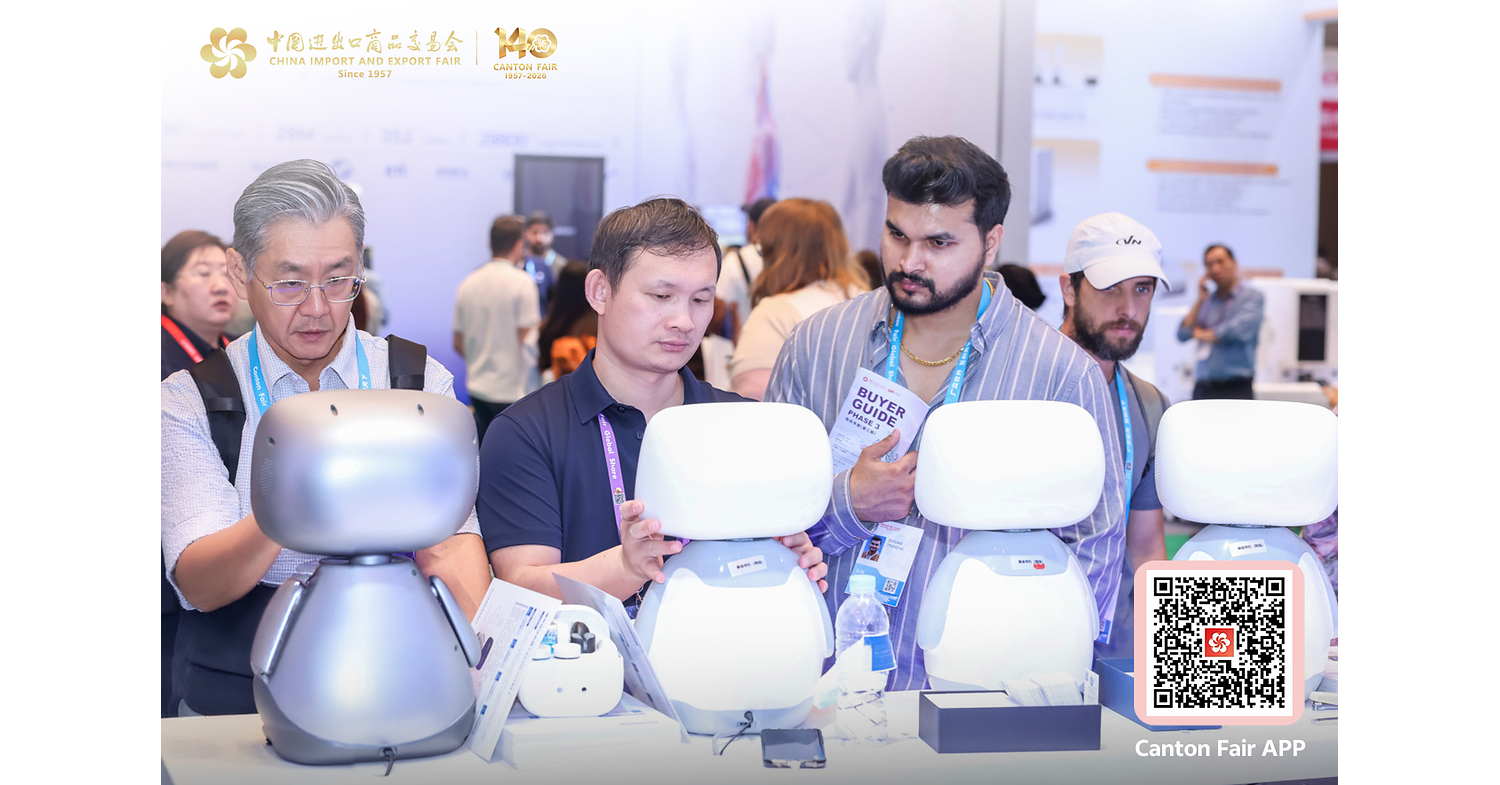
The 140th Canton Fair, opening October 15 in Guangzhou, will showcase AI-enabled service robots for eldercare, restaurants, cleaning and hazardous emergency response. Featured applications include health monitoring, fall detection, medication reminders, autonomous cleaning and fire reconnaissance, emphasizing lower operating costs, continuous operation and reduced risk to human workers. The announcement is promotional and illustrates broad AI-robotics adoption rather than providing company-specific financial metrics or guidance.
Analysis
This is promotional, pre-commercialization evidence rather than a demand or earnings signal; it does not justify a directional robotics trade today. The investable read-through is that service robotics is shifting from hardware unit sales toward recurring software, fleet-management, maintenance and safety-certification revenue. That favors scaled ecosystem providers with installed bases and channel access over standalone consumer-companion concepts, where customer-acquisition cost, reliability and reimbursement remain unresolved.
Over the next 1-3 months, the relevant catalyst is whether exhibitor activity translates into disclosed enterprise orders, deployments and utilization metrics—not demonstration volume. Restaurants and commercial cleaning have the clearest ROI because labor substitution can be measured against wage inflation and machine uptime; eldercare has the largest long-duration TAM but faces slower procurement, privacy/liability constraints and fragmented payment responsibility. Chinese vendor price competition could compress hardware gross margins globally while accelerating adoption by lowering customer payback periods.
The underappreciated second-order beneficiary is industrial automation infrastructure: machine vision, motion control, edge compute, batteries and fleet orchestration can monetize regardless of which robot OEM wins. Conversely, broad AI enthusiasm may be overextended for names without evidence that autonomy reduces onsite labor rather than merely adds software and support costs. Falsify the adoption thesis if major vendors report rising service labor per deployed unit, declining gross margin despite volume growth, or customer payback periods above roughly 24 months.
AllMind Terminal
AI-powered research, real-time alerts, and portfolio analytics for institutional investors.
Request TrialMarket Sentiment
Overall Sentiment
mildly positive
Sentiment Score
0.35
Key Decisions for Investors
- No immediate standalone trade: treat the event as a sourcing and order-flow watch item; require independently disclosed contracts, shipment growth and gross-margin progression before underwriting service-robotics revenue.
- Build a 1-3 month watchlist around Teradyne (TER) and Rockwell Automation (ROK) as diversified automation proxies; initiate only after evidence of improving robotics backlog/order commentary, with a stop on downward full-year automation guidance.
- Monitor Zebra Technologies (ZBRA) and Cognex (CGNX) for warehouse/commercial-deployment spillover: long exposure is warranted only if logistics and machine-vision bookings stabilize, since these names offer higher-quality recurring software/service attachment than unproven robot OEMs.
- For a 6-18 month thematic expression, prefer a basket of automation enablers (TER, ROK, CGNX) over pure-play consumer robotics; cap position sizing until verified enterprise ROI data shows sub-24-month payback and improving fleet utilization.
More News
- Saudi, Turkish, Pakistani chiefs plan urgent talks amid Yemen fighting
- Oil falls amid optimism over potential diplomatic solution to the Iran conflict
- Trump Versus Xi: How Their High-Stakes Summits Compare
- SEBI Allows Portfolio Managers to Invest Overseas, Short Equity Options
- Trump, Xi Address AI, Taiwan During State Visit
- Oracle Japan shares surge 7% after record fiscal first quarter, bucking selloff of U.S. parent