
LG CNS Targets U.S. Ad Market with Agentic AI-Powered Marketing Solution
Source: PR Newswire
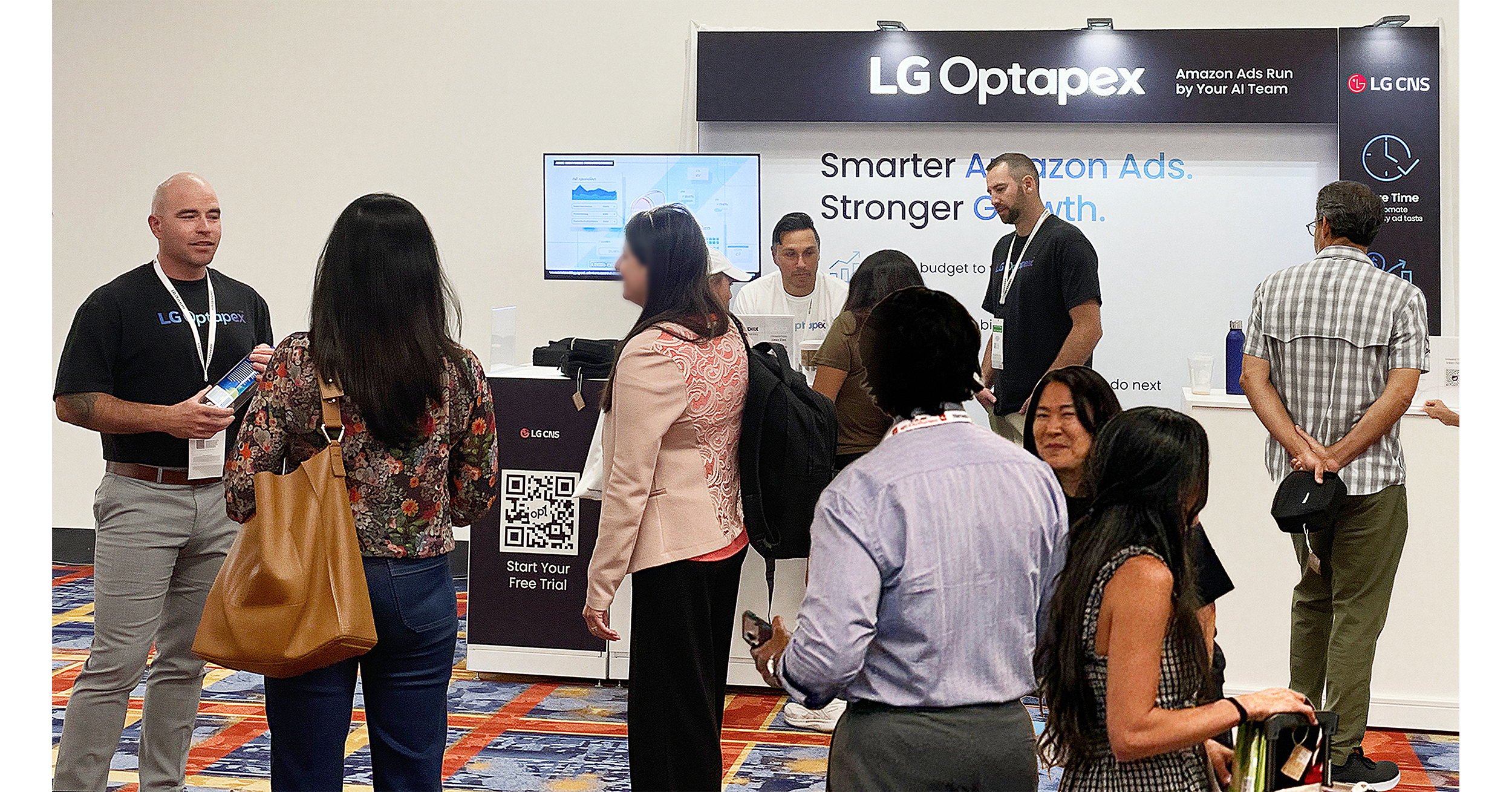
LG CNS showcased its agentic AI-powered Amazon ad optimization platform, “LG Optapex,” at ASD Market Week, aimed at improving Amazon marketplace sales and ad efficiency. The solution—launched in North America in 1H 2025 and reportedly used by ~190 companies—uses AI plus mathematical optimization to set bids/budgets and automate real-time ad operations; cited customer results include ~40% ROAS improvement for a U.S. gaming gear seller and 129% ROAS with an 8x lift in ad-attributed revenue for a UK beauty seller. Overall, the announcement signals modestly positive traction and product differentiation, but it is not a clear market-wide earnings or macro catalyst.
Analysis
The real beneficiary is AMZN, but not because this specific vendor wins share; it is because better seller tooling tends to increase auction intensity on Amazon’s ad stack. In marketplace advertising, most efficiency gains are eventually competed away into higher bids, more SKUs advertised, and broader budget participation, which is why the platform usually captures more of the economic surplus than the software layer. That argues for a slow-burn uplift to Amazon ad monetization and seller retention over 1-3 quarters, even if the headline itself is only incremental.
The second-order loser set is the long tail of smaller merchants and lower-end agencies that cannot operationalize agentic bidding at scale. If these tools become table stakes, performance gaps widen between data-rich brands and fragmented sellers, which can accelerate share concentration inside Amazon’s marketplace. That is mildly supportive for AMZN’s ad revenue and fulfillment mix, but a quieter headwind for omnichannel names like TGT if incremental shopper intent keeps migrating to the marketplace rather than to physical retail.
The main risk is commoditization: if Amazon rolls out comparable native automation, third-party optimizers lose pricing power and the press-release value accrues mostly to distribution rather than software margin. Also, if consumer demand weakens, better ROAS does not create demand; it just rationed budgets more efficiently. The thesis is falsified if AMZN ad growth decelerates over the next 1-2 quarters or if Amazon publicly embeds similar agentic tools into Seller/Ads, which would collapse the external vendor moat.
Contrarian view: the consensus may overrate the novelty of the AI layer and underrate the auction mechanics. The important question is not whether ROAS improves, but whether that improvement expands total seller spend; if it does, AMZN wins twice, while seller-side vendors get competed down. CRMT has no clear direct read-through; this is not a consumer-demand catalyst for a name like that unless marketplace share shifts become visible in category-level traffic data.
AllMind Terminal
AI-powered research, real-time alerts, and portfolio analytics for institutional investors.
Request TrialMarket Sentiment
Overall Sentiment
mildly positive
Sentiment Score
0.28
Ticker Sentiment
Key Decisions for Investors
- Long AMZN on a 1-3 month horizon; treat this as a gradual ad-monetization tailwind rather than a same-day catalyst. Best entry is any post-news pullback, with thesis invalidation if Amazon Ads growth or marketplace take-rate trends inflect lower in the next quarterly print.
- Buy AMZN 3-6 month call spreads on dips to express upside from seller adoption and auction intensity without paying full premium for a low-conviction news item. Risk/reward is attractive only if you expect multiple quarters of ad-growth reacceleration.
- No direct trade in TGT or CRMT off this item; use them only as monitoring names for share-shift evidence. If Amazon category share gains accelerate while brick-and-mortar traffic softens, then consider a separate retail underweight.
- Watch for Amazon-native feature announcements at the next ads/seller event; if Amazon introduces equivalent automation, exit any AMZN-vs.-vendor relative-value idea because the external moat compresses quickly.
More News
- TSMC chip capacity is ‘fierce’ battleground for AI customers, amid record quarter
- Nvidia’s European spending spree is about much more than Europe
- Here's our monthly update on our 32 stocks, including 2 more names to buy
- Cost of AI default insurance spikes as data centre confidence wobbles
- AWS, Anthropic race to deploy army of specialized engineers key to proving AI spending will pay off
- Amazon launches new Bee 'personal AI' devices that listen to conversations