
SANY Renewable Energy oznamuje na veľtrhu WindEnergy Hamburg 2026 viac ako 300-percentný rast tržieb v zahraničí
Source: PR Newswire
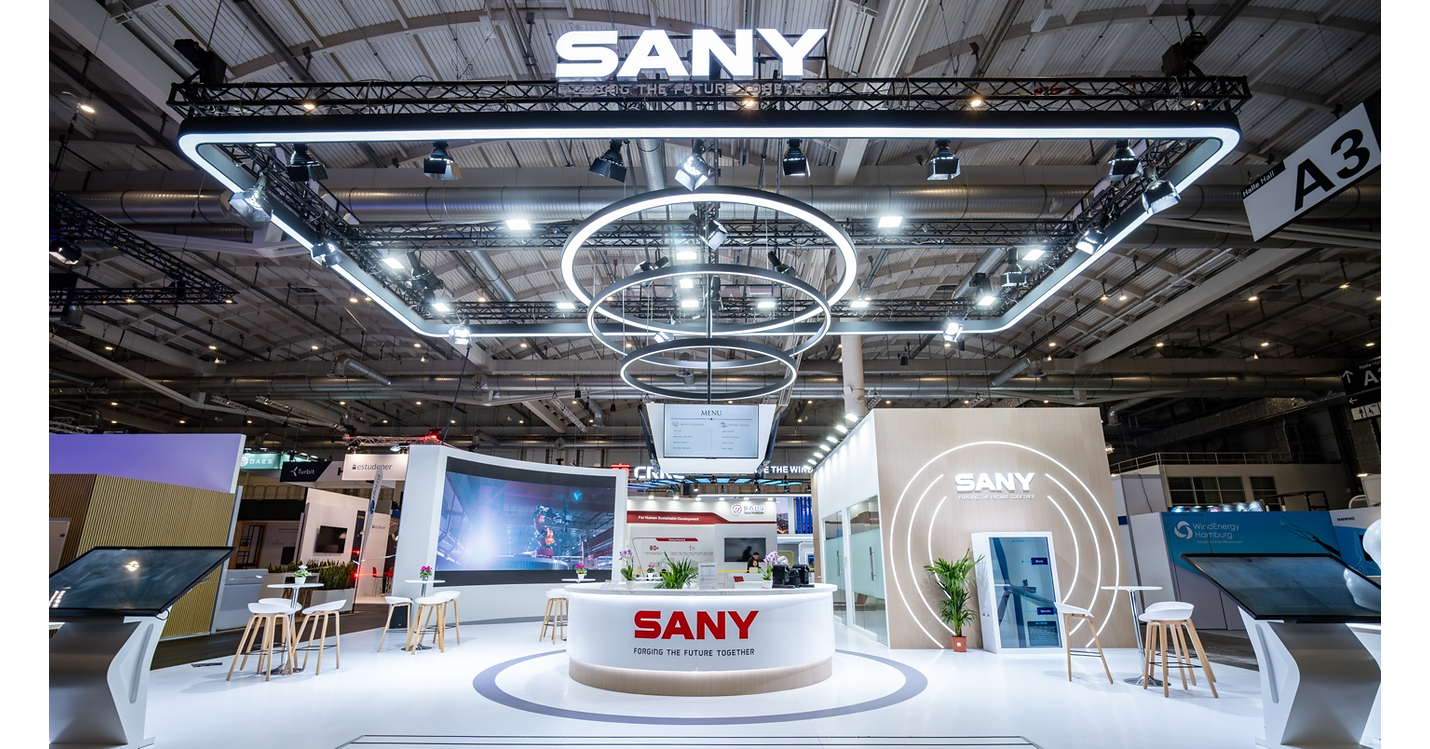
SANY Renewable Energy reported overseas revenue growth of more than 300% in H1 2026, with signed international orders approaching 5 GW and overseas installed capacity reaching 1,462.35 MW. DNV awarded European certification for SANY's SI-17578EU turbine, supporting its European expansion, while the company showcased 10 MW wind technology and AI-based blade-to-tower clearance modeling. Recent project milestones in Kazakhstan, Central Asia and Spain reinforce SANY's execution credentials and its push for global wind-market growth.
Analysis
The relevant read-through is not SPGI but a potential change in the competitive cost curve for onshore wind. If SANY converts certification into bankable European projects, incumbent OEMs—Vestas (VWS.CO) and Nordex (NDX1)—face pressure in price-sensitive tenders, particularly in Southern Europe and emerging-market export corridors where turbine availability, service coverage and financing are more important than established installed-base advantage. The initial impact should be modest: European procurement cycles, grid queues and lender qualification processes make a meaningful share shift a 12-36 month issue rather than a near-term earnings event.
The more investable second-order effect is on OEM margin discipline. European turbine manufacturers have recovered pricing partly by limiting low-return contracts; a credible Chinese 8-10MW alternative could force them to retain volume through lower equipment pricing or richer service guarantees. That risk is concentrated in new-build equipment margins, while incumbents' service businesses remain relatively insulated until the competing fleet reaches scale. GE Vernova (GEV) has less direct European onshore exposure than VWS.CO/NDX1, but broader grid-equipment demand could benefit if incremental wind deployments translate into transmission and interconnection spending.
This remains company-supplied growth and order data, not evidence of funded backlog or recognized revenue. The key verification points over the next 1-3 months are disclosed European awards, named project financiers, local service/hub commitments, and whether pricing is sufficiently low to win tenders without unusual warranty terms. A lack of financed EU orders by the next reporting cycle would indicate that certification is commercially useful but not yet a competitive inflection; conversely, multiple EU wins would justify a lower terminal-margin assumption for European OEMs.
Contrarian view: market concern over Chinese turbine competition may still be premature because trade remedies, local-content preferences, cybersecurity scrutiny and bankability requirements can protect incumbents even where turbine capex is lower. The more likely near-term effect is pricing pressure in Latin America, Central Asia and selected emerging Europe markets, where European OEMs already face weaker negotiating leverage. SPGI has no actionable fundamental exposure from its supplier classification activity; the data point is reputational rather than a revenue catalyst.
AllMind Terminal
AI-powered research, real-time alerts, and portfolio analytics for institutional investors.
Request TrialMarket Sentiment
Overall Sentiment
moderately positive
Sentiment Score
0.68
Ticker Sentiment
Key Decisions for Investors
- No directional SPGI trade: treat its connection as immaterial; require evidence of incremental ratings, benchmarks, or sustainability-product revenue before assigning a catalyst.
- Establish a 6-18 month watchlist short on VWS.CO versus long GEV only if SANY or other Chinese OEMs disclose at least two financed European projects or >1GW of named EU awards. Thesis is European onshore equipment-margin compression versus GEV's more diversified grid and power exposure; invalidate if Vestas sustains equipment EBIT margin guidance while European order pricing improves.
- For a cleaner emerging-market expression, monitor VWS.CO and NDX1 tender outcomes in Spain, Latin America and Central Asia over the next two quarters. Do not short on certification alone; enter only after confirmed order losses or management commentary indicating pricing concessions, with a stop on upward order-margin guidance.
- Long GEV on pullbacks remains the higher-quality indirect beneficiary if new wind capacity converts into grid capex, but require transmission-order evidence rather than extrapolating from turbine announcements. The principal risk is that project delays and interconnection bottlenecks defer grid spending by 12+ months.
- Track EU trade-policy and financing developments as the binary catalyst: a formal restriction on Chinese wind equipment would remove the competitive-margin thesis quickly, while lender acceptance and local service build-out would accelerate it.
More News
- AMC Entertainment stockholders approve equity plan amendment, reject board changes
- Treasury yields continue to rise after 10-year hit 19-year high as investors ramp-up rate hike bets
- Trump Versus Xi: How Their High-Stakes Summits Compare
- SEBI Allows Portfolio Managers to Invest Overseas, Short Equity Options
- Trump, Xi Address AI, Taiwan During State Visit
- Oracle Japan shares surge 7% after record fiscal first quarter, bucking selloff of U.S. parent