
Exobiosphere to Become the First Commercial Customer of Outpost's New Space Factories, Bringing Microgravity Drug Discovery to Orbit and Back
Source: PR Newswire
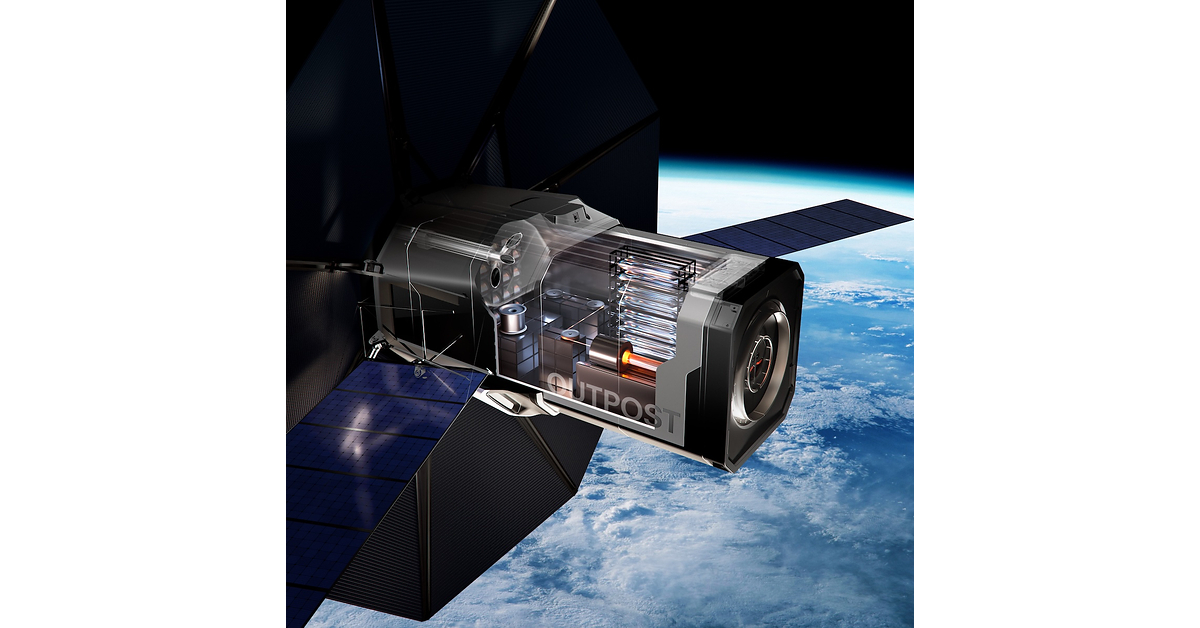
Outpost Technologies named space-biotech company Exobiosphere as the first announced customer for its Space Factories platform, with Exobiosphere's automated microgravity drug-discovery module scheduled to fly on Outpost's reusable CarryAll spacecraft. CarryAll is designed to return 200 kg to 10 metric tons of orbital cargo, providing reusable, precision-return logistics for research and manufacturing payloads. The commercial booking precedes Outpost's planned 2028 orbital mission and targets growing demand for post-ISS microgravity research and Earth-return capability ahead of the ISS's planned 2030 decommissioning.
Analysis
This is not yet a public-markets revenue event: both counterparties are private, commercial terms are absent, and the operational dependency chain remains unproven. The relevant read-through is that post-ISS LEO demand will increasingly be constrained by downmass capacity, landing reliability, and payload certification—not launch cadence alone. Public launch providers such as RKLB and SPCE/ASTR-like access proxies do not automatically capture this value; the better-positioned incumbents are vertically integrated operators with proven return systems, principally SpaceX privately and Northrop Grumman (NOC) through cargo/logistics heritage.
The first-order risk is schedule credibility. A planned inaugural orbital mission roughly two years away leaves substantial engineering, licensing, launch-integration, reentry, and customer-validation gates before any recurring service revenue can be underwritten. The 1-3 month catalyst is limited to financing or partnership announcements; over 6-18 months, a credible commercial-station award, launch contract, or independently disclosed backlog could validate a broader orbital-services bottleneck thesis. Failure to secure flight hardware milestones or a licensed landing architecture would sharply reduce the strategic value of the customer announcement.
Contrarian view: microgravity drug discovery is often framed as a platform breakthrough, but the economic hurdle is not scientific novelty—it is reproducibility and a measurable improvement in pharma R&D decision quality versus terrestrial automation. Until a customer publishes comparative hit-rate, crystallization, or time-to-candidate data, biotech demand should be valued as option demand rather than durable manufacturing demand. The nearer investable implication is modestly positive for commercial-LEO ecosystem suppliers, but insufficient to justify buying space-exposed public equities on this release alone.
AllMind Terminal
AI-powered research, real-time alerts, and portfolio analytics for institutional investors.
Request TrialMarket Sentiment
Overall Sentiment
moderately positive
Sentiment Score
0.50
Key Decisions for Investors
- No directional trade on the announcement; set an alert for disclosed mission financing, named launch provider, regulatory approval, and contracted backlog. Reassess only if these establish a funded path to the first flight within 12 months.
- Maintain NOC on a 6-18 month watchlist as a public logistics/space-station proxy, but require evidence that commercial-station demand is converting into funded cargo and return-service awards before initiating exposure.
- Avoid extrapolating this into a long RKLB solely on launch demand: the value pool described is return operations and payload handling, while launch is likely a pass-through cost. A trade becomes actionable only if RKLB is named as launch or systems supplier with contract economics.
- For private-market diligence, require independently verifiable technical milestones: reentry-test history, payload environmental specifications, landing permissions, insurance terms, and customer prepayments. Absence of these data should be treated as a high execution-risk signal rather than commercial validation.
More News
- Trump vs Europe as US presses for release of emergency diesel stocks
- FAA says Boeing 737 Max software glitch not a flight-safety issue
- Broadcom, Amazon Test Limits of Investor Demand for AI Buildout
- Your health insurance premiums may take a big jump in 2027 — here's why
- September Jobs Miss Shocks Markets
- Anthropic to invest $100 million to train AI engineer talent