
Sceye unterstützt SoftBank Corp. bei weltweit erster Vorführung einer Laserentfernungsmessung durch Verfolgung eines HAPS vom Boden aus
Source: PR Newswire
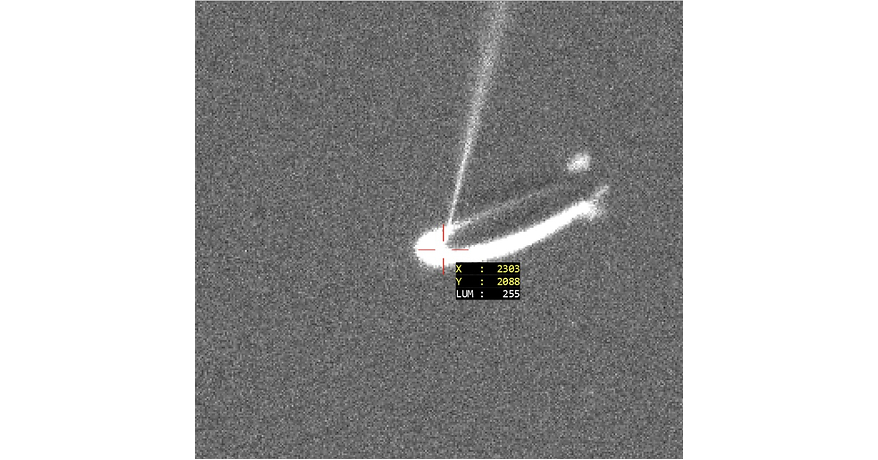
Sceye and SoftBank completed what they describe as the first real-time ground-based laser ranging and tracking demonstration of a stratospheric high-altitude platform system (HAPS), successfully receiving continuously reflected laser signals. The test was conducted during Sceye's 30-day ST1 mission, which covered nearly 30,000 km and included more than seven days operating over Japan. The result provides operational data for future optical free-space links connecting ground networks, HAPS and satellites, with potential applications in high-capacity connectivity, disaster recovery and Earth-observation data transfer.
Analysis
This is not yet a monetizable optical-network milestone: a retroreflector-ranging test validates pointing/acquisition geometry, but not the link-budget elements that determine commercial capacity—adaptive optics, weather availability, bidirectional terminal power, payload mass, and sustained data throughput. For SoftBank Corp. (9434 JP), the near-term P&L sensitivity is immaterial; the strategic value is optionality to backhaul rural/disaster coverage without paying for dense terrestrial fiber buildouts. The relevant valuation catalyst is a disclosed trial showing multi-Gbps throughput, uptime through adverse atmospheric conditions, and a deployable terminal cost, not another navigation or tracking demonstration.
If HAPS becomes a credible middle layer between towers and LEO, it is more substitutive to selective rural backhaul and emergency-connectivity spend than to global satellite networks. AST SpaceMobile (ASTS) and Globalstar (GSAT) could face a modest long-term competitive narrative risk in concentrated geographies where a regulator permits persistent stratospheric operations; Iridium (IRDM) is relatively insulated because its value proposition is global coverage and resilient narrowband service. The more immediate beneficiaries are optical-terminal and defense communications suppliers—L3Harris (LHX), CACI (CACI), and MDA Space (MDA CN)—but only if procurement programs convert experimental links into repeatable payload orders.
Consensus may overvalue the “first” label. Atmospheric optical links have a structurally non-linear availability problem: cloud cover and turbulence can make capacity effectively binary, requiring RF fallback, geographically diverse ground stations, or both. That redundancy can erase much of the theoretical cost advantage versus fiber or LEO; the thesis is falsified positively by independently reported availability and throughput across seasonal conditions, and negatively if terminal complexity or spectrum/aviation approvals delay commercial service beyond 2028.
AllMind Terminal
AI-powered research, real-time alerts, and portfolio analytics for institutional investors.
Request TrialMarket Sentiment
Overall Sentiment
moderately positive
Sentiment Score
0.62
Key Decisions for Investors
- No directional trade in 9434 JP or SFTBY on this release; treat as a 6-18 month strategic-optionality watch item. Reassess only following disclosed payload throughput, terminal cost, and a commercial deployment commitment; absent those data, a valuation rerating is unlikely.
- Maintain a relative-quality preference for IRDM over ASTS over the next 1-3 months if HAPS enthusiasm broadens: long IRDM / short ASTS in equal dollar risk can hedge non-terrestrial-connectivity beta while favoring existing revenue and lower dependence on unproven deployment economics. Exit if ASTS reports contracted revenue or commercial service metrics that materially exceed expectations.
- Create alerts for LHX, CACI, and MDA CN tied to funded government or carrier optical-terminal awards rather than demonstrations. A contract with recurring payload volume is the actionable confirmation; without it, these large diversified names have insufficient earnings sensitivity for a dedicated position.
- For a higher-risk thematic expression, avoid adding to GSAT on HAPS-related weakness until regulators clarify persistent HAPS operating rights in major markets. The downside case is localized emergency/rural substitution; the upside case remains satellite spectrum monetization, which this development does not directly impair.
More News
- Saudi, Turkish, Pakistani chiefs plan urgent talks amid Yemen fighting
- Oil falls amid optimism over potential diplomatic solution to the Iran conflict
- Trump Versus Xi: How Their High-Stakes Summits Compare
- Trump, Xi Address AI, Taiwan During State Visit
- Oracle Japan shares surge 7% after record fiscal first quarter, bucking selloff of U.S. parent
- China's Xi urges U.S. to cooperate on AI