
The ECB is virtually certain to hike rates Thursday. Here is why Wall Street is bracing for what comes next.
Source: MarketWatch
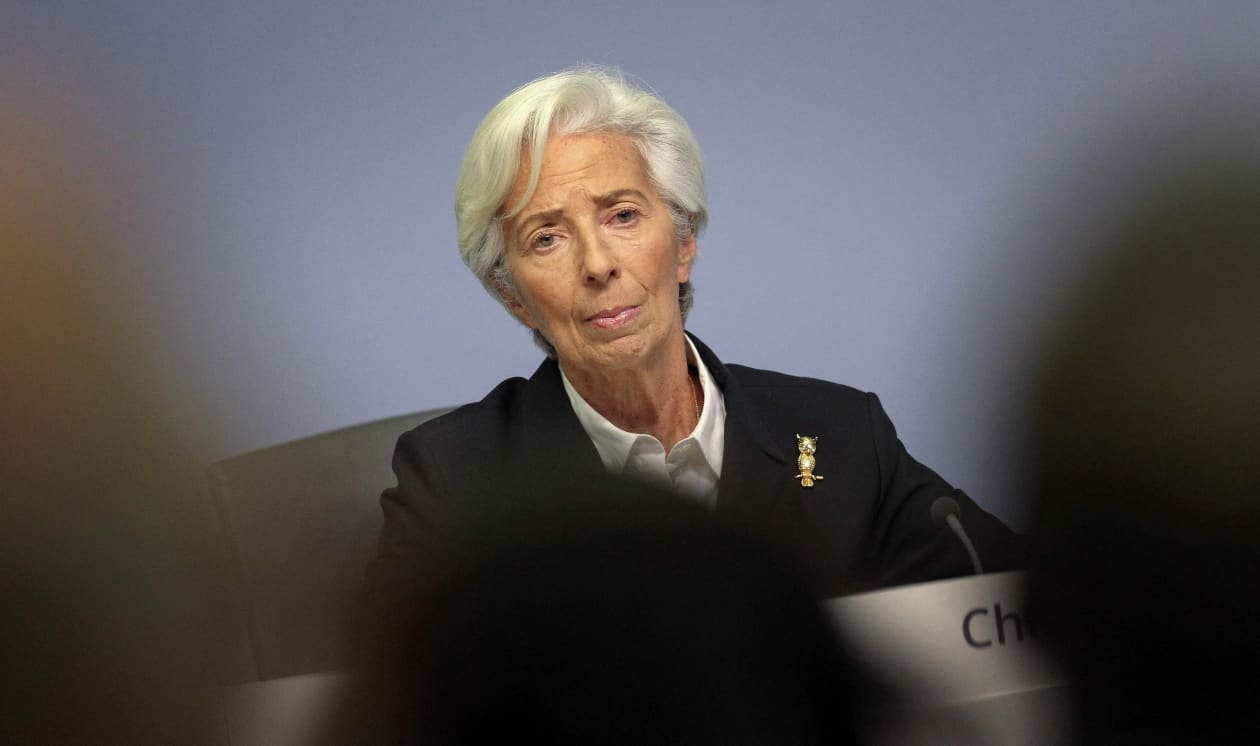
Futures markets assign a 99.7% probability that the ECB will raise rates 25bps to 2.5% on Thursday. The market focus is on whether President Christine Lagarde validates bond-market pricing for three additional 25bp hikes by June 2027 or retains policy flexibility. The ECB's path may depend on whether tensions in the Strait of Hormuz ease or escalate, while ING expects Lagarde to push back against aggressive tightening expectations.
Analysis
The investable question is not the decision itself but whether the ECB validates a policy path that is materially tighter than the growth backdrop can absorb. A refusal to pre-commit would likely remove premium from the EUR front end within days: Schatz yields should fall faster than Bund yields, producing a 2s10s bull-steepening impulse. That is negative for euro-area banks after an initial relief rally, since the market has already begun to price a higher-for-longer net-interest-income runway; rate-sensitive real estate, utilities, and highly levered cyclicals would benefit disproportionately from lower terminal-rate expectations.
Hormuz is a two-sided risk rather than a simple hawkish catalyst. A sustained energy-supply disruption raises headline inflation but simultaneously acts as a tax on European consumers and industrial margins, making additional tightening increasingly credit-destructive. Over 1-3 months, widening European high-yield spreads or deteriorating bank-lending data would force markets to price the growth channel ahead of the inflation channel; over 6-18 months, a persistent energy shock favors defensive quality exporters with pricing power over domestic demand and energy-intensive manufacturers.
Consensus appears too focused on the number of future hikes rather than the reaction function. If policymakers emphasize optionality and medium-term inflation rather than near-term energy prices, the likely repricing is dovish despite elevated oil; conversely, explicit concern about second-round wage effects would validate a higher front-end yield regime and pressure European duration-sensitive equities. The dovish-repricing thesis is falsified if 2-year German yields rise after the communication, EUR/USD strengthens, and euro-area inflation expectations move higher alongside broader credit-spread stability.
AllMind Terminal
AI-powered research, real-time alerts, and portfolio analytics for institutional investors.
Request TrialMarket Sentiment
Overall Sentiment
mixed
Sentiment Score
-0.10
Key Decisions for Investors
- Tactical long German 2-year duration via Schatz futures or equivalent 1-3 year German sovereign exposure, entered only if the ECB avoids language endorsing a defined multi-hike path. Target a 20-30 bp decline in 2-year yields over 1-3 months; exit if 2-year yields close 10 bp above the post-meeting level.
- Express a dovish repricing through a EUR rates bull-steepener: receive 2-year EUR swaps and pay 10-year EUR swaps for a 1-3 month horizon. The trade benefits if growth-risk repricing outweighs energy-driven inflation; stop if euro-area 5y5y inflation swaps break higher while credit spreads remain contained.
- Pair long European rate-sensitive equities through EXH1/European real-estate exposure versus short SX7E/European bank exposure after any post-meeting bank rally. Hold 1-3 months; the thesis is invalidated by explicit ECB guidance for several additional hikes or a renewed rise in long-end yields.
- Maintain a small upside hedge in Brent or ICE gasoil calls rather than outright short European equities. A Hormuz escalation can create a stagflationary outcome in which both rates and risk assets sell off, limiting the protection offered by the duration-long thesis.
More News
- Saudi Arabia intercepts missiles and drones as fighting with Houthis rages
- Here’s the ‘core economic flaw’ in the AI bull case as stock and bond trades unravel, according to a top economist
- Israelis hold final rally against Netanyahu ahead of what may be the most consequential election in the country’s history
- 5 big analyst AI moves: ’Uniquely catalyst-rich’ months ahead for SpaceX
- Braskem creditors, shareholders near deal on $11bn debt restructuring
- Brookfield to open Qatar office as it expands Middle East operations
From AllMind Research
- Anthropic IPO Preview: Valuation, Timing, and What to Watch
- Shein After the IPO: Venue, Valuation, and What Must Be Proved
- What AI Research Tools Should a Small Hedge Fund Buy First?
- How to Evaluate Consensus Estimates Platforms With AI
- Weekly Update: Adding Live MBO Level 3 Data - Liquidity Heatmap, OFI Charts, and More