
Optigo Networks Launches AI Assistant for OptigoVN, Making OT Network Diagnostics Anyone Can Act On
Source: PRWeb
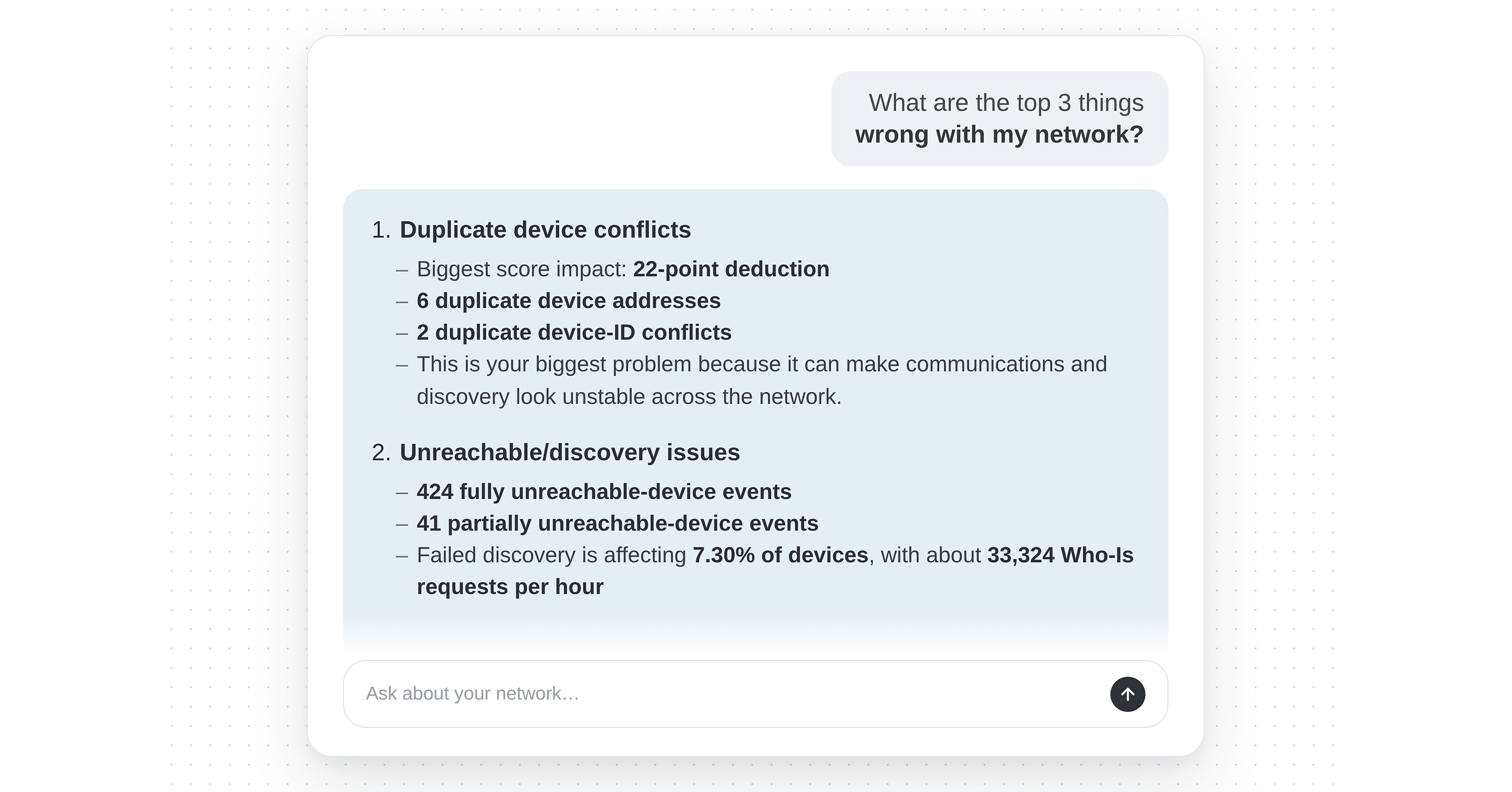
Optigo Networks publicly launched an AI Assistant embedded in its OptigoVN cloud platform for BACnet building-automation and OT-network monitoring. Trained in a closed environment using Optigo network data, documentation, and troubleshooting sessions, the tool provides root-cause analysis, recommended remediation steps, and automated punch lists, reports, and client communications. The Assistant is available in-app to eligible subscribers, aiming to reduce reliance on scarce technical expertise and shorten multi-day troubleshooting workflows.
Analysis
This is a private-company product announcement with no direct listed-equity read-through and insufficient evidence of incremental ARR, attach rate, pricing, or customer retention to support a trade. The relevant mechanism is labor substitution in fragmented building-controls service workflows: if deployment is reliable, diagnostic automation can reduce billable troubleshooting hours for systems integrators while increasing the capacity of their technicians. The near-term commercial benefit therefore depends less on model quality than on whether Optigo can monetize the feature as a paid tier rather than merely defend its existing SaaS base.
Public proxies are large building-automation platforms including JCI, CARR, TT, HON and Schneider Electric (SU.PA). Over 6-18 months, widespread AI-assisted commissioning and fault isolation could pressure service labor pricing at integrators but improve customer retention, retrofit conversion and recurring digital-service penetration for incumbents that own installed bases and workflow data. JCI and SU.PA have the clearest strategic exposure because they combine controls ecosystems with broad service channels; however, their scale makes any single niche vendor’s launch immaterial to earnings.
The contrarian view is that closed-domain diagnostic AI may be more defensible than generic copilots, but the moat is unproven until independently observable outcomes emerge: reduced truck rolls, lower mean-time-to-resolution, and paid-seat adoption. The principal risk to vendors is liability and trust: a confidently incorrect remediation recommendation in a critical facility can slow enterprise rollout and preserve demand for human review. No immediate equity trade is warranted.
AllMind Terminal
AI-powered research, real-time alerts, and portfolio analytics for institutional investors.
Request TrialMarket Sentiment
Overall Sentiment
moderately positive
Sentiment Score
0.48
Key Decisions for Investors
- No position on the announcement; treat it as a private-market/product signal rather than a tradable catalyst for JCI, CARR, TT, HON or SU.PA over the next 1-3 months.
- Add JCI and SU.PA to a 6-18 month watchlist for evidence that AI-enabled controls diagnostics is lifting digital-service ARR, service gross margin, or retrofit win rates; require management disclosure of measurable productivity gains before assigning multiple expansion.
- Monitor building-controls integrators and distributors for a second-order margin signal: sustained reductions in technician utilization or service revenue per installed site would indicate automation is cannibalizing labor revenue rather than expanding addressable service capacity.
- For any future long JCI/SU.PA thesis based on this theme, falsify on two consecutive quarters of flat-to-down service backlog, no improvement in service margin, or customer evidence that AI tools are shifting troubleshooting work away from OEM channels.
More News
- Saudi, Turkish, Pakistani chiefs plan urgent talks amid Yemen fighting
- Japan approval, a 27% surge: the diagnostics stock our models picked in September
- Trump Versus Xi: How Their High-Stakes Summits Compare
- Trump, Xi Address AI, Taiwan During State Visit
- SEBI Allows Portfolio Managers to Invest Overseas, Short Equity Options
- China's Xi urges U.S. to cooperate on AI