
Housing Market, Bathla, AI: Australia Briefing
Source: Bloomberg
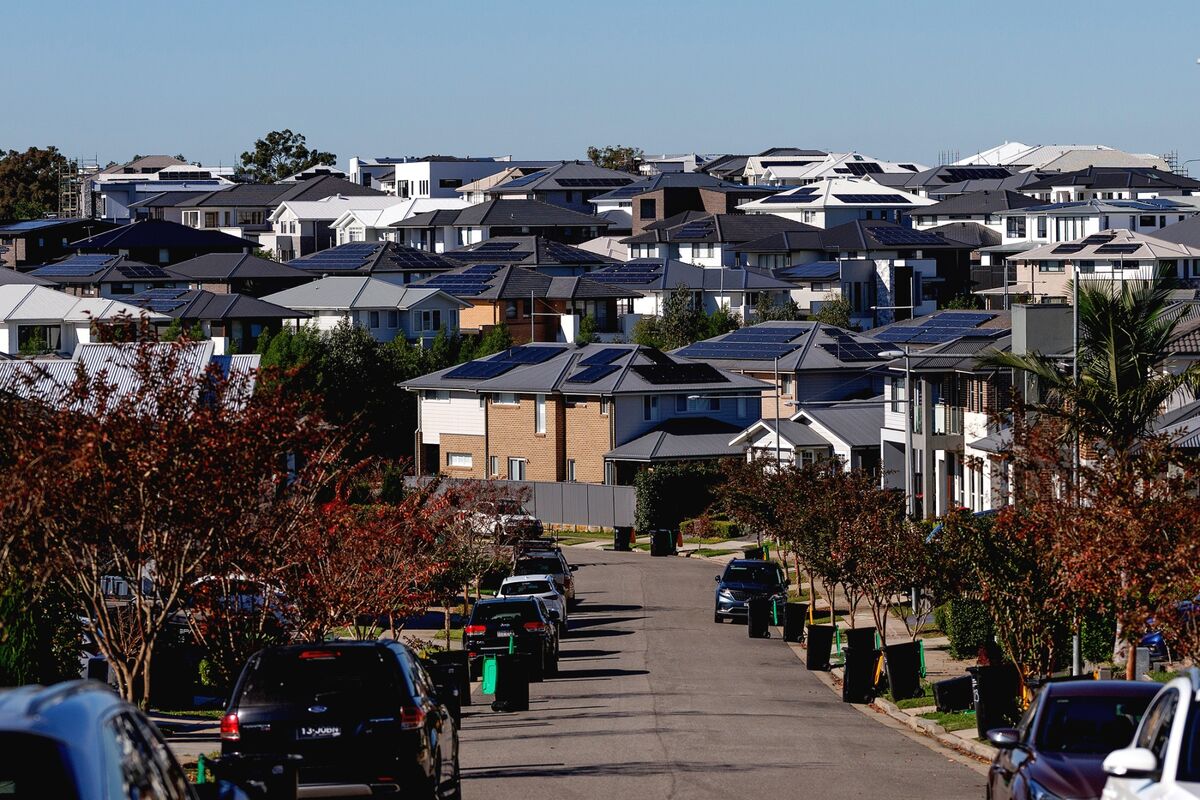
Australia's spring housing recovery failed to emerge, with capital-city auction volumes down about 34% year over year and clearance rates falling to 58.5%, versus nearly 75% a year earlier. The weak results signal continued cooling in the formerly strong property market following May property-tax changes and three Reserve Bank rate increases.
Analysis
The immediate equity read-through is more negative for transaction-linked platforms and discretionary housing exposures than for the major banks. REA Group (REA.AX) and Domain (DHG.AX) face a volume-led revenue headwind: lower listings reduce depth-product and agent-marketing spend, while weak clearance rates can delay vendor decisions and extend the downturn beyond the initial rate shock. Stockland (SGP.AX), Mirvac (MGR.AX), James Hardie (JHX.AX), Boral (BLD.AX) and Reece (REH.AX) have greater 6-18 month exposure through lower new-dwelling commencements, although an existing-home turnover slowdown is not yet equivalent to a construction collapse.
For CBA, WBC, NAB and ANZ, the near-term effect is less about mortgage demand than credit normalization. Higher rates initially support asset yields, but a sustained decline in housing liquidity raises refinancing risk, broker competition for prime borrowers and eventual impairment charges; regional banks with more concentrated mortgage books are likely more exposed than CBA. The key non-obvious risk is that reduced transaction activity weakens consumer spending through renovation, furnishings and relocation outlays, creating a second-round deterioration in unsecured-credit and SME portfolios over the next two reporting periods.
The contrarian case is that auction data are noisy and supply constrained: lower listings can support prices even as turnover falls, limiting collateral losses and making an outright bank short premature. A durable trade signal requires confirmation from monthly listings, mortgage arrears, housing-credit growth and developer presales. Reacceleration in clearance rates above roughly 65%, or an RBA pivot that materially lowers terminal-rate expectations, would likely trigger a sharp short-covering rally in rate-sensitive property and building-materials names.
AllMind Terminal
AI-powered research, real-time alerts, and portfolio analytics for institutional investors.
Request TrialMarket Sentiment
Overall Sentiment
moderately negative
Sentiment Score
-0.45
Key Decisions for Investors
- Prefer a 1-3 month relative-value position long CBA.AX / short REA.AX or DHG.AX in equal beta-adjusted amounts. Banks retain earnings support from existing loan books while portal revenue is more directly geared to listing volumes; exit if national listing growth turns positive for two consecutive monthly prints or clearance rates recover above 65%.
- Underweight REH.AX and BLD.AX versus defensively positioned Australian industrials over 6-12 months, rather than initiating an outright housing-sector short. The thesis requires falling building approvals and weaker renovation demand; falsify on a sustained recovery in approvals or company guidance maintaining volume growth.
- Do not short the Australian majors outright solely on auction results. Set an alert to revisit a short WBC.AX or ANZ.AX versus CBA.AX if 90+ day mortgage arrears accelerate for two quarters or impairment guidance rises; that would convert a turnover slowdown into a bank-credit catalyst.
- For investors needing macro protection over the next 3-6 months, use put spreads on the S&P/ASX 200 A-REIT index (XPJ) rather than broad ASX 200 downside, as property valuations remain most exposed to higher discount rates and slower residential activity. Size modestly because a rate-cut repricing can overwhelm weak housing data.
More News
- Trump says Iran war will end 'when I want it to' as costs reportedly balloon to $47 billion
- Fed expected to hold rates steady, but Warsh may point way to more hikes
- Analysis-Hold or sell? High Treasury yields spur US banks to rethink bond portfolios
- Oil rebounds as Houthi attacks on Saudi Arabia overshadow diplomatic efforts
- RBNZ holds rates at 2.75% in split vote, signals further hikes likely
- India’s Record Bank Cash Surplus Fades as RBI Curbs Rupee Bets