
Oracle Beats Q1 Estimates as AI Optimism Grows: How to Play the Stock
Source: zacks.com
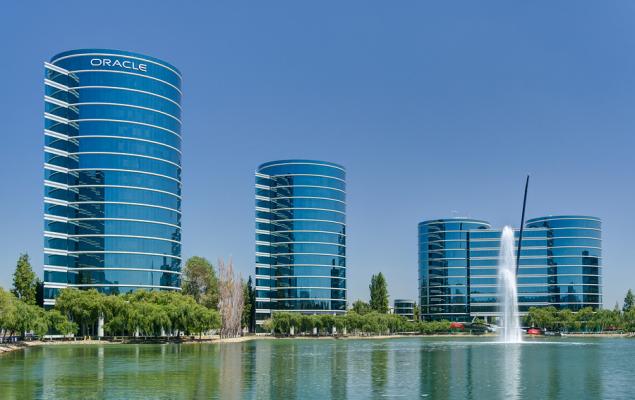
Oracle reported fiscal Q1 2027 revenue growth of 30% to $19.3 billion, while cloud revenue rose 62% to $11.6 billion and cloud infrastructure revenue surged 121%. Remaining performance obligations increased by $209 billion year over year to $664 billion, but free cash flow remained negative as Oracle plans $90-$95 billion of fiscal 2027 capital expenditures for AI data-center expansion. Despite ORCL's 27.9% year-to-date decline, its 15.8x forward P/E is below the software-industry average of 23.16x; the article maintains a Hold view pending clearer evidence of capex discipline and improving free-cash-flow generation.
Analysis
The investable question is not demand but conversion: contracted capacity only supports valuation if power delivery, site completion and customer utilization turn into revenue faster than depreciation, interest expense and lease obligations. ORCL’s build model makes it more operationally levered than AMZN, MSFT or GOOGL; a modest commissioning delay can defer high-margin consumption while fixed infrastructure costs begin immediately. Over the next 1-3 months, the key catalyst is evidence that incremental capacity is billing at attractive utilization rather than merely expanding committed backlog.
Second-order beneficiaries are AI infrastructure vendors with exposure to Oracle’s accelerated build cycle—particularly networking, power/cooling and data-center electrical supply chains—rather than application software. The competitive read-through for MSFT/GOOG is nuanced: Oracle’s capacity expansion can validate aggregate enterprise AI demand, but its multi-cloud positioning may also reduce customer lock-in and increase cloud price competition. That would favor enterprise buyers and pressure cloud gross-margin expectations across hyperscalers over the next 6-18 months.
Consensus appears too willing to capitalize backlog at face value. A large portion may be concentrated among a limited number of compute-intensive counterparties, subject to cancellation, repricing, delivery milestones or financing constraints; the missing data are customer concentration, contract duration, take-or-pay terms, and the share tied to unbuilt capacity. ORCL can rerate if quarterly cloud growth persists while capex-to-revenue peaks, but a missed commissioning target, weaker operating-cash-flow conversion, or another upward capex revision would expose the equity to multiple compression despite strong headline demand.
AllMind Terminal
AI-powered research, real-time alerts, and portfolio analytics for institutional investors.
Request TrialMarket Sentiment
Overall Sentiment
mildly positive
Sentiment Score
0.38
Ticker Sentiment
Key Decisions for Investors
- Maintain ORCL as a tactical long only against a defined catalyst: add after the next earnings release if cloud growth remains above 50% and management does not raise the capex envelope. Target a 15-20% 3-6 month rebound from multiple normalization; exit if utilization commentary weakens or fiscal-year capex rises above guided range.
- Express relative value via long ORCL / short IGV in equal beta-adjusted notional for 3-6 months. The pair isolates OCI conversion upside against software-sector exposure, but cut the trade if ORCL free-cash-flow burn accelerates for two consecutive quarters or IGV declines materially on broad rates risk.
- Do not chase QNT or QBTS on partnership headlines. Treat any move as a liquidity-driven event until disclosed contract value, revenue contribution and deployment timetable are independently measurable; these names remain unsuitable as a fundamental read-through on OCI demand.
- Create an alert around the next ORCL filing for customer concentration, remaining-performance-obligation timing, debt maturities and capex financing. A material increase in leverage or longer RPO recognition duration would shift the preferred expression to short ORCL versus long MSFT, whose balance sheet and enterprise distribution better absorb a prolonged infrastructure arms race.
More News
- Investors react to Fed hike and market sell-off: Brace for 'higher for longer' rates
- The Competition's Response to Tesla Robotaxi Day
- Generac's stock soars more than 30% after Amazon deal cements its status as AI power player
- Snap tries to bring AR glasses to enterprise market, partnering with Nvidia, AWS and Salesforce
- Hyperscaler debt signals warning sign, Apollo cautions
- US retail sales rebound more than expected in August; import prices surge