
Union Pacific Rolls Out First Two Battery-Electric Locomotives in California
Source: zacks.com
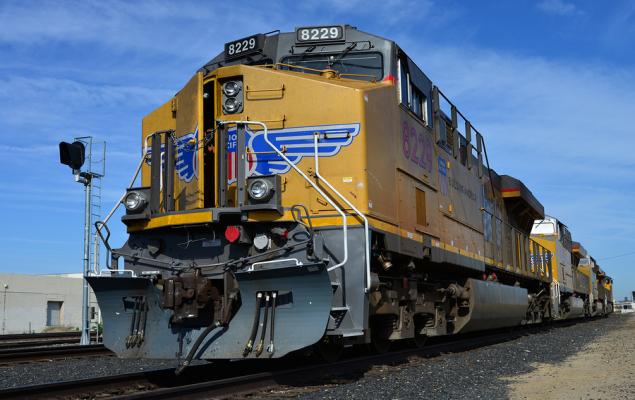
Union Pacific deployed its first two Wabtec FLXdrive battery-electric locomotives in Southern California, with two additional units due in October 2026 to complete a four-locomotive Los Angeles fleet. Each unit provides nearly 2.7 MWh of storage using roughly 7,000 battery cells and produces zero tailpipe emissions. The operational testing is intended to assess reliability, efficiency and the technology's potential role in Union Pacific's longer-term fleet modernization and emissions-reduction strategy.
Analysis
This is not yet an earnings-relevant decarbonization event for UNP: a four-unit pilot cannot move fuel expense, locomotive capex, or network productivity at a company-wide level. The investable output is operational data from Los Angeles switching duty—battery degradation, charging-cycle availability, and utilization versus diesel—which will determine whether battery locomotives become a niche yard/local-service product or remain a costly demonstration. Near term, the announcement should not alter UNP estimates; treating it as a catalyst for SHIP or SNDR is unsupported by any direct economic linkage.
WAB is the cleaner option on a successful pilot because validation reduces adoption friction across North American Class I railroads, potentially expanding an aftermarket, controls, and charging-infrastructure opportunity beyond the initial locomotive sale. However, rail battery economics are structurally constrained by duty cycle, charging dwell time, battery replacement cost, and the high opportunity cost of taking locomotives out of service. A favorable result over 6-18 months would likely favor WAB and battery-system suppliers more than UNP, while widespread deployment could ultimately pressure diesel-locomotive service and fuel-volume demand rather than create a near-term rail margin windfall.
The contrarian view is that zero-tailpipe-emission equipment in Southern California has strategic value even with unattractive standalone payback: local air-quality rules, customer Scope 3 procurement requirements, and port-area permitting can make battery switching equipment economically rational before network-wide fuel savings appear. Conversely, the market may over-credit ESG optics if the pilot shows lower availability or requires incremental spare capacity; any productivity penalty would reinforce railroads' preference for diesel modernization and hybrid configurations.
Key catalysts are UNP/WAB disclosures on availability, energy cost per locomotive-hour, maintenance intervals, and whether orders expand after the fleet is fully delivered. Thesis failure for WAB is no follow-on order or a disclosed reliability/productivity shortfall by the first post-completion operating update; upside validation requires an identifiable multi-railroad order pipeline, not promotional language.
AllMind Terminal
AI-powered research, real-time alerts, and portfolio analytics for institutional investors.
Request TrialMarket Sentiment
Overall Sentiment
mildly positive
Sentiment Score
0.32
Ticker Sentiment
Key Decisions for Investors
- No directional UNP trade on this announcement; maintain existing exposure only. Reassess over the next 6-12 months if management quantifies fuel, availability, or labor-productivity benefits sufficient to affect the operating ratio.
- Place WAB on a 6-18 month accumulation watchlist rather than chase near-term strength. Initiate only following evidence of follow-on Class I orders or quantified pilot utilization; use a relative-value framework, long WAB versus short IYT, to isolate electrification/order-conversion upside from freight-cycle beta.
- Monitor WAB order backlog, locomotive-margin commentary, and announced charging/energy partners at each earnings release. A multi-customer expansion would support multiple upside; absence of commercial conversion after fleet completion is a signal to avoid the theme.
- Do not use SHIP or SNDR as read-through vehicles: their earnings drivers are dry-bulk rates and truckload freight conditions, respectively, not battery-locomotive adoption. Remove any mechanically induced news-driven exposure in those names.
More News
- Oil prices jump after Yemen’s Houthis claim attacks on Saudi facilities
- Saudi, Turkish, Pakistani chiefs plan urgent talks amid Yemen fighting
- Oil falls amid optimism over potential diplomatic solution to the Iran conflict
- Trump Versus Xi: How Their High-Stakes Summits Compare
- Trump, Xi Address AI, Taiwan During State Visit
- China's Xi urges U.S. to cooperate on AI