
Zendure Introduces Agentic HEMS at IFA 2026: "The Home Energy Hub of the AI Era"
Source: PR Newswire
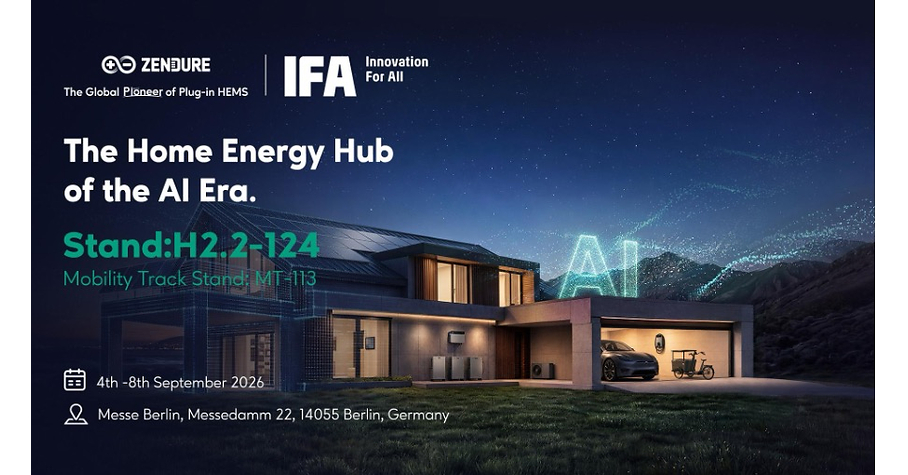
Zendure will introduce its Agentic HEMS at IFA 2026, positioning it as an autonomous home energy system that predicts, plans, and acts using the ZenPulse forecasting model, ZENKI AI agents, and the open Zen+OS platform. The platform integrates with major smart-home standards (e.g., MQTT, Home Assistant) and connects to 870+ energy providers across Europe, while also supporting dynamic tariff operation via ZenWave for lower-cost charging. While specific financial metrics are not provided, the announcement is a product/technology expansion likely to modestly improve expectations for Zendure’s HEMS ecosystem and customer adoption.
Analysis
This is more of a category signal than a near-term earnings event. The actionable takeaway is that behind-the-meter energy is moving from device sales toward software-defined orchestration, which raises the value of installed base, tariff data, and interoperability while compressing the moat of anyone selling only hardware. If consumer adoption broadens, the economic winner is whoever can monetize recurring control layers and grid services, not the low-end box seller; that favors ecosystem players with software attach and punishes closed, inverter-centric stacks over 6-18 months.
For public markets, the cleanest read-through is relative, not absolute. The first-order beneficiaries are names with a large residential energy footprint and the ability to upsell monitoring, storage, EV charging, and load management; the second-order loser is any OEM whose channels get commoditized by open APIs and installer-friendly plug-and-play bundles. A broader implication is that utilities and demand-response aggregators could see the customer relationship migrate upward into the home OS, reducing their pricing power if these platforms become sticky.
The setup is not strong enough for a thematic chase today because the claim set is ahead of verifiable monetization. The key falsifier is lack of conversion in partner ecosystem data, attach rates, or margin expansion by the next 1-2 earnings cycles; if hardware ASPs fall faster than software revenue grows, this becomes a race to the bottom. In the near term, the stock-market impact should remain muted unless a larger incumbent cites similar demand or a retailer/distributor confirms pull-through.
AllMind Terminal
AI-powered research, real-time alerts, and portfolio analytics for institutional investors.
Request TrialMarket Sentiment
Overall Sentiment
mildly positive
Sentiment Score
0.20
Key Decisions for Investors
- No direct trade in AERA/CETY/IUSDF; treat as noise unless channel checks show meaningful residential storage revenue linkage over the next 1-2 quarters.
- 1-3 month relative-value idea: long ENPH / short SEDG on the thesis that open, software-led home-energy orchestration supports premium multiples for the stronger ecosystem player; stop if SEDG shows accelerating software attach or ENPH guides to margin compression.
- Watchlist, not a trade: TSLA as a longer-dated beneficiary if home-energy-to-EV integration becomes a consumer habit; only actionable if energy segment disclosures or margins improve over 2-4 quarters.
- If you want a tighter risk-defined expression, buy a small ENPH call spread 3-6 months out into earnings only if distributor checks confirm residential storage demand; otherwise stand aside.
More News
- Iran says two tankers catch fire after hitting mines in Strait of Hormuz
- Why Marco Rubio’s visit to Mumbai has ruffled feathers in India
- US and Iran both claim control of Strait of Hormuz amid attacks on vessels
- AI stocks plunge. Inflation heats up. Where we're still finding opportunities
- Bending Spoons wants to revive software castoffs. Berkshire is backing the plan
- AI rapidly improving, could vastly boost U.S. GDP, Anthropic's Clark tells policymakers