
‘I just want out’: Why Jeffrey Gundlach is moving his money as far from AI as possible — and what he’s doing instead
Source: MarketWatch
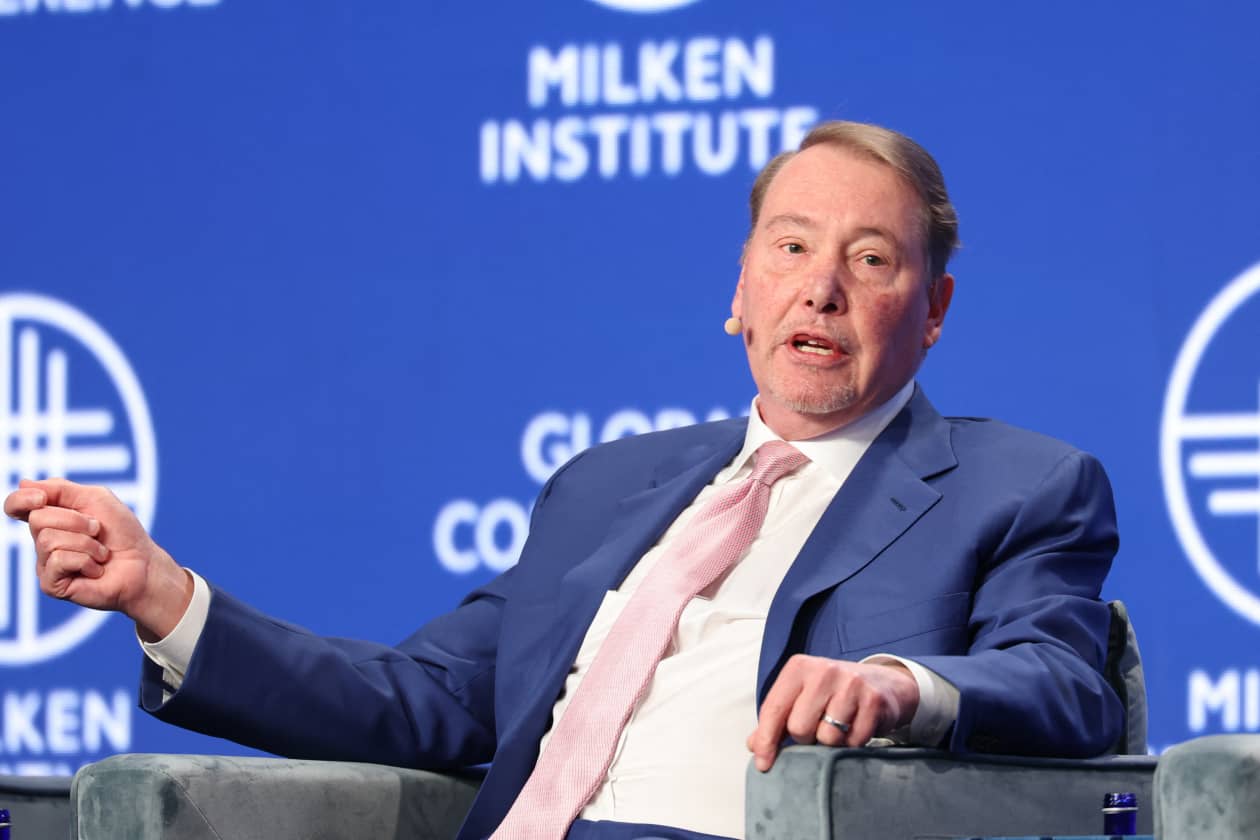
DoubleLine CEO Jeffrey Gundlach warned that investors are on the “hard side of the street” in the AI trade and said he wants out of its epicenter. He cut his recommended equity allocation to 30% from 40% and suggested concentrating that exposure in a single Fortune 500 equal-weighted index, signaling a more defensive positioning stance.
Analysis
This is primarily a positioning signal rather than a new fundamental datapoint. A high-profile AI skeptic can amplify de-risking in the most crowded, high-beta beneficiaries—particularly semiconductor equipment, networking and unprofitable AI-adjacent software—but it does not alter hyperscaler capex plans or earnings until guidance changes. The near-term vulnerability is therefore valuation and flow-driven: a modest decline in risk appetite can produce outsized downside where ownership concentration, elevated multiples and passive benchmark weight overlap.
The more consequential second-order effect would be a rotation from capex suppliers into broad-market equal weight and cash-generative value. If AI spending shifts from an infrastructure buildout to a monetization debate, NVDA/AVGO/ANET/SMCI and equipment names such as ASML/LRCX face multiple compression before revenue estimates fall; diversified software incumbents with embedded distribution—MSFT, ORCL and ADBE—could prove relatively defensive because monetization matters more than token-growth narratives. Equal-weight outperformance versus cap-weight over the next 1-3 months would confirm that breadth, rather than AI leadership, is becoming the marginal buyer's preference.
Contrarian view: public calls to exit crowded themes often arrive after volatility has already risen, and a wholesale short of AI is poorly timed absent evidence of demand cancellation. The thesis is falsified by another round of upward hyperscaler capex revisions, sustained AI-chip lead-time tightness, or NVDA/AVGO guidance that supports current revenue trajectories. The key 6-18 month risk remains not demand disappearance but diminishing incremental returns on AI capex, which would pressure customer free cash flow and ultimately force spending discipline.
AllMind Terminal
AI-powered research, real-time alerts, and portfolio analytics for institutional investors.
Request TrialMarket Sentiment
Overall Sentiment
mildly negative
Sentiment Score
-0.30
Key Decisions for Investors
- Reduce concentrated AI-beta exposure over the next days/weeks; prioritize trimming SMCI, ANET and the highest-multiple semiconductor names before reducing profitable platform exposure such as MSFT. This is a drawdown-control action, not a structural short.
- Establish a 1-3 month relative-value basket: long RSP / short QQQ in equal dollar notional. The trade monetizes a breadth rotation while limiting outright equity-beta risk; exit if QQQ resumes sustained relative outperformance following major-capex guidance.
- For existing NVDA or AVGO longs, replace part of spot exposure with defined-risk call structures or collars through the next earnings cycle. Do not add bearish exposure solely on sentiment; add only if hyperscaler capex guidance or AI infrastructure order commentary rolls over.
- Monitor MSFT, AMZN, GOOGL and META quarterly capex guidance and free-cash-flow conversion. A broad upward revision in capex without corresponding cloud/AI revenue acceleration is the actionable 6-18 month signal to underweight semiconductor infrastructure versus software and equal-weight equities.
More News
- Oil Traders Stymied by Iran War Stalemate: Evening Briefing Americas
- Australia’s central bank chief warns inflation risks materialising
- This AI-picked stock jumps 18% on Amazon’s $8 billion power deal
- Asian stocks rise as oil retreat eases inflation fears, BOJ in focus
- California AG Bonta on Paramount-Warner Bros., Meta and AI
- A breakout in the 10-year Treasury yield could hold back stocks if it reaches this level
From AllMind Research
- Anthropic IPO Preview: Valuation, Timing, and What to Watch
- Shein After the IPO: Venue, Valuation, and What Must Be Proved
- What AI Research Tools Should a Small Hedge Fund Buy First?
- State of Public Markets, June 2026: Higher for Longer Meets the AI Supercycle
- AI Research Tools With Exact Source Citations