
From Grid Connection to Critical Loads: Daqo Demonstrates Integrated Power Capabilities for the Middle East and Africa
Source: PR Newswire
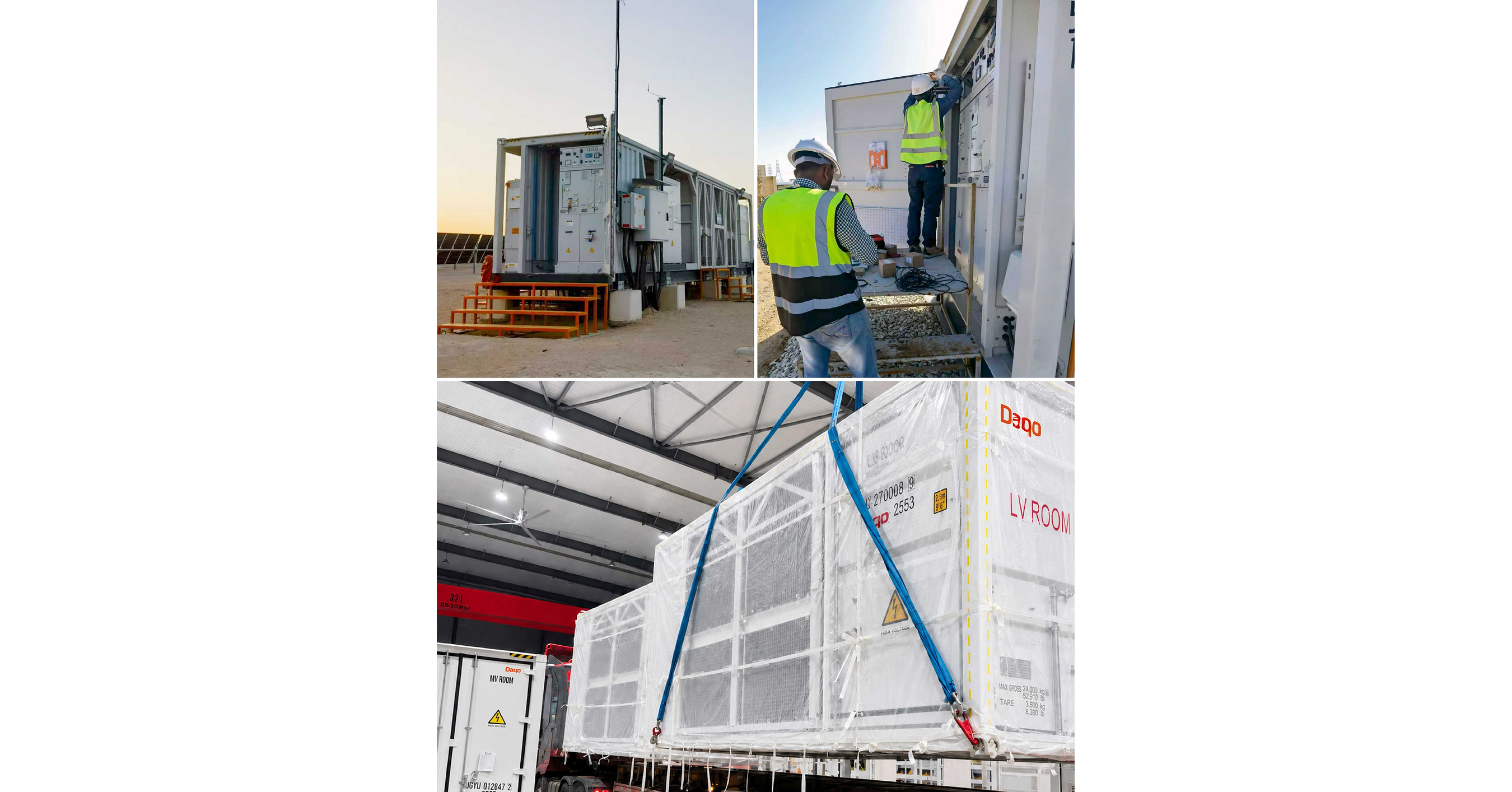
Daqo highlighted integrated electrical infrastructure capabilities tailored to Middle East and Africa projects at Middle East Energy 2026, spanning medium/low-voltage switchgear, transformers, busway, prefabricated substations, and E-Houses. The company claims a single engineering and manufacturing platform to reduce supplier handoffs and streamline commissioning, plus manufacturing scale across 32 companies and four research institutes to support transformer and switchgear lead times. It also cites 2,300+ patents and 450+ certifications, with regional support via Daqo Electric MEA FZCO for UAE, Saudi Arabia, Qatar, Jordan, Oman, and broader Africa applications.
Analysis
This reads more like a positioning statement than a hard catalyst: the investable angle is not near-term revenue, but whether integrated electrical packages can win share in regions where schedule risk matters more than unit price. If the thesis is real, the margin pool shifts upstream toward engineered switchgear, transformers, and prefabricated substations while commoditized local assembly and EPC coordination get squeezed.
The second-order winner set is broader than the named company: global electrification leaders with regional service footprints and modular data-center power offerings should benefit if MEA capex continues to tilt toward critical-load resilience. That favors ABB, Schneider Electric, Eaton, and Vertiv over smaller fabricators, because buyers increasingly pay for bankable delivery, testing, and commissioning risk transfer. The loser is the fragmented local supply chain that loses interface economics when a single vendor can package design-through-installation.
The problem is timing and verifiability. A showcase at an industry event does not prove backlog conversion, pricing power, or margin durability, and this kind of narrative can fade quickly if project awards slow or if customers revert to lowest-bid procurement. Over 6-18 months, the true falsifier is order growth and gross margin mix at the relevant industrial-electrical names; if those do not inflect, the story is mostly marketing.
Contrarian view: the market may be underestimating how much data-center and grid-reliability demand in the Gulf can support premiumization, but it may also be overestimating how quickly that demand accrues to any single vendor. In MEA, localization rules and EPC relationships can blunt share gains, so the strongest trade is usually the diversified global platform with local execution rather than the event exhibitor itself.
AllMind Terminal
AI-powered research, real-time alerts, and portfolio analytics for institutional investors.
Request TrialMarket Sentiment
Overall Sentiment
neutral
Sentiment Score
0.10
Ticker Sentiment
Key Decisions for Investors
- No immediate standalone trade in DQ/SCPAF; treat this as a watch item until there is disclosed order intake, backlog, or margin data over the next 1-2 quarters.
- If you want exposure to the theme, prefer long ABB or Schneider Electric versus local/regional electrical contractors over a 3-6 month horizon; the risk/reward is better because they capture modularity and service premiums without single-project concentration.
- Consider a pair trade: long VRT or ETN, short a basket of smaller EPC/industrial fabrication proxies, on the view that critical-load and prefab solutions take share from low-value assembly over 6-12 months.
- Set an alert for confirmed MEA order conversion or guidance raise; if not visible by the next earnings cycle, fade the theme and avoid paying up for narrative-driven rerating.
More News
- Latest Oil Market News and Analysis for Sept. 22
- UK to refuel Saudi jets to help counter Houthi attacks
- World Leaders Converge on United Nations General Assembly
- Oil Settles Near $100 as Hormuz Flows Stunt Rally
- Kallas Urges EU to Bolster Red Sea Mission Against Houthi Threat
- Intel surges 12% as CPU stocks rally. Here's what's driving the move