
DoGo Power Launches Commercially‑Available Grid‑Forming ESS for C&I and Utility‑Scale Projects
Source: PR Newswire
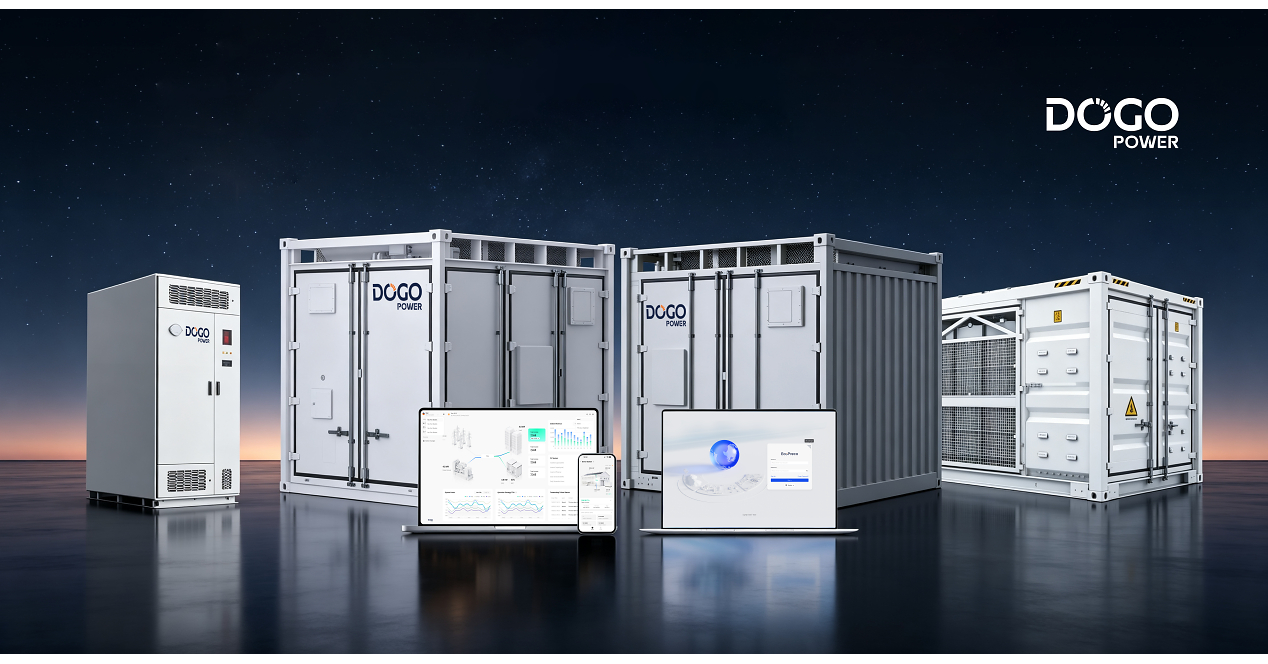
DoGo Power launched a grid-forming energy-storage portfolio for C&I and utility-scale projects, available for immediate global shipment. Its 1.672 MWh 10-foot C&I system claims to cut initial CAPEX by 1.2 US-cents/Wh, reduce footprint by 35%, and shorten project timelines by 5-7 days. In an Indonesian off-grid PV-ESS demonstration serving more than 3,000 residents, the company said electricity costs fell 81% from a prior 35 US-cents/kWh, while lifecycle output is projected above 26 million kWh with more than 22,000 tonnes of CO2 emissions avoided.
Analysis
The investable implication is not a direct equity catalyst—DoGo Power appears private—but a potential acceleration of storage-system commoditization at the smaller, access-constrained end of utility and C&I markets. If its claimed integration economics are reproducible, standalone container, transformer and balance-of-system vendors face modest pricing pressure, while grid-forming controls become a procurement requirement rather than a premium feature. This is incrementally negative for gross-margin assumptions at pure-play integrators such as FLNC, but could expand the addressable market for storage deployments faster than it erodes pricing.
The key near-term question is whether the claimed cost and installation advantages translate into independently disclosed orders, bankability approvals, and financing acceptance. A product launch without tier-1 cell sourcing, warranty backing, performance guarantees and grid-operator certifications does not change competitive economics; the relevant 1-3 month catalyst is evidence of wins in Southeast Asia, island grids or constrained-site tenders. For 6-18 months, tighter grid-forming requirements favor companies with validated inverter controls and fleet software, including TSLA, FLNC and GEV, even as hardware margins compress.
Contrary to an initial read-through, incumbent storage providers are not necessarily disadvantaged. Grid-forming capability raises project complexity, liability and commissioning risk; utilities may pay for proven performance rather than select the lowest CAPEX bidder. The sharper risk is to suppliers of discrete electrical equipment—particularly where integrated architectures eliminate cabinets and site labor—though material equity impact requires demonstrated volume rather than a single vendor's marketing claims.
AllMind Terminal
AI-powered research, real-time alerts, and portfolio analytics for institutional investors.
Request TrialMarket Sentiment
Overall Sentiment
moderately positive
Sentiment Score
0.58
Key Decisions for Investors
- No immediate directional position on the release; set a 90-day diligence alert for disclosed third-party certifications, project awards, warranty terms and named cell suppliers. Absence of these datapoints should prevent extrapolation of advertised unit-cost savings into listed-peer margin risk.
- Maintain a constructive 6-18 month bias toward GEV and FLNC only on confirmed grid-forming tender growth; use quarterly backlog, storage revenue and gross-margin guidance as validation. Exit or reduce if storage backlog conversion weakens or gross margin falls despite revenue growth, signaling price-led commoditization.
- For a defensive relative-value expression, prefer long GEV versus short FLNC over the next 1-3 quarters if procurement data show grid-forming demand rising but integrator pricing declining. GEV has broader grid-equipment and service exposure; the thesis fails if FLNC demonstrates stable or expanding storage gross margin and materially outgrows GEV's electrification backlog.
- Monitor ETN and ABB for a second-order negative mix signal rather than shorting now: sustained adoption of highly integrated storage packages could reduce per-project demand for discrete switchgear and transformer content. Act only if management commentary identifies storage-related order or pricing pressure, since broader electrification demand likely dominates this effect.
More News
- Saudi, Turkish, Pakistani chiefs plan urgent talks amid Yemen fighting
- Trump Versus Xi: How Their High-Stakes Summits Compare
- Trump, Xi Address AI, Taiwan During State Visit
- China's Xi urges U.S. to cooperate on AI
- Oracle Japan shares surge 7% after record fiscal first quarter, bucking selloff of U.S. parent
- Trump Hosts China’s Xi With Trade, AI, Taiwan in Focus