
CRRC finaliza la producción de una pala de turbina eólica reciclable de 110 metros
Source: PR Newswire
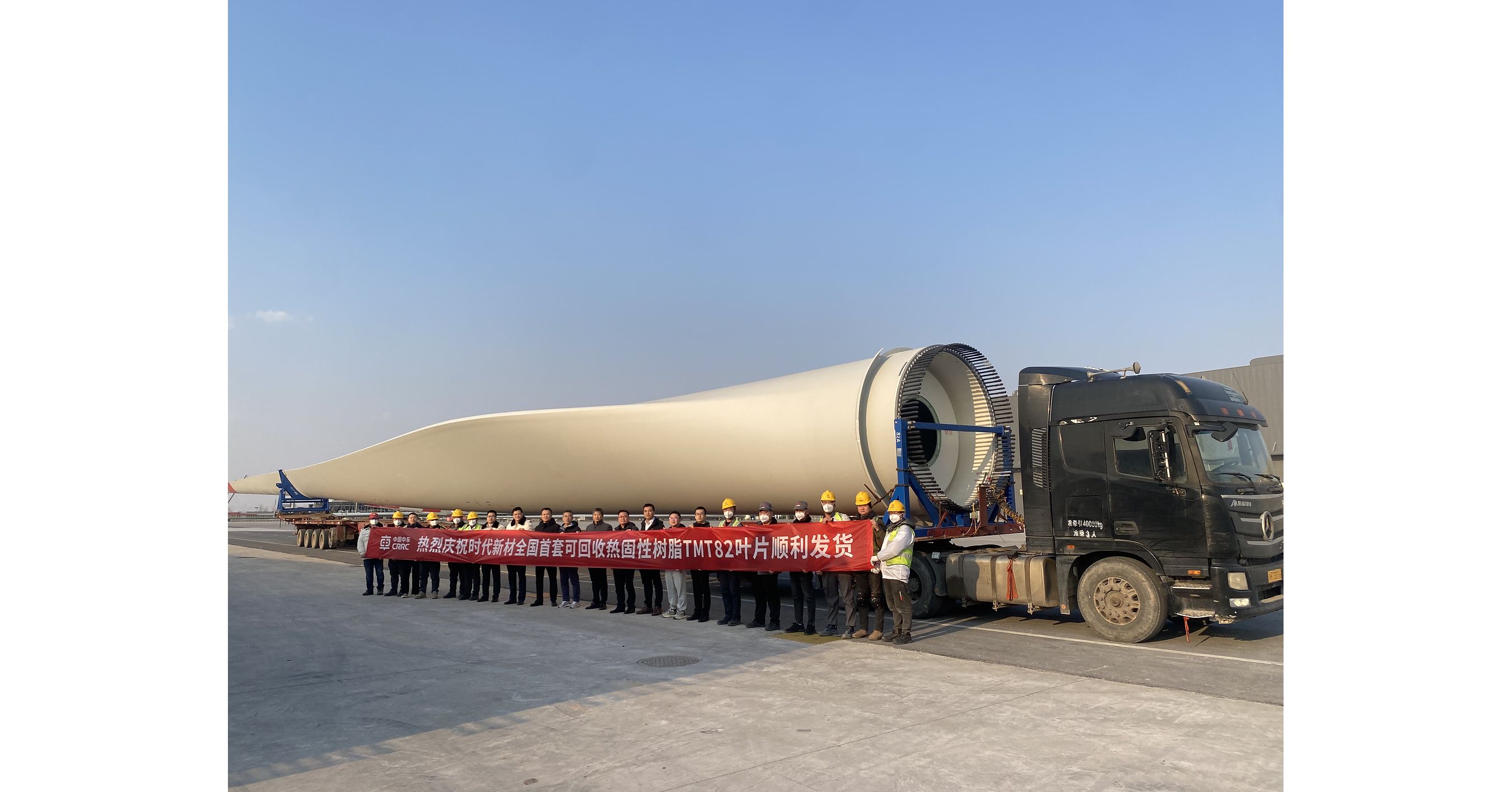
CRRC completed an internally developed 110-meter recyclable wind-turbine blade that can recover more than 95% of key materials, advancing commercial-scale end-of-life processing for ultralarge blades. The technology uses reversible chemical debonding to separate resin from reinforcing fibers for potential reuse in wind equipment, autos and infrastructure. The development addresses a growing Chinese waste-management need: more than 30,000 turbines, representing 44.73 GW and 947,900 metric tons of related solid waste, are projected to be retired by 2030.
Analysis
The investable implication is less a near-term earnings event than a potential change in offshore-wind procurement criteria. If recyclable-blade specifications become embedded in EU tenders or developer supplier scorecards, incumbents with legacy thermoset blade fleets face both redesign capex and weaker residual-value economics. This is incrementally constructive for Chinese turbine OEM export competitiveness, but only if third-party certification validates fatigue performance, repairability and levelized-cost-of-energy parity; company-reported recovery rates alone do not establish either.
European OEMs Vestas (VWS.CO) and Siemens Energy (ENR.DE) have stronger installed-base service franchises, yet their blade circularity roadmaps may become a margin-defense requirement rather than a source of premium pricing. The more immediate second-order beneficiary is offshore project development: reduced end-of-life liability can lower bid contingencies and improve financing acceptance for developers such as Ørsted (ORSTED.CO), RWE (RWE.DE) and Equinor (EQNR). Conversely, composite disposal and conventional blade-processing businesses could see their terminal-value assumptions impaired if chemical separation scales economically.
Over the next 1-3 months, monitor EU tender language, certification disclosures and any announced export order incorporating recyclable-blade requirements; without these, this remains promotional technology news with no standalone valuation catalyst. Over 6-18 months, the key issue is whether the process retains fiber quality sufficiently to displace virgin glass/carbon inputs. A successful closed-loop model would pressure composite-material demand growth and reduce exposure to volatile fiber and resin costs, but commercialization could be constrained by chemical-processing cost, permitting and transport logistics.
Consensus may overstate the direct threat to Western OEMs: turbine selection remains driven primarily by bankability, local-content rules, service capability and delivered LCOE. The contrarian outcome is that recyclable construction increases blade cost or compromises lifetime reliability, turning circularity into a compliance expense rather than a competitive advantage. Thesis is falsified by independent lifecycle-cost data showing no disposal-cost advantage, failed long-duration fatigue testing, or lack of adoption in European procurement specifications through 2027.
AllMind Terminal
AI-powered research, real-time alerts, and portfolio analytics for institutional investors.
Request TrialMarket Sentiment
Overall Sentiment
moderately positive
Sentiment Score
0.62
Key Decisions for Investors
- No directional position in CRRC (601766.SH) solely on this announcement; require independently verified blade certification plus an export order or tender win before attributing revenue upside. Set an alert for EU offshore tenders explicitly requiring blade-recyclability metrics over the next 3-12 months.
- Watchlist long VWS.CO versus short ENR.DE only if circularity requirements accelerate: Vestas' service/install base offers greater ability to monetize retrofit, disposal and lifecycle contracts, while Siemens Energy has less margin room for incremental blade redesign. Enter after tender evidence; invalidate if ENR.DE demonstrates equivalent certified economics or Vestas guides to material redesign-cost inflation.
- For a 6-18 month thematic expression, accumulate ORSTED.CO or RWE.DE only after project financing disclosures quantify reduced decommissioning provisions; target a 10-15% rerating from lower lifecycle-risk assumptions, with exit if offshore auction pricing continues to leave projects uneconomic despite the potential disposal benefit.
- Monitor materials exposure rather than shorting immediately: a commercially validated high-quality fiber-recovery process would be a negative long-term demand signal for virgin composite inputs, but recycled material substitution rates and unit economics are missing. Treat any trade against composite suppliers as an alert, not a recommendation, until those data are disclosed.
More News
- Trump Versus Xi: How Their High-Stakes Summits Compare
- Trump, Xi Address AI, Taiwan During State Visit
- Oracle Japan shares surge 7% after record fiscal first quarter, bucking selloff of U.S. parent
- China's Xi urges U.S. to cooperate on AI
- Akamai secures $11.6B cloud deal with Anthropic for AI workloads
- U.S. government seeks to join Elon Musk in challenge against EU's fine on X