
Envision Energy predstavuje morskú veternú turbínu EN-252/16.7 - vysoký výkon a spoľahlivosť v prostrediach so silným vetrom
Source: PR Newswire
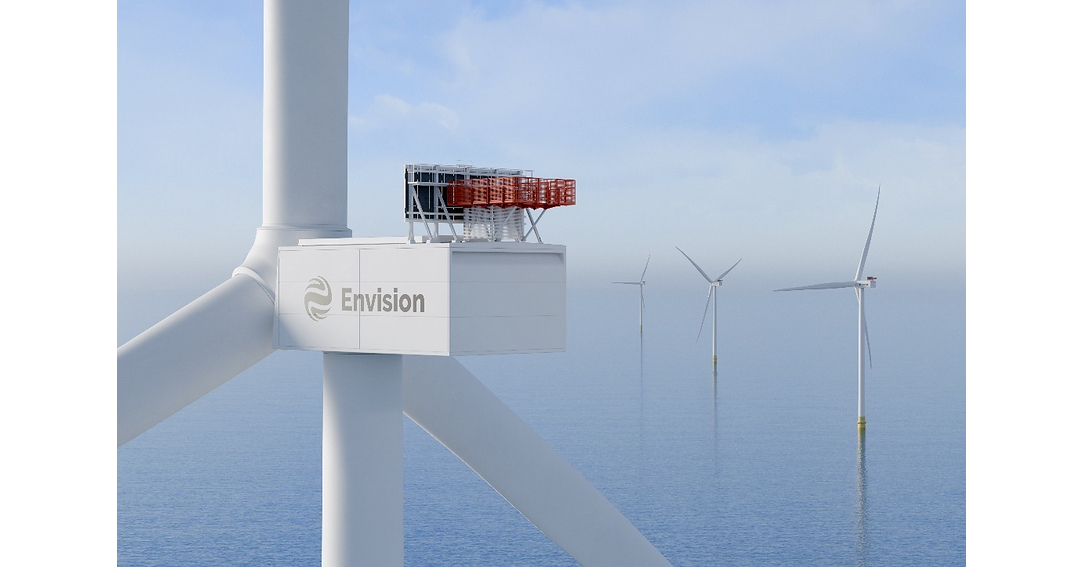
Envision Energy launched its EN-252/16.7 offshore wind turbine, rated at 16.7MW and designed for high-wind European offshore projects. For a gigawatt-scale wind farm, the company estimates the turbine can raise annual energy output by 1-2%, reduce the required turbine count by roughly 10%, and lower levelized energy costs by 2-4%. The platform also incorporates AI-enabled Galileo monitoring, which can provide fault warnings roughly one to six months in advance to reduce unplanned maintenance and lifecycle OPEX.
Analysis
The strategic signal is less about a near-term revenue event than a credible new pricing competitor in Europe’s high-wind offshore segment. If Envision can obtain European certification, project-finance acceptance and service infrastructure, VWS.CO and ENR.DE face a more difficult margin-repair path: developers can use an additional qualified OEM in procurement negotiations even before material unit share shifts. The greatest pressure would be on turbine ASPs and long-term service contract economics, while developers ORSTED.CO and RWE.DE gain optionality through lower equipment and installation costs.
The claimed project-cost benefit should be treated cautiously. Fewer, larger units reduce foundations, cables and installation events, but a 16.7MW-class machine raises demand for scarce heavy-lift vessels, reinforced ports and larger monopile/foundation engineering; those bottlenecks can absorb much of the theoretical savings in the 2027-29 build cycle. The central diligence question is not modeled energy yield but whether independent reliability data, IEC/DNV certification, warranty terms and European spare-parts capacity make the platform bankable. A launch without named European orders, an anchor developer, or insurer acceptance has negligible 1-3 month earnings relevance.
Contrarian view: the market may overstate immediate disruption to incumbent OEMs. European offshore procurement increasingly values geopolitical security, local-content commitments and balance-sheet-backed availability guarantees, areas where incumbents retain an advantage. Conversely, if Envision wins even one major EU project in the next 6-12 months, it would validate a third credible supplier precisely when developers need lower bids to revive deferred projects—more consequential for Vestas/Siemens Energy multiples than the initial product announcement suggests.
AllMind Terminal
AI-powered research, real-time alerts, and portfolio analytics for institutional investors.
Request TrialMarket Sentiment
Overall Sentiment
strongly positive
Sentiment Score
0.52
Key Decisions for Investors
- No directional trade on the launch alone; set an alert for a named EU order, third-party certification, financing approval, or European service/manufacturing commitment. Those are the gating catalysts for a 6-18 month competitive-impact thesis.
- Maintain a watchlist pair: long ORSTED.CO or RWE.DE / short VWS.CO, initiated only after verified Envision European order intake. The thesis is developers capture procurement savings while OEM pricing power weakens; target a 10-15% relative move over 6-12 months, with exit if Vestas demonstrates offshore order pricing or service-margin expansion despite new competition.
- Avoid adding to ENR.DE solely on offshore turbine optimism until offshore order margins and warranty provisions visibly improve. A lower-cost entrant can delay the expected normalization of Siemens Gamesa profitability; falsification is sustained positive offshore order gross margin and materially lower quality-related cash charges across two reporting periods.
- Monitor heavy-lift and port-capacity proxies rather than assuming larger turbines are uniformly deflationary. If vessel day rates and foundation costs rise during 2027 tendering, developers’ expected LCOE gains may fail to convert into returns, reducing the attractiveness of the long-developer leg.
More News
- Saudi, Turkish, Pakistani chiefs plan urgent talks amid Yemen fighting
- Trump Versus Xi: How Their High-Stakes Summits Compare
- Trump, Xi Address AI, Taiwan During State Visit
- SEBI Allows Portfolio Managers to Invest Overseas, Short Equity Options
- China's Xi urges U.S. to cooperate on AI
- Oracle Japan shares surge 7% after record fiscal first quarter, bucking selloff of U.S. parent