
AI’s Risks and Rewards (ARM, SNPS)
Source: Bloomberg
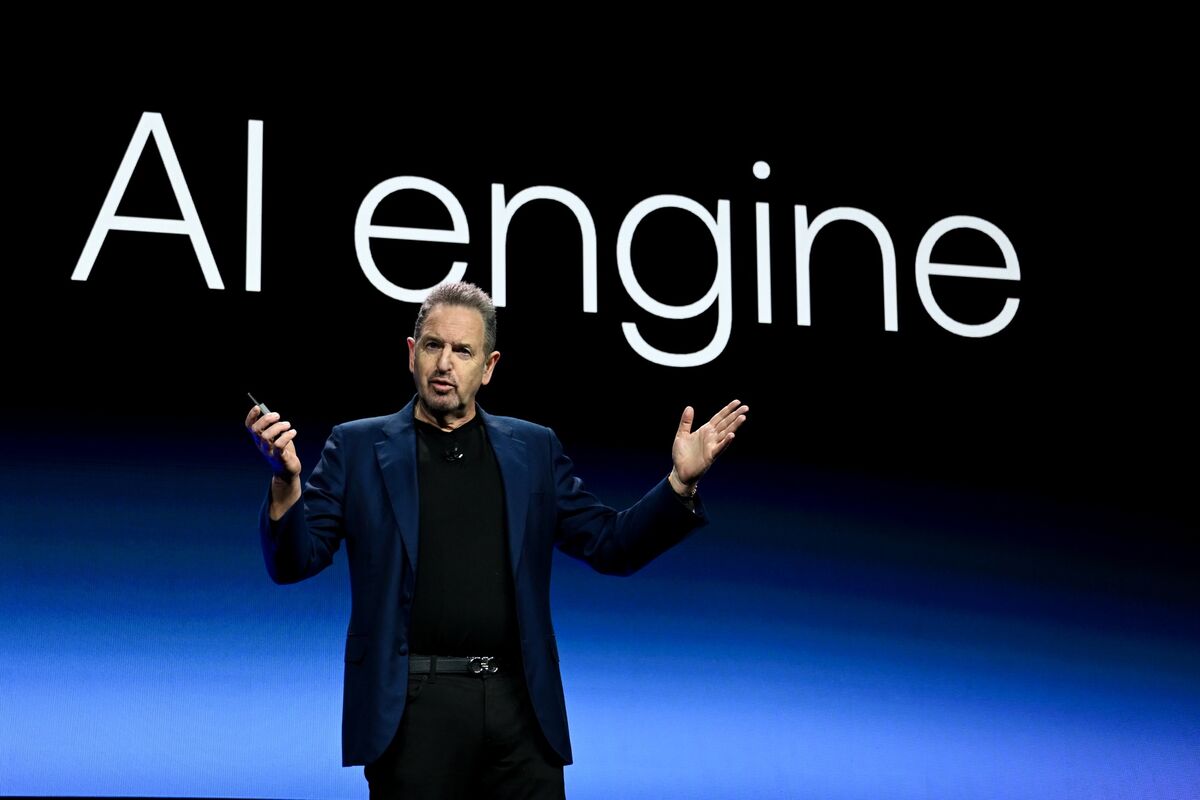
After a week of stock-market losses attributed to AI jitters, Arm CFO Jason Child and Synopsys CFO Shelagh Glaser discuss AI-related investment plans, forecasting and trade-offs. The article excerpt provides no specific investment figures, forecasts or company-level outcomes.
Analysis
The signal is about duration and quality of AI revenue, not evidence of a new earnings inflection. For Arm, any move toward greater investment in silicon could increase exposure to execution, working-capital and ecosystem risks that its relatively asset-light model has historically limited; verify whether this means incremental product/R&D spending or a materially different capital commitment before changing the thesis. For Synopsys, accelerated customer schedules could pull revenue forward rather than expand lifetime demand. The key distinction is whether schedule changes convert into durable bookings and backlog or simply shift delivery between quarters.
Over days, AI-related sentiment may dominate both stocks; the article provides no company-specific figures to support a directional trade. Over 1–3 months, monitor Arm’s investment disclosures and licensing/royalty outlook, and Synopsys’ bookings, backlog conversion and customer schedule changes. Over 6–18 months, AI chip complexity is a potential structural tailwind for design tools, including Synopsys and competitor Cadence, while Arm’s payoff depends on monetizing its platform without diluting the economics of its model. The contrarian risk is treating AI exposure as uniform: design-tool demand can persist even if some chip spending is delayed. Conversely, pulled-in schedules may mask timing rather than improving demand.
AllMind Terminal
AI-powered research, real-time alerts, and portfolio analytics for institutional investors.
Request TrialMarket Sentiment
Overall Sentiment
mixed
Sentiment Score
-0.10
Ticker Sentiment
Key Decisions for Investors
- No immediate single-name trade: the supplied information lacks investment amounts, bookings, backlog, guidance changes and valuation context. Treat both as sentiment-sensitive watchlist names rather than infer an earnings revision.
- For ARM, verify the scope and funding of the stated silicon investment before adding exposure. Reassess negatively if it entails sustained capital commitments without a corresponding improvement in licensing/royalty outlook; the thesis improves if investment is limited and supports customer adoption without changing the asset-light economics.
- For SNPS, monitor whether accelerated schedules produce incremental bookings and backlog or merely pull revenue forward. A deterioration in bookings/backlog conversion or guidance would falsify the durable-demand interpretation; sustained conversion would support relative preference over more directly exposed chip spending.
- If AI-risk selling broadens, consider a relative-value watch—long Synopsys versus Arm only after confirming durable bookings at Synopsys and no material change in Arm’s investment burden. Avoid initiating on this article alone; use earnings disclosures and subsequent guidance as the entry trigger.
More News
- TechCrunch Mobility: Rivian’s next act
- The $5 Trillion Club: Which Is the Better Stock to Own, Apple or Nvidia?
- GMIF2026: AI Inference Powers the "Token Factory" and Drives System-Level Rethinking of Memory & Storage
- Indonesian stocks plunge to six-year low as MSCI downgrade fears mount
- Nifty Bank Heavyweights HDFC, ICICI in Focus After Weekend Earnings
- Putin reportedly suggests summit with Trump and Xi to decide fate of Ukraine