
TrinaTracker Launches Two Robots to Expand its Smart PV Ecosystem
Source: PR Newswire
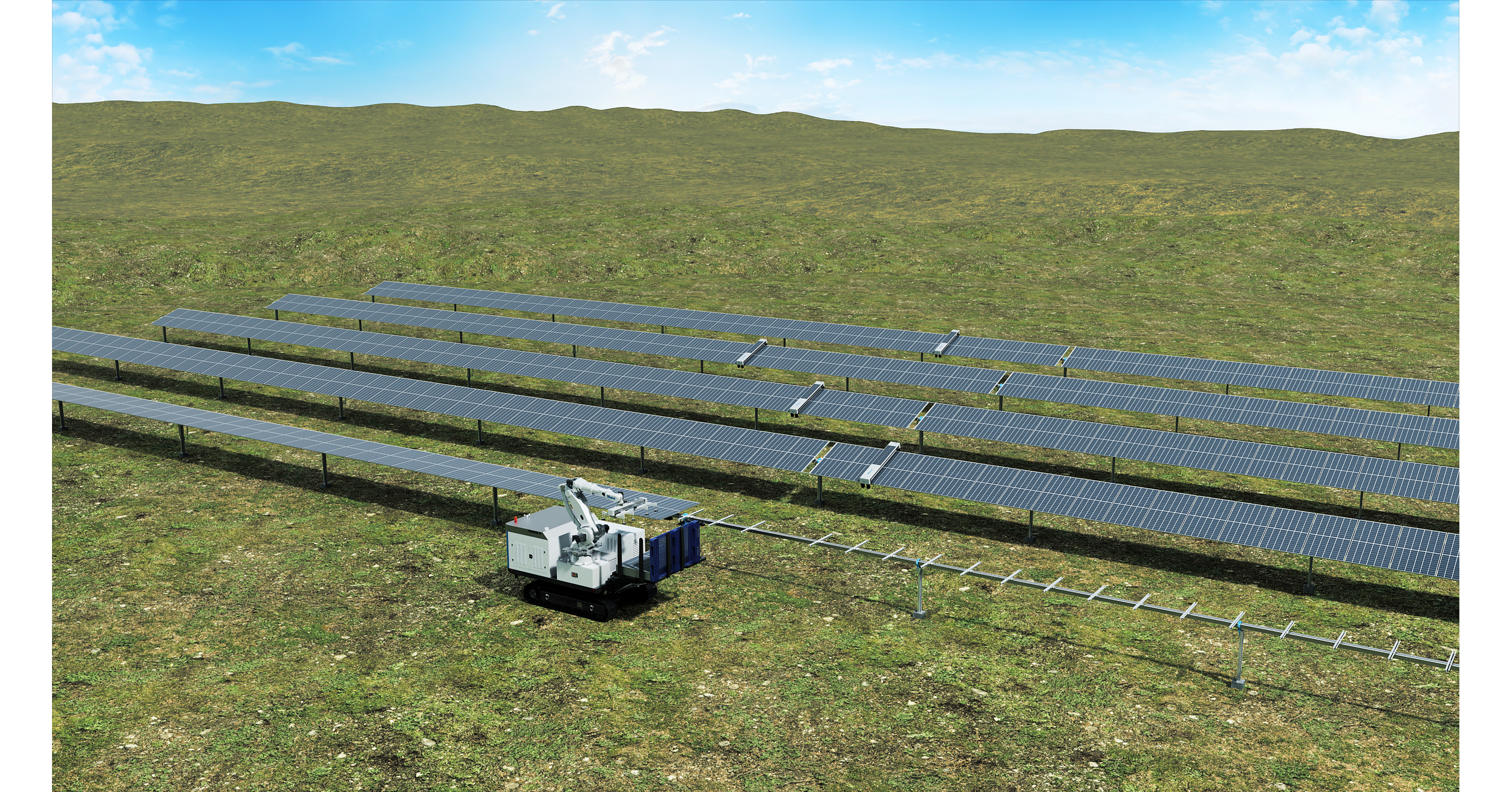
TrinaTracker launched BUILDEX, a PV module-installation robot capable of installing up to 90 modules per hour—3–4 times manual-labor productivity—and AURORA, an autonomous PV cleaning robot designed for continuous smart O&M. The products extend TrinaTracker's Tracker+ ecosystem from equipment supply into AI-enabled construction, cleaning and digital plant-management services, targeting lower installation, operating and levelized energy costs. The announcement supports Trina Solar's smart-PV positioning, though it provides no financial guidance, order values or commercialization metrics.
Analysis
The strategic value is not the robots themselves but potential migration from one-time tracker revenue toward higher-content, recurring software/O&M relationships. If adoption is validated, Trina can bundle equipment, construction automation and monitoring into project bids, raising switching costs and improving lifecycle gross-profit stability; this is a competitive threat to pure-play tracker vendors Nextracker (NXT), Array Technologies (ARRY) and FTC Solar (FTCI), particularly in labor-constrained utility-scale markets. Near-term equity read-through is limited because product launches do not establish utilization, selling price, service attach rate or warranty liability.
The non-obvious constraint is project economics: automation only captures value where labor savings, schedule acceleration and avoided generation losses exceed transport, supervision, maintenance and financing costs. That favors large, repetitive projects in high-wage or dust-intensive regions, not necessarily the price-sensitive Chinese domestic market where low-cost labor can compress the payback. Over 6-18 months, credible third-party evidence of lower installed cost per watt and sustained availability could pressure tracker-only multiples; conversely, field failures or robot-induced module damage would create disproportionate warranty and bankability risk because utility developers prioritize proven uptime over incremental efficiency.
Consensus should avoid treating AI branding as a margin catalyst before commercial proof. The relevant milestones over the next 1-3 months are named customer deployments, contracted fleet size, robot pricing versus manual installation cost, and whether project-finance lenders accept the technology without reserve requirements. A broad utility-scale solar capex slowdown, tracker pricing deflation, or evidence that autonomous systems require substantial onsite labor would falsify the ecosystem monetization thesis.
AllMind Terminal
AI-powered research, real-time alerts, and portfolio analytics for institutional investors.
Request TrialMarket Sentiment
Overall Sentiment
moderately positive
Sentiment Score
0.48
Key Decisions for Investors
- No directional trade solely on the launch; set an event-driven watch on Shanghai-listed Trina Solar (688599) for disclosed robot orders, service contracts and gross-margin commentary at the next results cycle.
- Monitor NXT versus ARRY as the cleaner liquid competitive read-through: consider a 3-6 month long NXT / short ARRY pair only if Trina or other tracker suppliers demonstrate bundled automation wins in export markets. NXT's stronger execution and software/service footprint should be more resilient; exit if ARRY wins comparable large-project orders or tracker pricing stabilizes.
- For a high-wage-market adoption signal, track U.S. utility-scale EPC procurement and NXT/ARRY backlog commentary over the next two quarters. Evidence of construction-labor bottlenecks plus automated-installation uptake would support a selective long in NXT rather than a broad solar-equipment basket.
- Treat any claimed O&M yield benefit as unverified until independently measured cleaning frequency, water use, fleet availability and module-damage rates are disclosed; do not underwrite a valuation uplift without those metrics.
More News
- Saudi, Turkish, Pakistani chiefs plan urgent talks amid Yemen fighting
- Trump Versus Xi: How Their High-Stakes Summits Compare
- SEBI Allows Portfolio Managers to Invest Overseas, Short Equity Options
- Trump, Xi Address AI, Taiwan During State Visit
- Oracle Japan shares surge 7% after record fiscal first quarter, bucking selloff of U.S. parent
- China's Xi urges U.S. to cooperate on AI