
Rund 100 ehemalige Staats- und Regierungschefs fordern die derzeitigen Staats- und Regierungschefs auf, die internationale Zusammenarbeit wiederzubeleben
Source: PR Newswire
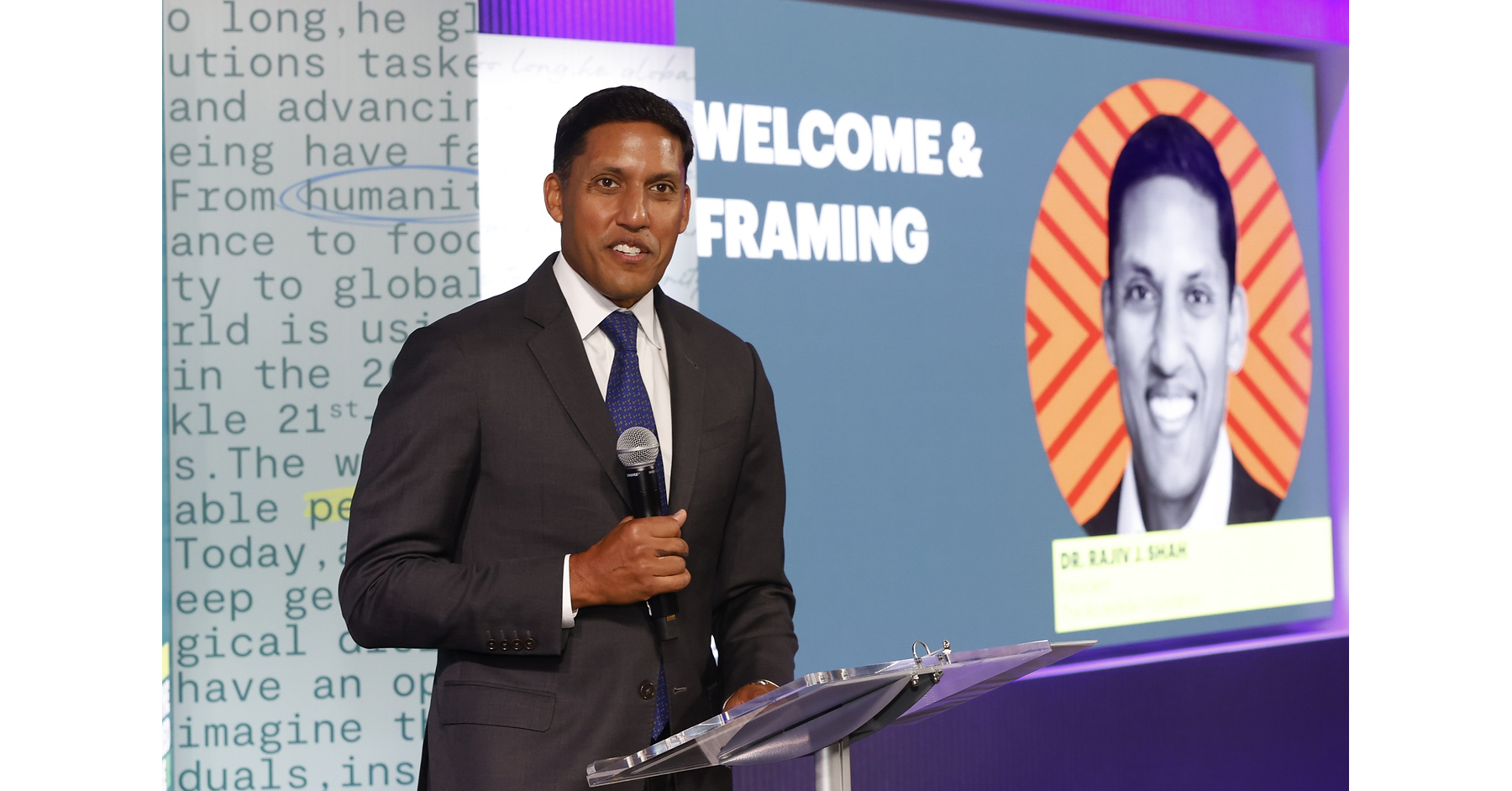
Nearly 100 former heads of state and government called for renewed international cooperation amid conflict, climate change, pandemics, inequality, migration and AI-related disruption. A Focaldata survey across 34 countries found 57% support cooperation on global challenges even with compromises to national interests, versus 10% opposition; more than 80% supported commitments to human dignity and collective action on threats to peace and security. The Rockefeller Foundation-backed initiative seeks to translate these principles into a cross-regional framework, but it contains no binding policy actions or immediate market-moving measures.
Analysis
This is non-binding advocacy rather than a policy commitment, so it has no direct earnings or asset-price transmission mechanism. The relevant signal is only indirect: a broader political constituency for cross-border coordination could marginally reduce tail-risk premia in areas requiring multilateral implementation—pandemic surveillance, climate-finance standards, AI governance, and trade rules—but incumbent-government adoption remains the missing variable.
The market should not price a détente or regulatory convergence from this development. In the next 1-3 months, election cycles, tariff actions, sanctions, and defense-spending decisions will dominate any stated preference for cooperation; a widening geopolitical risk premium would overwhelm this narrative. Over 6-18 months, tangible outcomes such as interoperable AI rules, cross-border carbon-market recognition, or coordinated health procurement could favor scaled multinationals with compliance capacity over smaller regional competitors, but there is no investable catalyst currently.
Contrarian implication: public support for cooperation does not necessarily translate into lower protectionism. Governments can pair multilateral language with domestic-content rules, industrial subsidies, and technology controls; that combination may strengthen national champions while raising capex and compliance burdens for global supply chains. Treat any near-term market rally attributed to this initiative as narrative-driven unless followed by signed government agreements, funded programs, or enforceable regulatory timetables.
AllMind Terminal
AI-powered research, real-time alerts, and portfolio analytics for institutional investors.
Request TrialMarket Sentiment
Overall Sentiment
mixed
Sentiment Score
0.12
Key Decisions for Investors
- No standalone position: this is insufficiently actionable absent a government-level commitment, funding mechanism, or regulatory text.
- Set alerts for formal multinational AI-governance or cross-border data-transfer agreements; if adopted by the US/EU/UK within 6-12 months, reassess relative longs in Microsoft (MSFT), Alphabet (GOOGL), and SAP (SAP) versus smaller software vendors with less compliance scale.
- Monitor carbon-market linkage and climate-finance implementation rather than declarations; a funded, interoperable framework would be a more credible catalyst for selective long exposure to carbon-market infrastructure and European grid suppliers, not broad ESG ETFs.
- Maintain existing geopolitical hedges until observable de-escalation occurs—sanctions relief, lower sovereign CDS spreads, or trade-policy reversals—not merely cooperative rhetoric.
More News
- US 30-Year Yield Hits Highest Since 2004
- Oil falls amid optimism over potential diplomatic solution to the Iran conflict
- SEBI Allows Portfolio Managers to Invest Overseas, Short Equity Options
- Trump-Xi summit: Four key takeaways from the Washington, DC, meeting
- Trump, Xi Address AI, Taiwan During State Visit
- Oracle Japan shares surge 7% after record fiscal first quarter, bucking selloff of U.S. parent
From AllMind Research
- Anthropic IPO Preview: Valuation, Timing, and What to Watch
- Shein After the IPO: Venue, Valuation, and What Must Be Proved
- What AI Research Tools Should a Small Hedge Fund Buy First?
- What Is an AI Investment Research Platform?
- What Exactly Does Post-Training in LLMs and Finance-Focused AI Actually Mean for Asset Managers?