
Dialogue over division, cooperation over decoupling in China-U.S. ties
Source: PR Newswire
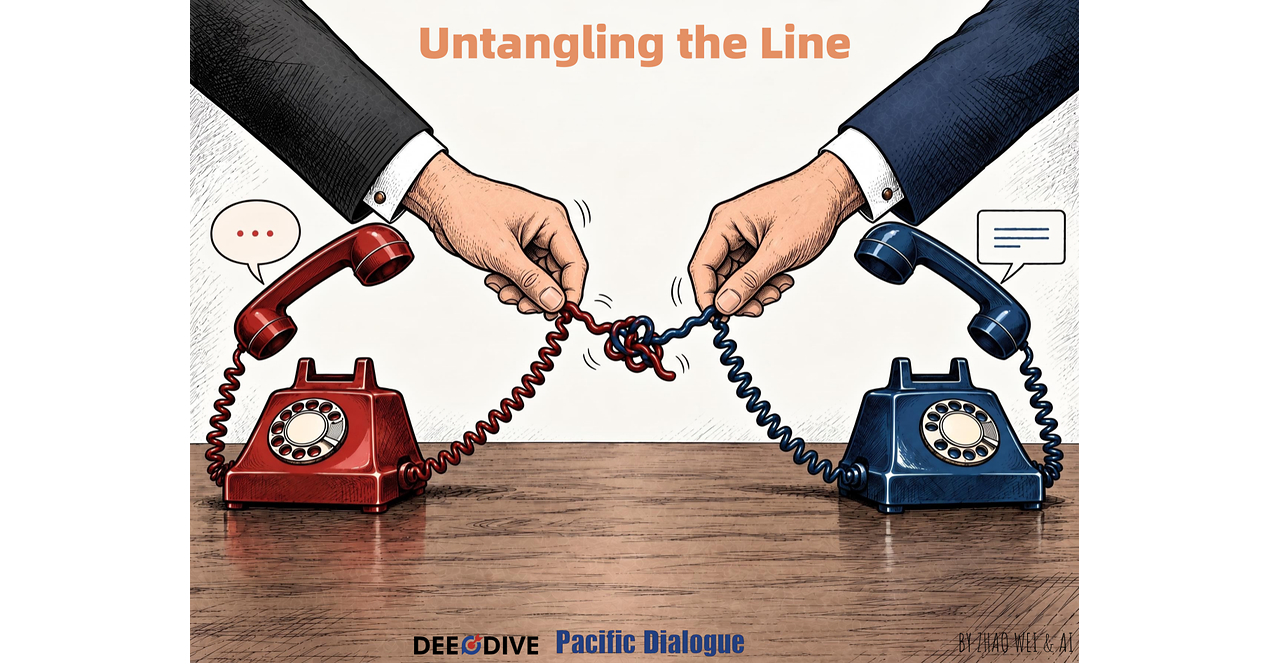
President Xi Jinping called for a more stable China-U.S. relationship centered on cooperation, moderated competition and manageable differences during a U.S. state visit, signaling a potential easing in bilateral tensions. AmCham South China said 76% of surveyed U.S. firms plan to reinvest in China in 2026, with more than $13.4 billion earmarked for expansion over the next three to five years; over 45% rank China as their top reinvestment destination. The article emphasizes that sustained high-level dialogue could improve investment predictability, though it acknowledges that a single summit will not resolve longstanding disputes.
Analysis
This is signaling rather than policy, so the immediate investable effect should be a modest reduction in the geopolitical-risk discount embedded in China-exposed cyclicals, not a fundamental earnings revision. The highest-beta beneficiaries of a credible thaw would be U.S. semicap equipment (AMAT, LRCX, KLAC), networking/handset supply chains (QCOM, SWKS) and China consumer exposure (AAPL, NKE, SBUX); however, export-control architecture and outbound-investment restrictions are unlikely to change merely through diplomatic rhetoric.
The more consequential 1-3 month catalyst is whether engagement produces implementable deliverables: tariff exclusions, licensing approvals, resumed commercial aviation orders, or curbs on retaliatory investigations. A narrow licensing détente would disproportionately help AMAT/LRCX/KLAC through service revenue visibility and China shipment normalization, while AAPL would benefit from reduced regulatory and consumer-nationalism risk. Conversely, policy ambiguity still encourages dual-sourcing and local substitution, preserving the 6-18 month structural advantage for Chinese semiconductor equipment and domestic component suppliers rather than reversing it.
Consensus may overread any summit optics as a broad de-risking of bilateral policy. Washington's strategic restrictions on leading-edge AI compute are bipartisan and China will continue to localize critical inputs; the likely outcome is a lower probability of acute escalation, not restored pre-2022 trade integration. Treat any relief rally as tradeable only if it is followed by verifiable commercial actions; otherwise, China-exposed U.S. hardware could retrace quickly on a new controls announcement or security-related investigation.
AllMind Terminal
AI-powered research, real-time alerts, and portfolio analytics for institutional investors.
Request TrialMarket Sentiment
Overall Sentiment
mildly positive
Sentiment Score
0.38
Key Decisions for Investors
- Do not add directional China-risk exposure solely on this release; establish an event watchlist for post-summit tariff, export-license, aviation, and regulatory deliverables over the next 30-60 days.
- If concrete semiconductor licensing relief is announced, buy AMAT and LRCX versus short SOXX for a 1-3 month relative-value trade; target 8-12% relative upside, with exit if implementation language excludes advanced-node tools or either company fails to raise China revenue commentary.
- For a lower-beta normalization expression, accumulate AAPL on weakness rather than chase a headline rally; reduced China operating-risk can support multiple stability over 6-12 months, but cut the thesis on renewed China consumer retaliation, material App Store restrictions, or supplier disruption.
- Maintain structural caution on U.S. China-revenue hardware: pair long KLAC or AMAT only on confirmed licensing progress against a short basket of lower-moat handset RF names such as SWKS and QRVO, where China localization and customer concentration remain longer-duration risks.
More News
- Saudi, Turkish, Pakistani chiefs plan urgent talks amid Yemen fighting
- US 30-Year Yield Hits Highest Since 2004
- Oil falls amid optimism over potential diplomatic solution to the Iran conflict
- Trump Versus Xi: How Their High-Stakes Summits Compare
- Trump, Xi Address AI, Taiwan During State Visit
- China's Xi urges U.S. to cooperate on AI