
Russian Envoy to Meet With US in New York for Ukraine Proposals
Source: Bloomberg
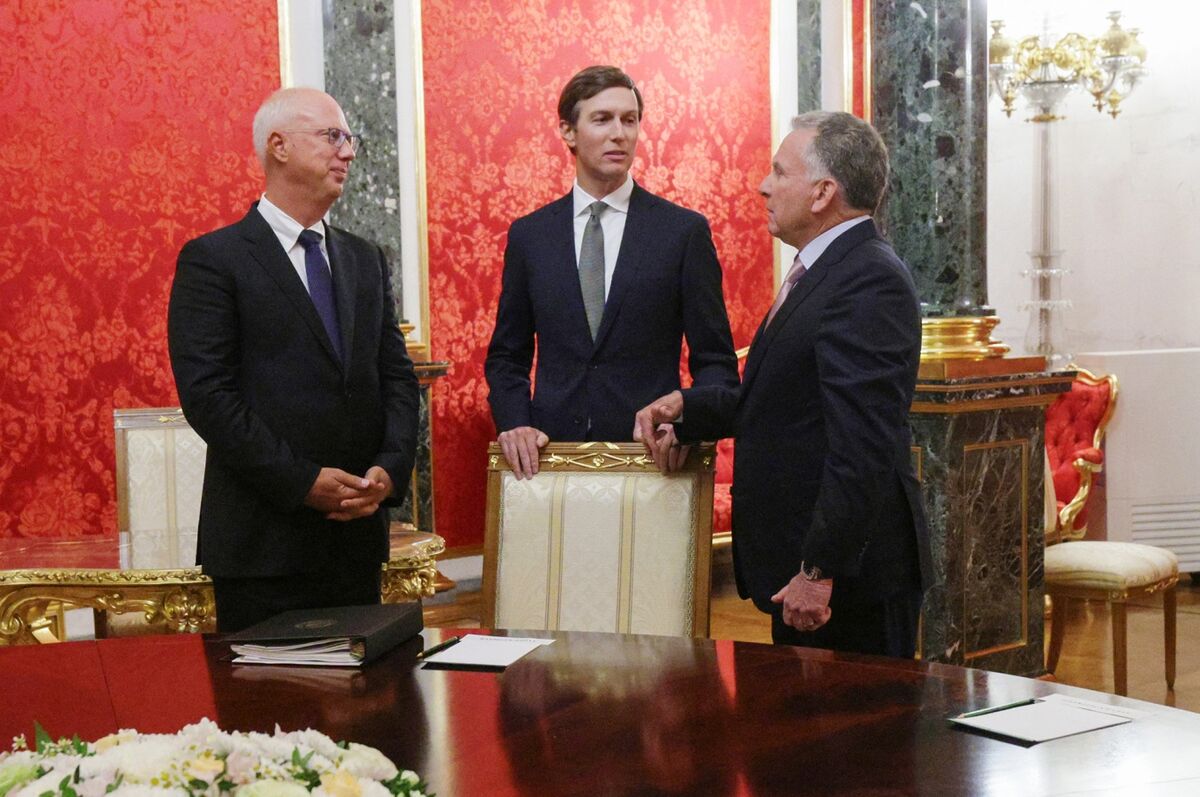
Kremlin envoy Kirill Dmitriev is scheduled to meet US officials Steve Witkoff and Jared Kushner in New York to receive US proposals concerning the Ukraine war. Details of the proposals and meeting remain undisclosed, leaving the potential for any diplomatic breakthrough uncertain. The talks could matter for geopolitical risk sentiment, but no concrete agreement or policy action has been announced.
Analysis
The market should treat this as a volatility event rather than a durable risk-premium reset until there is evidence of enforceable sequencing on sanctions, energy flows, and territorial/security guarantees. A credible de-escalation path would first compress European natural-gas and power risk premia, weaken LNG shipping and US gas-export optionality, and pressure defense multiples; the initial beneficiaries would be European cyclicals and rate-sensitive equities through lower energy-input and inflation risk. The key transmission is not Ukraine reconstruction spending, which is a multi-year and politically contingent outcome, but a near-term reduction in the European energy-security discount.
The more asymmetric second-order exposure is in sanctions-sensitive commodity supply. Any pathway that permits incremental Russian crude, refined-product, or pipeline-gas access to global markets would be bearish Brent time spreads and supportive for European refiners and chemical producers, but implementation would likely lag headlines by months and remain vulnerable to US/EU political fragmentation. Conversely, a failed process could lift geopolitical hedging demand quickly, particularly in crude and European gas, while extending the earnings-duration premium in defense names such as Rheinmetall (RHM.DE), BAE Systems (BA.L), Saab (SAAB-B.ST), and US peers RTX and LMT.
Consensus may overprice either outcome from a single diplomatic signal. European defense budgets have shifted from emergency procurement toward multi-year capability commitments, making a near-term ceasefire insufficient to reverse order books; defense equities may therefore be less exposed than headline beta implies. The cleaner tactical expression is to wait for confirmation in energy curves, sanctions language, and European procurement guidance rather than chase an initial equity move.
AllMind Terminal
AI-powered research, real-time alerts, and portfolio analytics for institutional investors.
Request TrialMarket Sentiment
Overall Sentiment
neutral
Sentiment Score
0.05
Key Decisions for Investors
- No outright geopolitical-risk trade before concrete terms emerge; use the meeting as an alert for 1-5 day moves in Brent, Dutch TTF gas, EUR/USD, and European defense equities rather than as a directional catalyst.
- If verifiable sanctions-relief or energy-transit language appears, initiate a 1-3 month pair: long European cyclicals via VGK or SXRP exposure / short ITA. Target a 5-8% relative move; stop if TTF front-month gas rises more than 15% after the announcement or European defense procurement guidance is raised.
- If talks break down or are publicly rejected, buy 1-3 month upside exposure in USO or XOP rather than adding to extended defense shares; the commodity response is likely more immediate. Exit if Brent fails to sustain a move above its pre-meeting range within five trading sessions.
- Maintain structural exposure to RHM.DE, BA.L, RTX, and LMT only on weakness, not as a ceasefire short: reassess the thesis if 2027-28 European defense-budget plans are cut or backlog conversion/guidance deteriorates materially at the next earnings cycle.
More News
- Saudi, Turkish, Pakistani chiefs plan urgent talks amid Yemen fighting
- US 30-Year Yield Hits Highest Since 2004
- Oil falls amid optimism over potential diplomatic solution to the Iran conflict
- Trump Versus Xi: How Their High-Stakes Summits Compare
- Trump, Xi Address AI, Taiwan During State Visit
- China's Xi urges U.S. to cooperate on AI