
Sieťové interaktívne riešenie AIDC od Huawei: formovanie novej paradigmy infraštruktúry umelej inteligencie
Source: PR Newswire
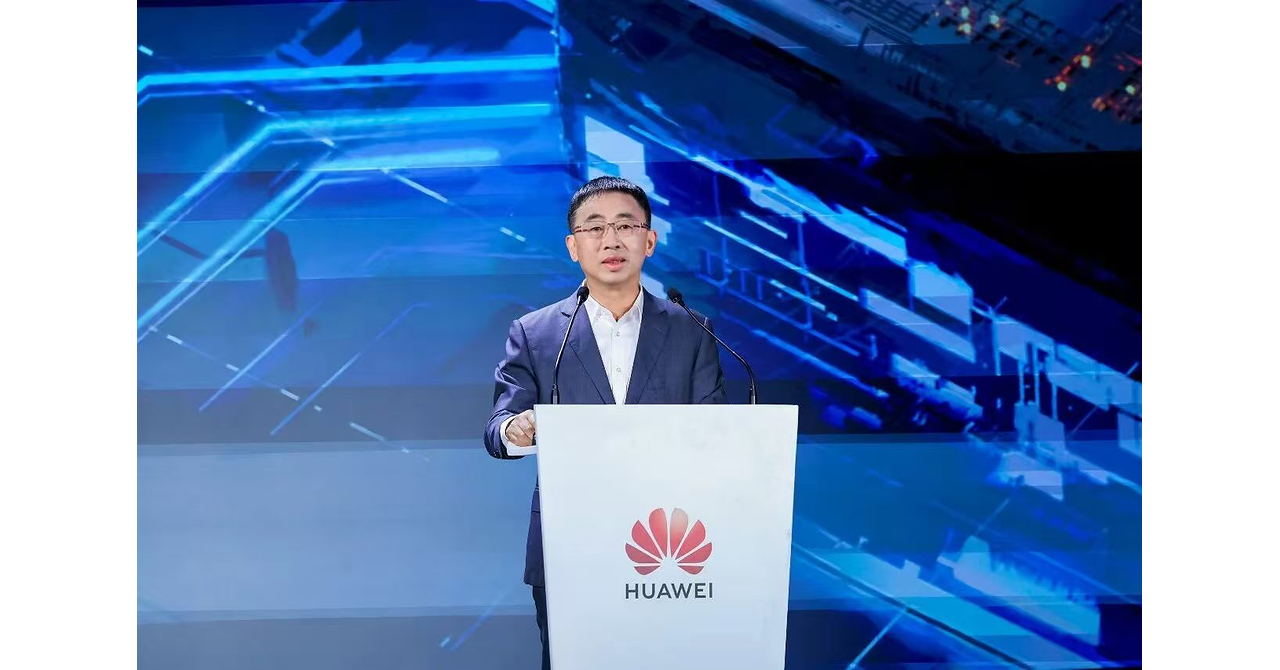
Huawei launched its grid-interactive AIDC 1.0 solution at HUAWEI CONNECT 2026, combining grid-forming UPS, intelligent lithium batteries, energy storage and AI-enabled liquid cooling to improve reliability and maximize AI tokens per watt. The company positions token-per-watt and token cost as core competitiveness metrics for AI computing factories, while emphasizing faster modular deployment and greater grid compatibility. SenseTime's SenseCore said its end-to-end optimization improved tokens per watt by 80%, underscoring the potential efficiency gains from integrating AI compute infrastructure with power systems.
Analysis
The investable read-through is not Huawei-specific; it is that AI data-center economics are shifting from facility-level efficiency to usable compute output per unit of power. That raises the value of integrated power management, battery buffering and liquid-cooling capability relative to commodity colocation shells. For VNET, the upside is higher-value AI capacity and better utilization, but its economics remain constrained by contracted power availability, GPU customer credit quality and the capital intensity required before revenue is recognized.
Near term, this is insufficient to alter VNET estimates: the announcement is vendor marketing rather than a disclosed order, deployment, capex commitment or customer contract. Over 1-3 months, the relevant catalyst is evidence that VNET converts AI-oriented campus design into signed capacity at a premium to conventional IDC pricing; absent this, investors should not capitalize efficiency claims into EBITDA. A more tangible beneficiary set is Eaton (ETN), Vertiv (VRT) and Schneider Electric (SU.PA), whose power-distribution, UPS and thermal-management backlogs monetize regardless of the winning compute vendor.
The second-order risk is that grid-interactive designs make data centers increasingly dependent on local interconnection rules and power-market compensation. If Chinese grid operators reward flexible load and storage, operators with campus-scale batteries can lower effective power cost and accelerate builds; if reliability rules require conservative redundancy, battery and cooling capex can rise faster than utilization, pressuring returns. US export restrictions also limit the degree to which Chinese AI clusters can translate infrastructure improvements into frontier-model demand, making domestic inference growth—not training capacity—the key VNET demand variable over 6-18 months.
Consensus may overstate the direct benefit to Chinese colocation names from every AI-infrastructure announcement. Better facility efficiency can be competed away through lower pricing, while the scarce asset is often secured megawatts rather than cooling technology. The more durable trade is to own suppliers with pricing power in electrical and thermal bottlenecks, while treating VNET as a contract-conversion watch item rather than a technology-led rerating.
AllMind Terminal
AI-powered research, real-time alerts, and portfolio analytics for institutional investors.
Request TrialMarket Sentiment
Overall Sentiment
moderately positive
Sentiment Score
0.42
Ticker Sentiment
Key Decisions for Investors
- No standalone VNET position on this release. Set a 1-3 month alert for disclosed AI-capacity leases, contracted megawatts, incremental capex and EBITDA-per-MW; initiate only if contracted utilization and pricing validate returns above conventional IDC capacity. Falsifier: capex rises without a corresponding backlog or guidance increase.
- Maintain or initiate a 6-12 month long basket in ETN and VRT, sized as infrastructure beneficiaries of higher rack-density power and cooling spend. Prefer ETN for lower execution risk; VRT offers greater operating leverage but is more vulnerable to backlog normalization. Risk: hyperscaler capex guidance cuts or supplier lead-time compression.
- Pair idea for China AI infrastructure: long ETN/VRT versus short a broad China data-center proxy only after a VNET-led rally on uncontracted AI-capacity announcements. Thesis is supplier revenue is recognized closer to buildout, whereas operator returns depend on utilization and regulated power access. Cover if operators disclose multi-year take-or-pay contracts at premium pricing.
- Monitor Chinese power-market rules and battery-storage compensation over the next 6-18 months. A formal flexible-load or storage-payment framework would be a positive catalyst for VNET and China grid-storage supply chains; continued interconnection delays or mandated redundancy would invalidate the margin-expansion thesis.
More News
- Huawei netinteractieve AIDC-oplossing: Het nieuwe paradigma van AI-infrastructuur vormgeven
- Soluzione Grid-Interactive AIDC di Huawei: plasmare il nuovo paradigma delle infrastrutture per l'IA
- Huawei Şebeke Etkileşimli AIDC Çözümü: Yapay Zeka Altyapısının Yeni Paradigmasını Şekillendiriyor
- Řešení AIDC společnosti Huawei pro interakci s rozvodnou sítí: vytváření nového paradigmatu infrastruktury umělé inteligence
- Grid-Interactive-AIDC-Lösung von Huawei: das neue Paradigma der KI-Infrastruktur gestalten
- Solution AIDC de Huawei interconnectée au réseau électrique : façonner un nouveau paradigme pour les infrastructures d'IA