
Huawei netinteractieve AIDC-oplossing: Het nieuwe paradigma van AI-infrastructuur vormgeven
Source: PR Newswire
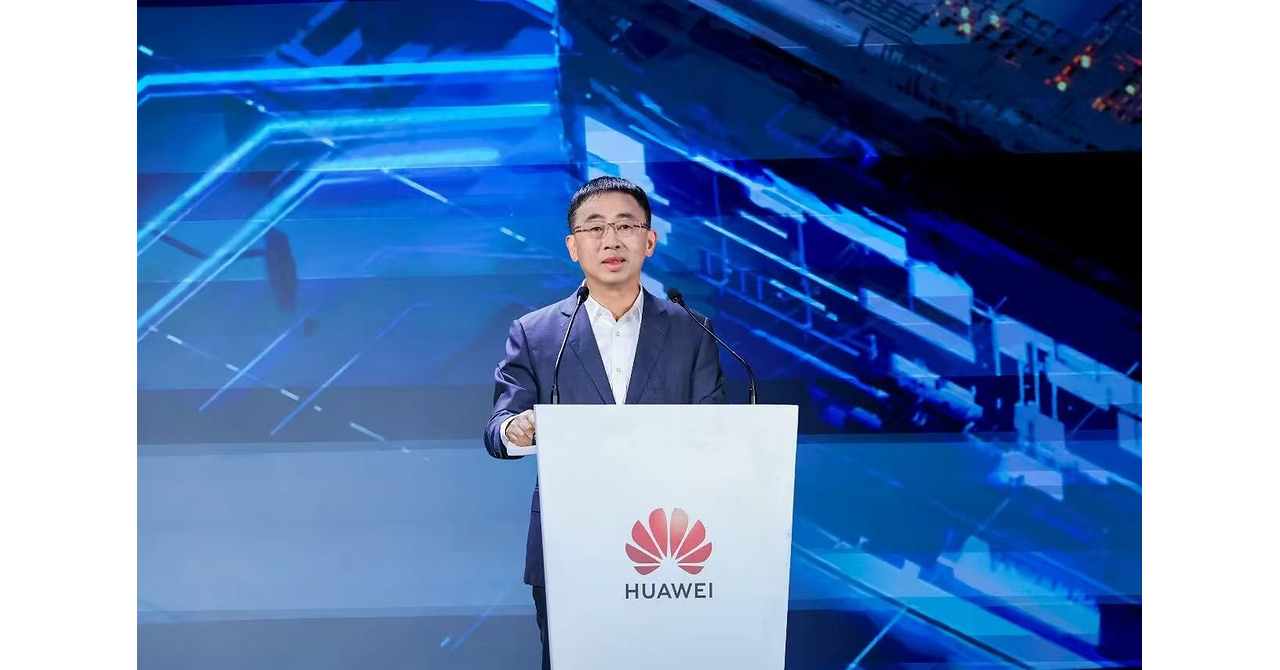
Huawei launched its grid-interactive AIDC 1.0 solution at Huawei Connect 2026, combining grid-friendly UPS systems, intelligent lithium batteries, grid-forming energy storage and AI-driven liquid cooling for AI data centers. The company aims to maximize tokens per watt and reduce cost per token as AI workloads raise power, cooling and grid-stability requirements. SenseTime's SenseCore said end-to-end optimization of its infrastructure improved tokens per watt by 80%, underscoring the industry's shift from PUE-based efficiency metrics to AI-output efficiency.
Analysis
The investable implication is less about a single equipment launch than a shift in AI-data-center procurement toward integrated power-management stacks. If operators begin underwriting capacity on compute output per unit of electricity rather than facility PUE, component suppliers with control over UPS, switchgear, batteries, liquid cooling and software orchestration should gain wallet share versus point-solution vendors. VRT, ETN and Schneider Electric (SU.PA) are the clearest listed beneficiaries outside China; the risk is that Chinese integrated offerings pressure pricing in domestic projects and eventually export markets.
For VNET, grid-interactive architecture could reduce the practical constraint imposed by power availability and improve utilization of commissioned AI capacity, but the financial payoff depends on whether it lowers delivered power cost and outage-related SLA expense faster than it raises upfront capex. The announced efficiency claims are vendor/customer assertions, not yet evidence of VNET margin expansion, and China’s hyperscale customers retain substantial pricing power. Over the next 1-3 months, this is primarily a capex-intent and competitive-positioning signal; the relevant catalysts are disclosed AI rack additions, power procurement terms, and any evidence that utilization/revenue per MW improves.
The contrarian point is that better power smoothing can make marginal AI deployments viable, but it also expands the addressable supply of inference capacity. That could eventually compress GPU-cloud pricing and leave data-center operators with lower returns despite superior physical efficiency. Over 6-18 months, the structural winner may be power-equipment vendors selling into a broader buildout, while operators such as VNET need demand visibility and contracted utilization to avoid converting efficiency gains into customer price concessions.
A reversal would be signaled by VNET reporting rising capex per incremental MW without a corresponding improvement in EBITDA per MW, delayed grid connections, or slower AI-cloud demand. For global power names, the thesis weakens if AI-data-center construction shifts from accelerated buildouts to capacity deferrals, or if liquid-cooling and electrical-equipment order growth decelerates materially in quarterly bookings.
AllMind Terminal
AI-powered research, real-time alerts, and portfolio analytics for institutional investors.
Request TrialMarket Sentiment
Overall Sentiment
moderately positive
Sentiment Score
0.42
Ticker Sentiment
Key Decisions for Investors
- Keep VNET on a 1-2 quarter watch rather than add exposure solely on this announcement; require evidence of contracted AI capacity, improving utilization, and stable capex intensity before underwriting an earnings inflection. A negative trigger is incremental capacity spending with no improvement in revenue or EBITDA per MW.
- Express the infrastructure angle through a basket long VRT / ETN / SU.PA over 6-12 months, sized modestly because expectations for AI electrical infrastructure are already elevated. Prefer entries following broader AI-capex pullbacks; take risk off if bookings/backlog commentary indicates project delays rather than supply bottlenecks.
- For investors seeking a China-specific relative-value expression, monitor long VNET versus a China internet/technology ETF hedge only after VNET provides measurable economics from AI capacity. The intended payoff is operator-specific utilization improvement, while the hedge limits broad China policy and ADR-risk exposure.
- Avoid treating token-per-watt claims as a standalone catalyst for battery or renewable-energy equities. Establish an alert for disclosed long-duration storage procurement or direct renewable-power contracts by Chinese data-center operators; only then consider suppliers with verifiable order exposure.
More News
- Soluzione Grid-Interactive AIDC di Huawei: plasmare il nuovo paradigma delle infrastrutture per l'IA
- Sieťové interaktívne riešenie AIDC od Huawei: formovanie novej paradigmy infraštruktúry umelej inteligencie
- Huawei Şebeke Etkileşimli AIDC Çözümü: Yapay Zeka Altyapısının Yeni Paradigmasını Şekillendiriyor
- Řešení AIDC společnosti Huawei pro interakci s rozvodnou sítí: vytváření nového paradigmatu infrastruktury umělé inteligence
- Grid-Interactive-AIDC-Lösung von Huawei: das neue Paradigma der KI-Infrastruktur gestalten
- Solution AIDC de Huawei interconnectée au réseau électrique : façonner un nouveau paradigme pour les infrastructures d'IA