
Soluzione Grid-Interactive AIDC di Huawei: plasmare il nuovo paradigma delle infrastrutture per l'IA
Source: PR Newswire
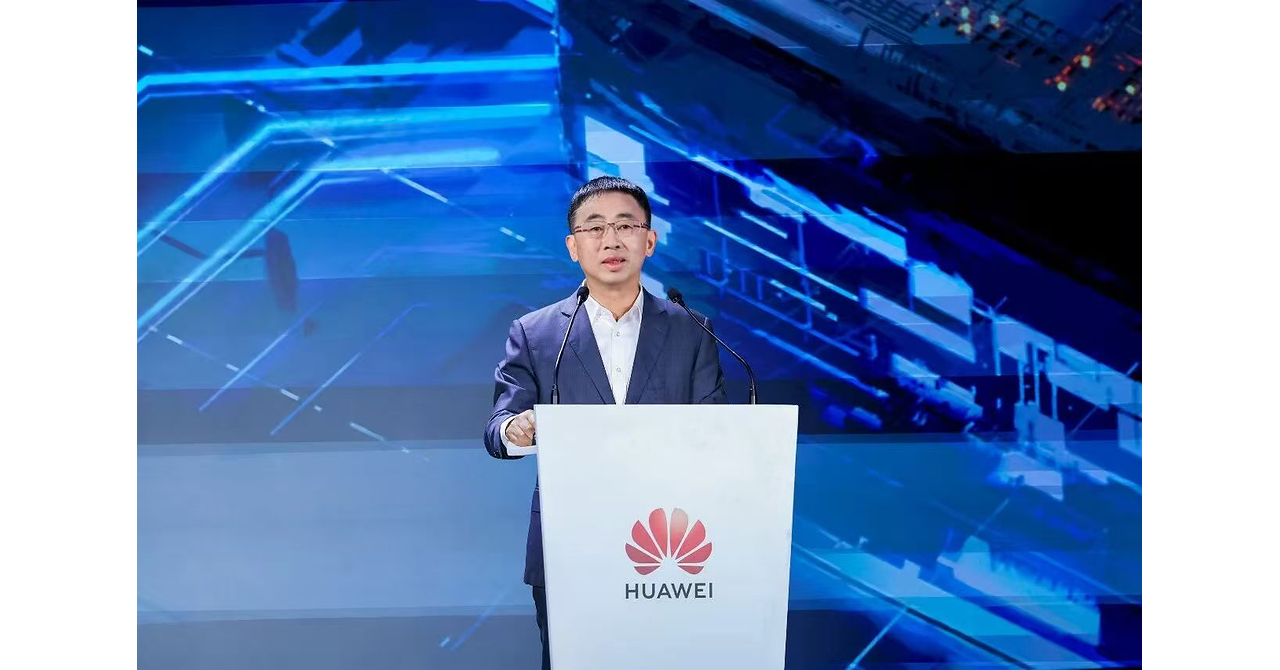
Huawei launched its Grid-Interactive AIDC 1.0 solution at HUAWEI CONNECT 2026, combining grid-compatible UPS systems, smart lithium batteries, grid-forming energy storage and AI-enhanced liquid cooling to improve power stability and energy efficiency for AI data centers. The company is positioning token-per-watt and cost-per-token as key AI infrastructure metrics; SenseTime's SenseCore said its end-to-end optimization improved token-per-watt efficiency by 80%. The announcement is a product and infrastructure positioning update, with no financial guidance, contract value or revenue impact disclosed.
Analysis
The investable implication is less about Huawei’s product cycle than a shift in AI data-center procurement toward integrated power, storage and thermal systems. This favors suppliers able to bundle UPS, switchgear, liquid cooling and controls—ETN, VRT and Schneider Electric (SU.PA)—while pressuring standalone component vendors on pricing and customer ownership. In China, Huawei’s vertical integration is a competitive negative for foreign electrical-equipment suppliers where procurement is localized, but it could expand the total addressable market for domestic battery, power-electronics and cooling suppliers.
VNET’s relevance is as an early demand signal rather than a direct earnings catalyst: grid-constrained campuses can monetize faster deployment and potentially lower curtailment/backup-power costs, but only if customers pay for AI capacity and local grid interconnection is available. The key second-order effect is that flexible data-center load may make renewable-linked capacity more financeable, improving the economics of co-located storage and generation; conversely, it raises execution risk because data-center operators become partially exposed to power-market volatility and grid rules rather than simply buying fixed utility supply.
Near term, this is low-conviction promotional news with no independently disclosed order, capex, efficiency or margin data. Over 1-3 months, watch whether VNET reports AI-rack utilization, power availability, lease pricing, or capex-per-MW improvements; absent those disclosures, a valuation rerating is unlikely. Over 6-18 months, export-control constraints on accelerators, weak Chinese AI demand, or slower-than-expected grid approvals would leave integrated power infrastructure underutilized and turn fixed power-and-cooling investments into a margin drag.
Consensus may overfocus on PUE and underestimate utilization-adjusted compute output: better power quality matters only if it avoids downtime, enables denser rack deployment, or reduces the amount of stranded contracted power. The more material beneficiary could therefore be VRT and ETN outside China, where utility interconnection delays are acute and customers have greater ability to pay for time-to-power, rather than VNET, whose stock still depends primarily on leasing conversion and funding discipline.
AllMind Terminal
AI-powered research, real-time alerts, and portfolio analytics for institutional investors.
Request TrialMarket Sentiment
Overall Sentiment
mildly positive
Sentiment Score
0.38
Ticker Sentiment
Key Decisions for Investors
- No standalone VNET purchase on this announcement. Set a 1-3 month alert for disclosed AI capacity pre-leasing, utilization gains, or capex/MW reductions; initiate only if these metrics improve without a corresponding deterioration in net leverage or free cash flow.
- Maintain a 6-12 month overweight in VRT versus a broad data-center REIT basket (SRVR) as a time-to-power and liquid-cooling expression. Use a 10-15% relative-underperformance stop or reassess if hyperscaler capex guidance is cut materially.
- For China exposure, prefer a catalyst-driven VNET watch position rather than treating Huawei integration as direct revenue. Falsify any constructive view if quarterly contracted capacity, pricing, or adjusted EBITDA guidance fails to improve while capex remains elevated.
- Monitor ETN, VRT and SU.PA order commentary for battery-storage, medium-voltage distribution and liquid-cooling attach rates over the next two earnings cycles. A broad AI-infrastructure trade becomes more attractive only if backlog converts to revenue without worsening working-capital intensity.
More News
- Huawei netinteractieve AIDC-oplossing: Het nieuwe paradigma van AI-infrastructuur vormgeven
- Sieťové interaktívne riešenie AIDC od Huawei: formovanie novej paradigmy infraštruktúry umelej inteligencie
- Huawei Şebeke Etkileşimli AIDC Çözümü: Yapay Zeka Altyapısının Yeni Paradigmasını Şekillendiriyor
- Řešení AIDC společnosti Huawei pro interakci s rozvodnou sítí: vytváření nového paradigmatu infrastruktury umělé inteligence
- Grid-Interactive-AIDC-Lösung von Huawei: das neue Paradigma der KI-Infrastruktur gestalten
- Solution AIDC de Huawei interconnectée au réseau électrique : façonner un nouveau paradigme pour les infrastructures d'IA