
Perma-Pipe Trades at a Discount: Should You Buy, Sell or Hold?
Source: zacks.com
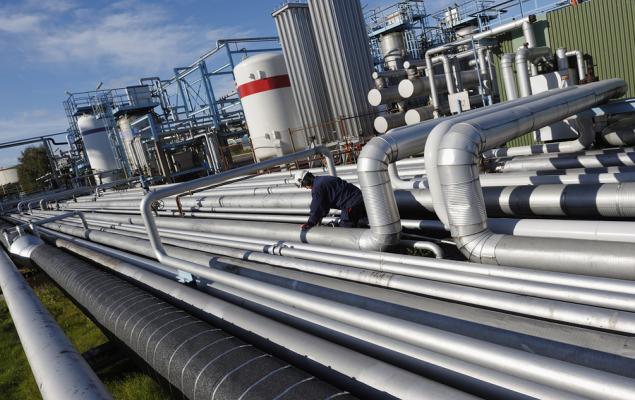
Perma-Pipe trades at 1.09x trailing EV/sales, a 61% discount to its industry's 2.8x average, while its shares have risen 13% over three months versus a 7.3% industry decline. First-half fiscal 2026 sales increased 16% year over year to $109.8 million and operating cash flow improved to $13.3 million from a $1.3 million outflow, supported by North American and MENA project activity. Offsetting these strengths, gross margin fell 400bps to 29%, while tariffs, Middle East-related shipping and commodity costs, and rising G&A and interest expense pose risks; new credit facilities provide up to $139 million plus $50 million in incremental capacity.
Analysis
PPIH’s valuation discount should not be benchmarked mechanically against VMI or TS: its smaller scale, project-based revenue, customer concentration risk and lower liquidity warrant a persistent discount. The investable question is whether recent capacity additions convert into higher throughput without further overhead leakage; modest revenue growth with gross margin recovering above 30% would drive disproportionate EBITDA and multiple expansion over the next 6-12 months. Conversely, revenue growth that remains working-capital intensive could make the improved operating cash flow non-repeatable rather than evidence of durable earnings power.
The new credit capacity is strategically useful for bonding, letters of credit and project execution, but it also raises downside convexity if Middle East project timing slips or fixed-price contracts cannot absorb freight, tariffs and steel-related inputs. Short-duration contracts reduce backlog quality when costs are rising; a one-to-two quarter lag in repricing can erase the benefit of volume growth. Welspun is the more relevant competitive/supply-chain read-through than TS or VMI: successful local manufacturing would improve bid competitiveness in Levant water projects, while delays would leave PPIH carrying development costs without the anticipated regional revenue.
Consensus may overemphasize the headline sales multiple and underweight margin normalization. This is not yet a clean value long after the recent outperformance: the key catalyst is the next two earnings reports demonstrating that Ohio and Qatar absorption costs have peaked, alongside order/backlog disclosure and stable cash conversion. Falsify a constructive thesis if gross margin remains below 29% through two reporting periods, net debt rises despite operating growth, or management signals that tariff/freight costs cannot be repriced.
TS and VMI are weak shorts solely on this setup because their valuation and earnings drivers are materially broader than PPIH’s project-cycle dynamics. The more actionable relative expression is PPIH versus a diversified infrastructure proxy only after liquidity, average daily volume and borrow/position-sizing constraints are verified.
AllMind Terminal
AI-powered research, real-time alerts, and portfolio analytics for institutional investors.
Request TrialMarket Sentiment
Overall Sentiment
mildly positive
Sentiment Score
0.30
Ticker Sentiment
Key Decisions for Investors
- Place PPIH on a catalyst watch for the next two results; initiate a small long only if gross margin rebounds to at least 30%, operating cash flow remains positive after working-capital changes, and management quantifies funded backlog. Target 20-30% upside over 6-12 months from earnings/multiple normalization; exit on two consecutive sub-29% margin prints.
- Do not underwrite the stated EV/sales discount as standalone upside. Require segment-level backlog, customer concentration, net-debt and covenant availability data before assigning a peer-like multiple or increasing exposure.
- If execution criteria are met, express as long PPIH / short PAVE or XLI in a 3-6 month, beta-adjusted pair rather than short TS or VMI; this isolates idiosyncratic facility-ramp and regional project conversion. Avoid the pair if PPIH liquidity cannot support disciplined exits.
- Monitor Middle East freight and steel input costs, tariff policy, and Jordan water-project award timing over the next 1-3 months. A material escalation in shipping costs or an award delay is a no-add signal because fixed-price contract exposure can compress margins before revenue recognition catches up.
More News
- Saudi, Turkish, Pakistani chiefs plan urgent talks amid Yemen fighting
- US 30-Year Yield Hits Highest Since 2004
- Oil falls amid optimism over potential diplomatic solution to the Iran conflict
- Trump Versus Xi: How Their High-Stakes Summits Compare
- History shows financial calamities occur when rates rise rapidly like this: 'Something always breaks'
- Trump, Xi Address AI, Taiwan During State Visit