
Canaan Inc. to Exhibit at BTCHEL Conference: Showcasing Hash-to-Heat Solutions from District Networks to Home Solutions
Source: PR Newswire
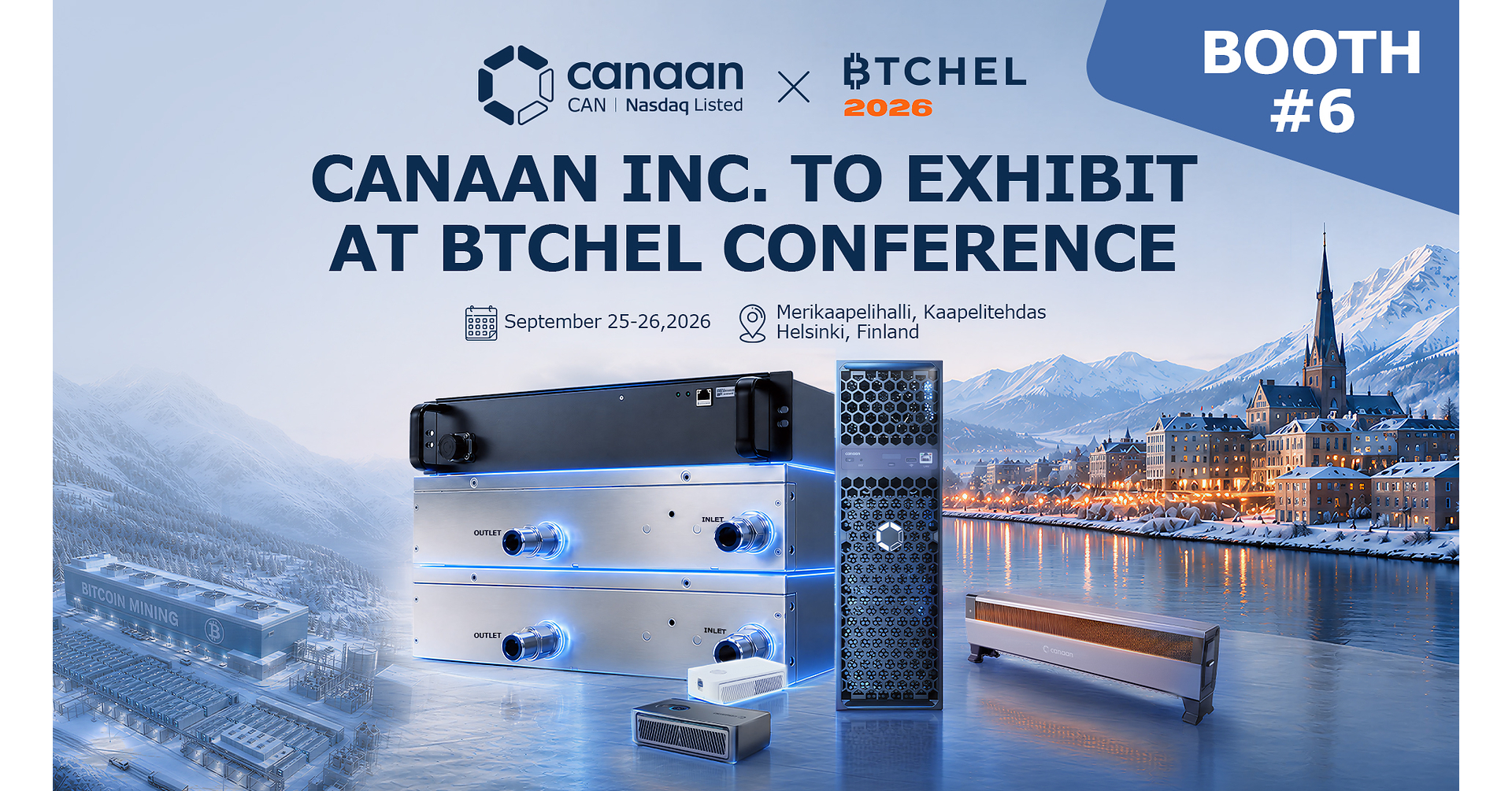
Canaan will showcase its hash-to-heat technology at the BTCHEL conference, highlighted by an approximately 8 MW Nordic district-heating installation that is fully online and supplying heat to roughly 2,800 homes. Its hydro-cooled Avalon A1566HA miners produce approximately 80°C water for existing heating networks, while its consumer lineup spans the 6 TH/s, 140W Nano 3S; 37.5 TH/s, 800W Mini 3; and 90 TH/s AvalonQ. The announcement supports Canaan's strategy to position Bitcoin-mining infrastructure as a source of reusable heat, but it does not provide new financial guidance or revenue implications.
Analysis
The strategic value is not consumer-device sales; it is whether heat-reuse provides miners a lower effective electricity cost and a permit/social-license advantage in high-cost European power markets. If a district-heating counterparty pays for usable thermal output or accepts a long-term heat offtake arrangement, CAN can sell hardware into projects that would be uneconomic on mining economics alone. That potentially expands its addressable market versus Bitmain and MicroBT, but only if installations translate into repeat orders, disclosed pricing, and service revenue rather than demonstration-scale deployments.
Near term, this is unlikely to alter earnings estimates: an 8 MW reference site is immaterial against the volatile, Bitcoin-price-driven ASIC order cycle, and retail home-miner economics remain unattractive when difficulty rises or BTC falls. The more relevant 1-3 month catalyst is evidence of a second utility contract, backlog conversion, or third-party verification of heat revenue and uptime. Over 6-18 months, a credible thermal-integration product could modestly reduce CAN's cyclicality and justify a narrower valuation discount to mining-hardware peers, though Europe’s seasonal heat demand creates utilization risk precisely when miners need steady annual load.
Consensus may overvalue the ESG narrative while underweighting execution complexity: district-heating systems require local engineering, water-temperature compatibility, maintenance guarantees, and long procurement cycles. The key falsifier is not conference interest but disclosed gross margin and cash collection on heat-integrated systems; a rising receivables balance, warranty expense, or inventory without backlog conversion would indicate that the product is being used to support marketing rather than economics.
AllMind Terminal
AI-powered research, real-time alerts, and portfolio analytics for institutional investors.
Request TrialMarket Sentiment
Overall Sentiment
mildly positive
Sentiment Score
0.34
Ticker Sentiment
Key Decisions for Investors
- No new directional CAN position on the release alone; treat any conference-driven move as liquidity-sensitive until management discloses contracted MW, equipment ASP, gross margin, and whether heat offtake is monetized. Reassess after the next earnings release or a named follow-on utility contract.
- For existing CAN exposure, retain only a small tactical position through the next 1-3 months and use a 15-20% trailing stop from entry; upside requires tangible order/backlog disclosure, while ASIC pricing pressure and BTC/difficulty volatility can overwhelm the heat-reuse narrative.
- Set an alert for evidence that the installed base expands beyond 8 MW or that CAN reports recurring service/heat-related revenue. A multi-site pipeline above roughly 25-50 MW with disclosed economics would support upgrading the thesis from promotional optionality to a differentiated sales channel.
- If CAN rallies sharply without contract economics, consider a relative-value short CAN versus a broad Bitcoin proxy such as IBIT only for investors able to hedge crypto beta; the thesis is that hardware execution and working-capital risk remain company-specific while the promotional catalyst is not earnings-material.
More News
- Saudi, Turkish, Pakistani chiefs plan urgent talks amid Yemen fighting
- Trump Versus Xi: How Their High-Stakes Summits Compare
- Trump, Xi Address AI, Taiwan During State Visit
- Oracle Japan shares surge 7% after record fiscal first quarter, bucking selloff of U.S. parent
- China's Xi urges U.S. to cooperate on AI
- Akamai secures $11.6B cloud deal with Anthropic for AI workloads