
CRRC schließt die Produktion eines recycelbaren 110-Meter-Windturbinenflügels ab und erreicht eine Rückgewinnungsquote von über 95 % bei den wichtigsten Materialien
Source: PR Newswire
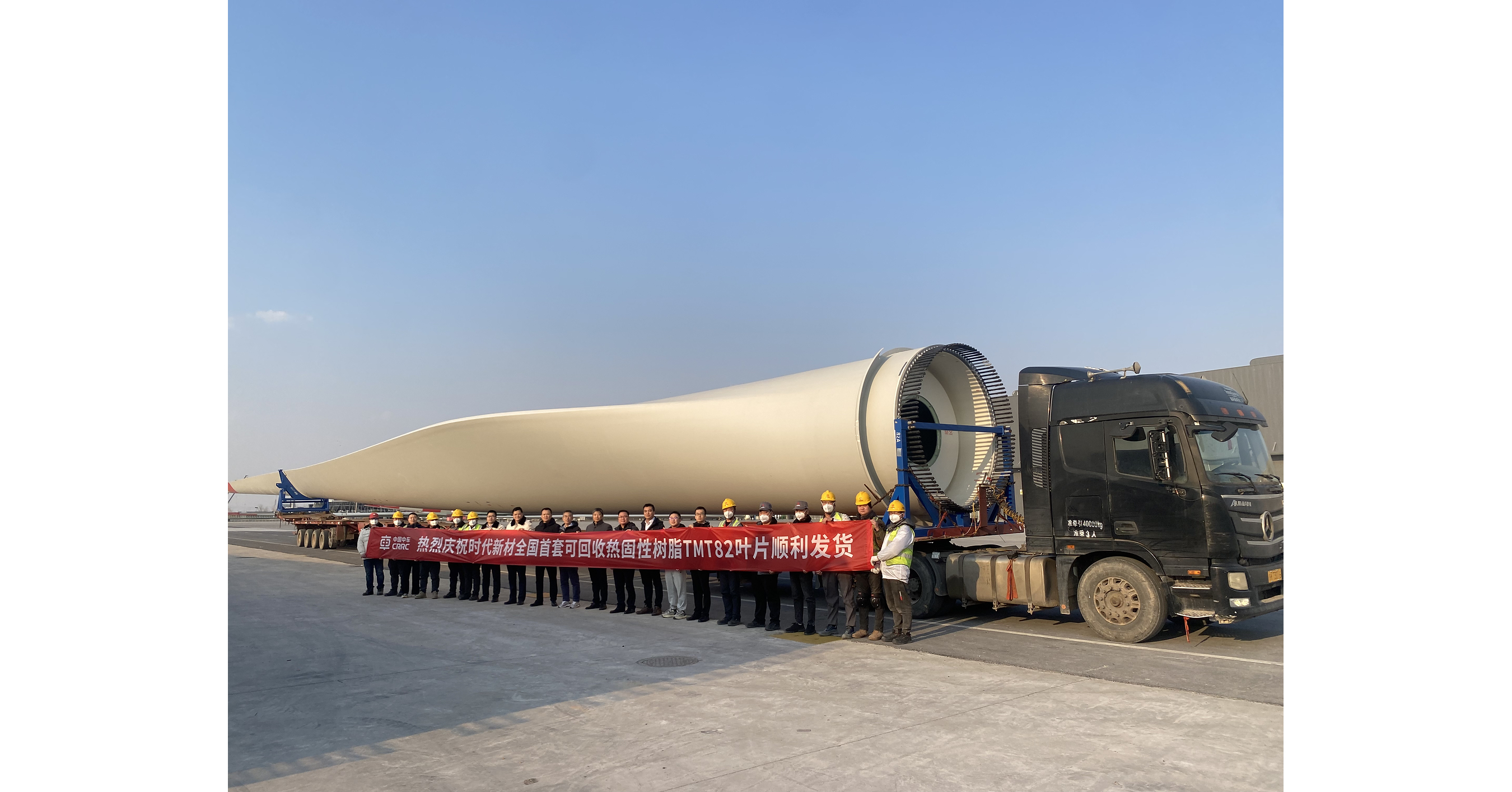
CRRC completed a 110-meter recyclable wind-turbine blade designed to recover more than 95% of key materials, advancing commercial-scale end-of-life recycling for ultra-large blades. The development addresses a growing Chinese waste challenge, with more than 30,000 turbines representing 44.73 GW expected to be decommissioned by 2030 and generating an estimated 947,900 tonnes of wind-related solid waste. The recyclable resin-and-fiber system, alongside CRRC's mobile blade-processing technology, could strengthen its offshore-wind competitiveness and help customers meet sustainability reporting requirements including EU CSRD standards.
Analysis
The commercial implication is less a near-term earnings event than a potential bid-qualification advantage in European offshore tenders, where lifecycle documentation and end-of-life liabilities are becoming procurement variables alongside LCOE. If CRRC can certify blade durability and recovery economics at scale, it can reduce customers' decommissioning provisions and strengthen its export proposition against Siemens Energy (SIE.DE), Vestas (VWS.CO) and GE Vernova (GEV). The second-order pressure falls on conventional blade-material suppliers—particularly virgin glass fiber, epoxy and balsa demand per incremental turbine—although the addressable volume remains too small before 2030 to alter commodity pricing.
The key unresolved variable is cost: chemical separation may deliver high material recovery while still being uneconomic after collection, cutting, transport, energy and requalification of recovered fibers. Offshore blade qualification cycles are multi-year, so no material international revenue impact should be underwritten before 2028-29; the nearer 1-3 month signal is whether CRRC discloses third-party certification, customer orders, throughput economics, or a project using recovered material in a new blade. A credible closed-loop process would be more damaging to specialist composite recyclers than to turbine OEMs, because OEMs can internalize compliance value while recyclers lose scarcity pricing.
Consensus may overstate the ESG differentiation because European market access is constrained more by local-content preferences, supply-chain traceability, trade remedies and bankability than by blade recyclability alone. Conversely, incumbents face a non-obvious margin risk: if lifecycle obligations become contractual rather than voluntary, legacy installed-base provisions could rise while new recyclable designs reset bid economics. The news is insufficient for a directional renewable-energy trade today; it is a watch item for evidence that recovery is independently verified and profitable rather than a technically successful prototype.
AllMind Terminal
AI-powered research, real-time alerts, and portfolio analytics for institutional investors.
Request TrialMarket Sentiment
Overall Sentiment
moderately positive
Sentiment Score
0.48
Key Decisions for Investors
- No immediate position in CRRC (601766.SS) or global wind OEMs; treat this as a diligence trigger, not an earnings catalyst. Reassess on third-party blade certification, disclosed cost per tonne processed, and a signed offshore customer deployment.
- Monitor a relative-value setup: long SIE.DE or VWS.CO versus short a European wind-equipment basket only if tender documents begin assigning explicit end-of-life liability and incumbents lack comparable certified blade solutions. Use a 6-18 month horizon; invalidate if EU procurement barriers materially exclude Chinese turbine participation.
- For GEV, watch LM Wind Power disclosures and offshore bid margins over the next 2-4 quarters. A broad move toward recyclable-blade specifications could require incremental design and qualification spending before pricing catches up, creating a temporary margin headwind despite favorable long-term positioning.
- Set an alert for independently reported recovery yield after processing costs and for recovered-fiber resale pricing. If recovered fibers cannot achieve economically usable quality for structural applications, the strategic claim should be discounted and any CRRC valuation premium tied to circularity avoided.
More News
- Saudi, Turkish, Pakistani chiefs plan urgent talks amid Yemen fighting
- Trump Versus Xi: How Their High-Stakes Summits Compare
- Trump, Xi Address AI, Taiwan During State Visit
- Oracle Japan shares surge 7% after record fiscal first quarter, bucking selloff of U.S. parent
- China's Xi urges U.S. to cooperate on AI
- Akamai secures $11.6B cloud deal with Anthropic for AI workloads
From AllMind Research
- Anthropic IPO Preview: Valuation, Timing, and What to Watch
- Shein After the IPO: Venue, Valuation, and What Must Be Proved
- What AI Research Tools Should a Small Hedge Fund Buy First?
- How to Track Guidance Changes Across a Coverage List With AI
- Stop Treating AI Like a Chatbot: What Are Agents, SubAgents, MCP, and Skills, and How Do They Actually Work?