
Trump Elevates Tech Titans to Place of Honor at US-China Summit
Source: Bloomberg
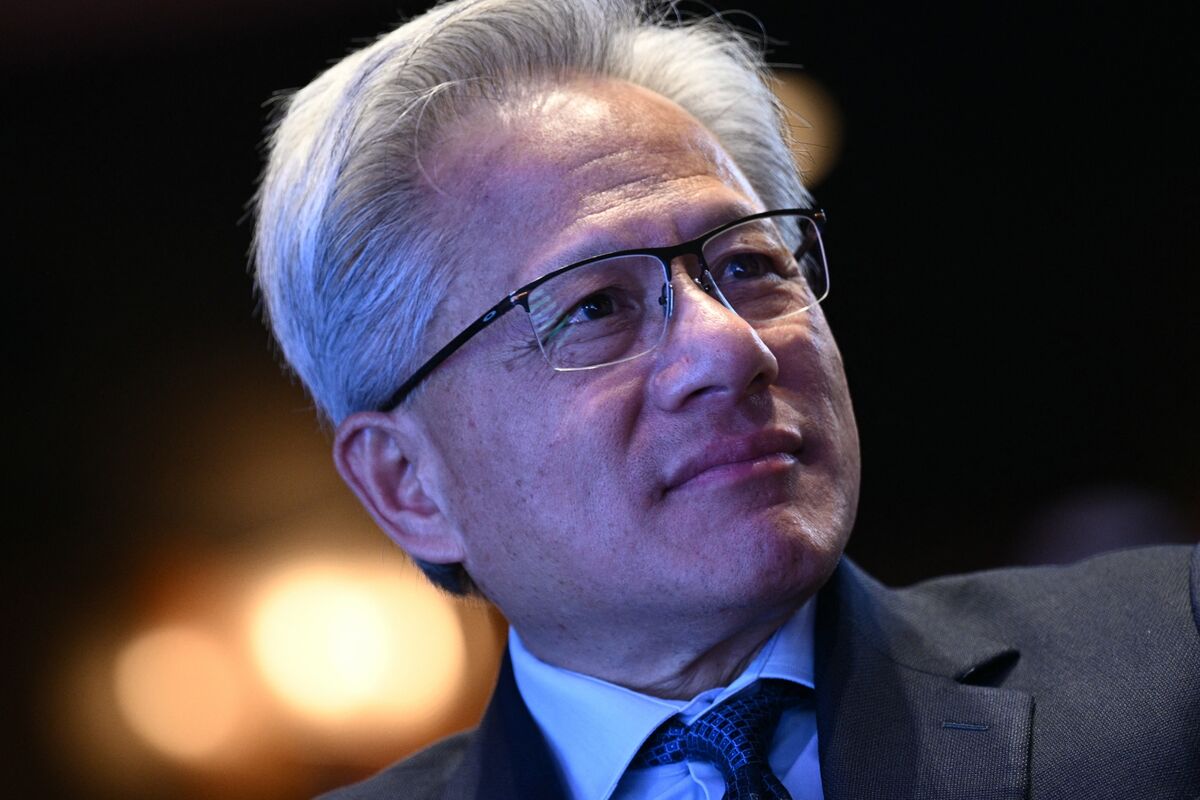
President Trump is elevating major technology CEOs to prominent roles at a US-China summit state dinner, underscoring their growing access to trade and geopolitical policymaking. The newsletter also flags a temporary halt to a White House press ban and discusses how China obtained F-35 components, highlighting policy and export-control sensitivities.
Analysis
The market-relevant signal is not ceremonial access itself, but whether select platform and semiconductor executives gain earlier visibility into tariff exemptions, export-control licensing, or China-market concessions. That informational advantage would favor companies with high China revenue sensitivity and complex hardware supply chains—AAPL, QCOM, AVGO, MU, and NVDA—while widening the competitive gap versus smaller suppliers that cannot directly shape implementation details. The near-term benefit is likely multiple support rather than an earnings change; a durable EPS impact requires published changes to licensing rules, tariffs, or procurement policy.
The more important second-order risk is regulatory capture optics. Visible alignment with Washington may reduce bilateral-policy uncertainty for large incumbents but can invite congressional scrutiny on China exposure, AI exports, antitrust, and domestic manufacturing commitments. Over 1-3 months, watch whether summit-linked companies receive discrete export licenses or tariff treatment; absent that evidence, any rally in China-sensitive technology should be treated as positioning-driven and vulnerable to reversal on a new restriction, retaliation from Beijing, or weak China handset/server demand.
Consensus may overvalue access as a substitute for policy. The administration can use CEOs as negotiating leverage while retaining broad restrictions that preserve domestic political optionality; this would leave headline beneficiaries with elevated expectations but no incremental revenue. A cleaner 6-18 month beneficiary could be US-based AI and semiconductor-capex infrastructure—ANET, VRT, ETN, and PWR—if geopolitical risk keeps supply-chain localization and domestic compute buildout elevated regardless of whether US-China talks improve.
AllMind Terminal
AI-powered research, real-time alerts, and portfolio analytics for institutional investors.
Request TrialMarket Sentiment
Overall Sentiment
neutral
Sentiment Score
0.05
Key Decisions for Investors
- No directional trade solely on the summit optics; establish an event watchlist for AAPL, QCOM, AVGO, MU, and NVDA and act only on independently verifiable tariff, licensing, or export-control changes.
- For a 1-3 month relative-value expression, prefer long ANET/VRT versus a basket of China-demand-sensitive hardware (QCOM, MU) if rhetoric improves but formal policy remains unchanged; domestic AI-capex visibility is less dependent on bilateral concessions. Reassess if hyperscaler capex guidance weakens or China-specific licenses are granted.
- If China-sensitive semis rally more than 8-10% without a documented policy concession, consider buying 3-month downside protection on SMH or reducing beta: expectations can reset quickly on a Commerce Department action or Chinese retaliation.
- Falsification trigger for the cautious view: broad, published easing of advanced-chip licensing or tariff exemptions that materially expands addressable China revenue. That would warrant rotating from infrastructure beneficiaries toward NVDA, QCOM, AVGO, and MU.
More News
- Saudi, Turkish, Pakistani chiefs plan urgent talks amid Yemen fighting
- US 30-Year Yield Hits Highest Since 2004
- Oil falls amid optimism over potential diplomatic solution to the Iran conflict
- Trump Versus Xi: How Their High-Stakes Summits Compare
- Trump, Xi Address AI, Taiwan During State Visit
- Oracle Japan shares surge 7% after record fiscal first quarter, bucking selloff of U.S. parent