
Trump, Xi Buy Time to Iron Out Trade Tensions
Source: Bloomberg
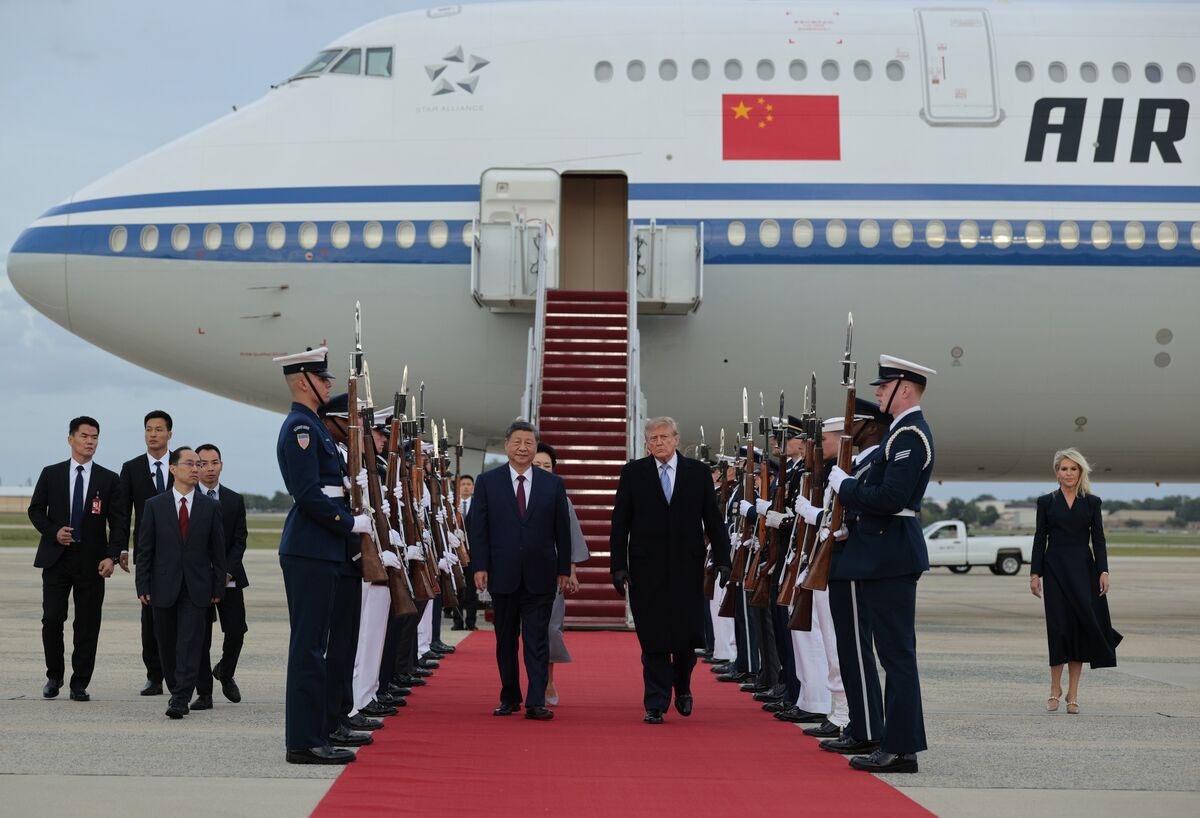
Donald Trump and Xi Jinping have bought additional time to address trade tensions, reducing the immediate risk of escalation but leaving policy uncertainty unresolved. Separately, 7% mortgage rates are pressuring home sellers, while Bentley is preparing its first fully electric vehicle at a comparatively lower price point for the luxury brand.
Analysis
A temporary reduction in US-China policy escalation should compress near-term tariff-risk premia in hardware and consumer-electronics supply chains, but it does not justify a broad rerating until procurement commitments, tariff exemptions, or export-control changes are independently confirmed. AAPL, DELL, HPQ and semiconductor equipment names with China revenue could outperform in the initial 1-3 month relief window; the more durable beneficiary is likely logistics capacity tied to Southeast Asian diversification (ZIM, MATX, GXO) if firms continue paying for dual-sourcing rather than reversing it. The contrarian point is that a pause can accelerate inventory rebuilding ahead of the next policy deadline, temporarily lifting freight and component orders without improving end demand.
Mortgage rates around current restrictive levels preserve the existing-home inventory lock-in, shifting relative share toward publicly traded builders with financing arms and spec inventory, notably DHI, LEN and PHM. That support has limits: affordability pressure eventually shifts from resale supply scarcity to absorption and incentive risk, with gross-margin pressure likely appearing before headline unit demand deteriorates. Over 6-18 months, mortgage originators and housing-exposed regional banks remain more vulnerable than builders if refinance activity stays depressed and consumer credit performance weakens.
Luxury EV pricing should be read as a signal of rising technology-content costs and residual-value uncertainty rather than a meaningful volume catalyst for mass-market EVs. Premium manufacturers face the most asymmetric downside where EV investment remains high but affluent buyers defer purchases amid weak resale values; RACE is comparatively insulated by scarcity economics, while VOW3.DE and suppliers with high European production exposure retain greater execution risk. The key falsifier for the housing relative-value thesis is a sustained decline in mortgage rates sufficient to release existing-home inventory; for the trade-policy thesis, it is renewed tariff or export-control action before supply-chain orders convert to revenue.
AllMind Terminal
AI-powered research, real-time alerts, and portfolio analytics for institutional investors.
Request TrialMarket Sentiment
Overall Sentiment
neutral
Sentiment Score
-0.05
Key Decisions for Investors
- Initiate a 1-3 month pair: long DHI or LEN / short RDFN. Builders can monetize constrained resale inventory through rate buydowns and captive financing, while asset-light brokerage economics need transaction volumes to recover. Exit if 30-year mortgage rates fall materially enough to unlock resale listings or if builder cancellation rates rise for two consecutive monthly reads.
- Use a modest long AAPL / short XRT pair for a 4-8 week trade-policy de-escalation window, rather than an outright China-risk beta position. AAPL benefits disproportionately from reduced supply-chain disruption risk; the short leg hedges a weak discretionary-demand backdrop. Do not add until a concrete policy deliverable is verified; renewed export restrictions invalidate the trade.
- Maintain a watch, not a position, in MATX and ZIM: a tariff pause could trigger pre-deadline inventory replenishment and a short-lived transpacific freight-rate bid. Upgrade only if spot-rate indices and booking data rise together; absent that confirmation, these remain high-volatility macro trades rather than policy beneficiaries.
- Avoid broad long exposure to European premium EV manufacturers over the next 6-12 months. Prefer RACE over VOW3.DE where luxury auto exposure is required, with the relative trade vulnerable if European EV incentives materially expand or industry residual-value data stabilize.
More News
- US 30-Year Yield Hits Highest Since 2004
- Oil falls amid optimism over potential diplomatic solution to the Iran conflict
- SEBI Allows Portfolio Managers to Invest Overseas, Short Equity Options
- History shows financial calamities occur when rates rise rapidly like this: 'Something always breaks'
- Trump-Xi summit: Four key takeaways from the Washington, DC, meeting
- Trump, Xi Address AI, Taiwan During State Visit