
AllMind vs Koyfin
AllMind is an AI research system for institutional investors, where agents read filings, broker research, expert calls and the firm’s own data, then produce the memo or model.
Koyfin is a self-serve data terminal for charting, screening and fundamentals, priced from $0 to $299 a month billed annually.
The split is the lookup against the work that follows it.
Bought when one answer needs a 10-K, three broker notes, an expert call and the firm’s own model read together, and the output has to be an Excel model, a Word memo or a deck rather than a chart.
Bought when the job is watching, screening and charting at a price you can read before you talk to anyone, or when the deliverable is a branded client proposal built off custodian data.
Count where the week goes. Lookup hours favor Koyfin, at a price one desk can approve on its own. Synthesis hours, and anything that has to carry an audit trail, favor AllMind.
Feature by feature
How the work gets done
Natural-language chat over documents
- AllMind
- Supported
- Koyfin
- Not supported
Answers cited to the source passage
- AllMind
- Supported
- Koyfin
- Not supported
AI summaries of earnings transcripts
- AllMind
- Supported
- Koyfin
- Supported
Agent runs lasting minutes or hours
- AllMind
- Supported
- Koyfin
- Not supported
Research that runs on a schedule across a coverage list
- AllMind
- Automations
- Koyfin
- Alerts only
Build your own agents
- AllMind
- Supported
- Koyfin
- Not supported
Content in the seat
Company filings (EDGAR and SEDAR)
- AllMind
- Supported
- Koyfin
- Filings only
Earnings-call transcripts
- AllMind
- Supported
- Koyfin
- Supported
Transcript history on the entry paid tier
- AllMind
- No plan tiers (quote-based)
- Koyfin
- Full history on Plus, $39/mo
Advanced transcript search
- AllMind
- Timestamped transcript search
- Koyfin
- Plus and above
Alternative data as a content class
- AllMind
- Supported
- Koyfin
- Not supported
Broker research as a content class
- AllMind
- AMR included; live via RMS
- Koyfin
- Not supported
Expert-call transcripts built in
- AllMind
- Supported
- Koyfin
- Not supported
Funds, ETFs and investment-vehicle data
- AllMind
- Supported
- Koyfin
- Supported
Self-serve US SMA and advisor workflow
- AllMind
- Not supported
- Koyfin
- Advisor tiers
Insider and institutional ownership fields
- AllMind
- Supported
- Koyfin
- Plus and above
Your own data
Warehouse connected and queried in place
- AllMind
- Snowflake, Databricks, S3
- Koyfin
- Not supported
Upload internal models, notes and decks
- AllMind
- Supported
- Koyfin
- PDF statements only
Ontology linking companies, suppliers and customers
- AllMind
- Supported
- Koyfin
- Not supported
What comes out
Excel models with live formulas
- AllMind
- Supported
- Koyfin
- Not supported
Word memos and research notes
- AllMind
- Supported
- Koyfin
- Not supported
PowerPoint from investment-bank templates
- AllMind
- 20+ templates
- Koyfin
- Not supported
Branded client proposals and reports
- AllMind
- Not supported
- Koyfin
- 10 to 200 a month
Data out through an API
- AllMind
- Not documented
- Koyfin
- Not supported
Buying and governance
Published list price
- AllMind
- Not supported
- Koyfin
- Supported
Free plan
- AllMind
- Not supported
- Koyfin
- Supported
Self-serve signup, no sales call
- AllMind
- Not supported
- Koyfin
- Supported
Per-user entitlements that agents inherit
- AllMind
- Supported
- Koyfin
- Not supported
SOC 2
- AllMind
- Type II, Nov 2025
- Koyfin
- Type 2, company-stated
Checked against published sources on August 30 2026. Koyfin’s marks come from its pricing and plan-comparison pages, its help center and its release notes through v3.97; the plan matrix was read in the page source, because a hidden column offsets a rendered read. AllMind’s come from its own product documentation. A dash means the capability is not publicly documented, not proof it cannot be done. The “Filings only” cell means Koyfin surfaces company filings but runs no agentic analysis over them. Koyfin’s SOC 2 Type 2 appears only on its own /llm-info page; AllMind’s SOC 2 Type II is dated November 2025, with ISO 27001 targeted for Q1 2027.
See AllMind on your own coverage→Three things a terminal subscription does not buy
A screener hands you a list, not an answer
Koyfin ends where the analysis begins. Its screener is quick, running what the company states as 5,900+ filter criteria over 100K global securities, and the chart is up in seconds. The next four hours are still yours: open each name, read the transcript, check the filing, write the note. Koyfin has no chat, no agent and no document-level reasoning.
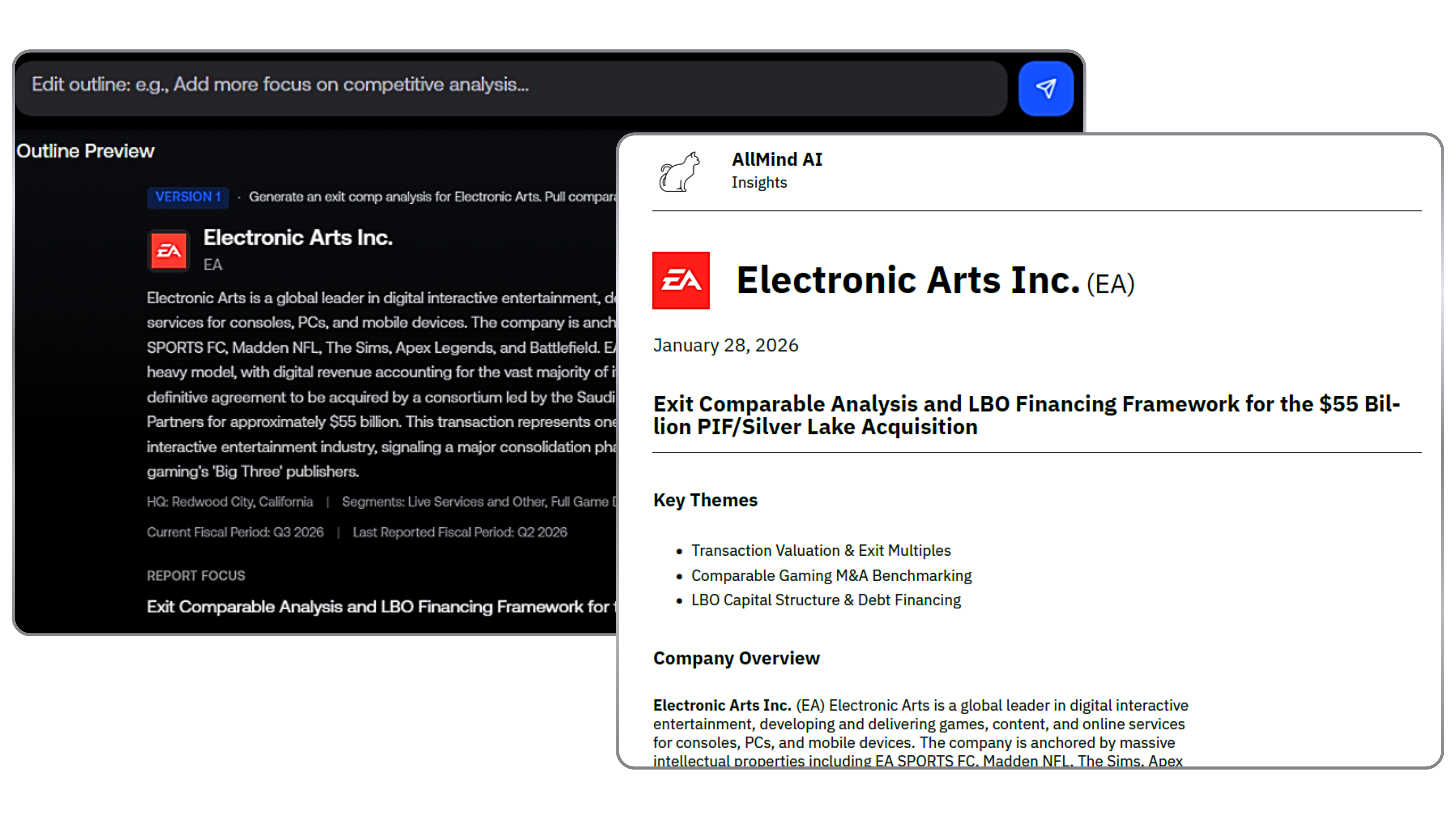
AllMind is built for that second half. Underneath it sits an ontology where a company, its suppliers and customers, the estimates on it, its filings and the firm’s own coverage are linked entities, so an agent follows a relationship out to the next thing worth reading rather than fetching one more document. A run is allowed to take minutes or hours instead of answering in a single turn, and what lands at the end is an Excel model with live formulas, a Word memo, or a deck built from 20+ investment-bank templates, each figure traceable to the passage it came from.
Your own models and notes are the part Koyfin cannot see
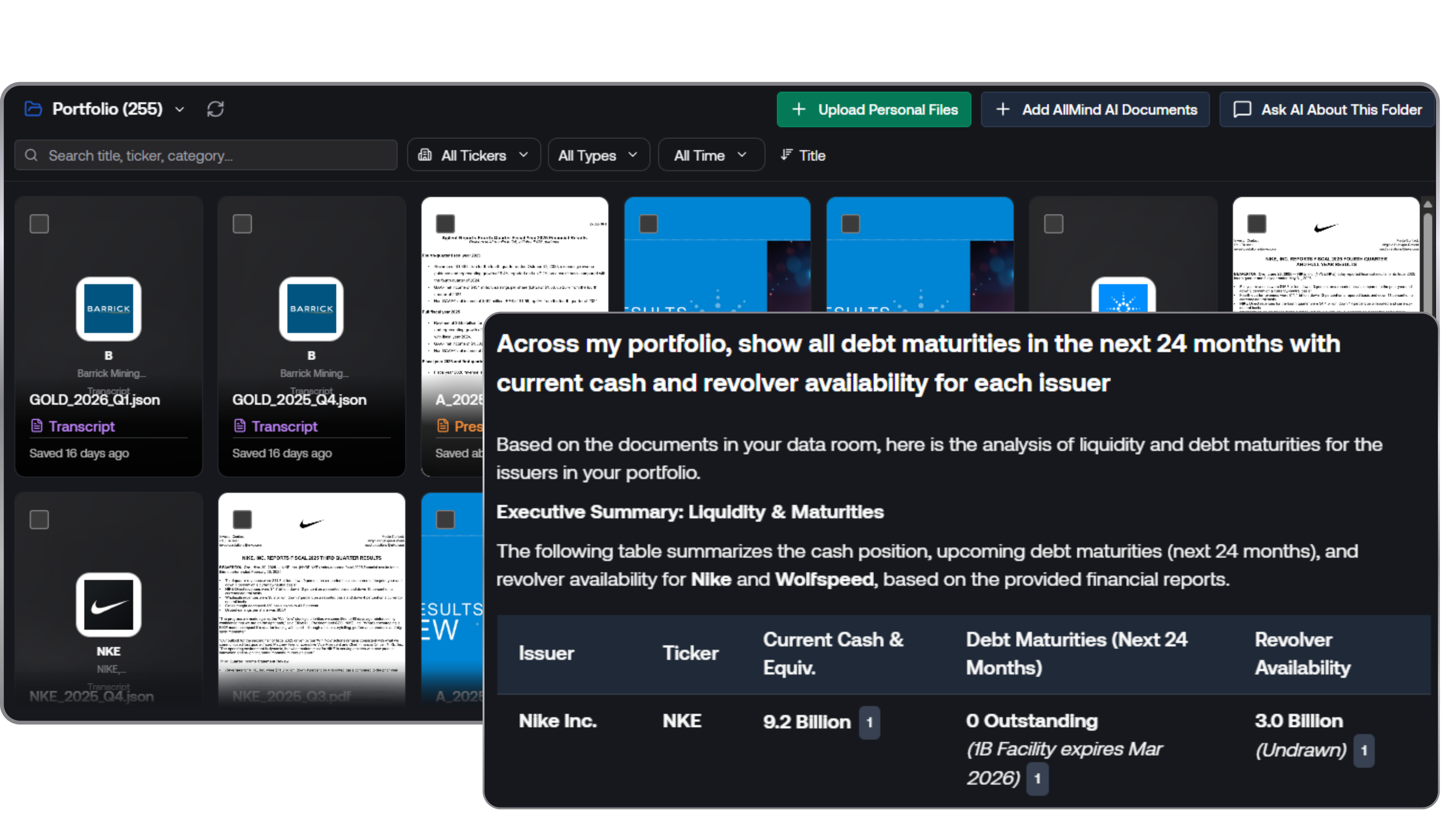
Half the research that decides a call already sits inside the firm, and Koyfin has no route to it. What separates one fund’s view from another’s is rarely on a public screen: the internal model, the channel notes, an analyst’s own history on the name, the tables sitting in a warehouse. Koyfin’s one upload path is a PDF brokerage statement on Advisor Pro, metered at 20 a month, used to populate a client portfolio.
AllMind reaches Snowflake, Databricks and S3 through a scoped IAM role and reads them in place, so the firm’s environment keeps hold of its own data, and a Data Room adds Google Drive and OneDrive folder sync for material that lives in a shared folder. That internal record is then reasoned over together with filings, estimates, broker research and Expert Insights. Nor does data readily travel out of Koyfin: it closed a 350-vote Excel integration request in August 2025, “not possible to implement with current vendor restrictions.”
Broker notes and expert calls sit in the same seat, under the same permissions
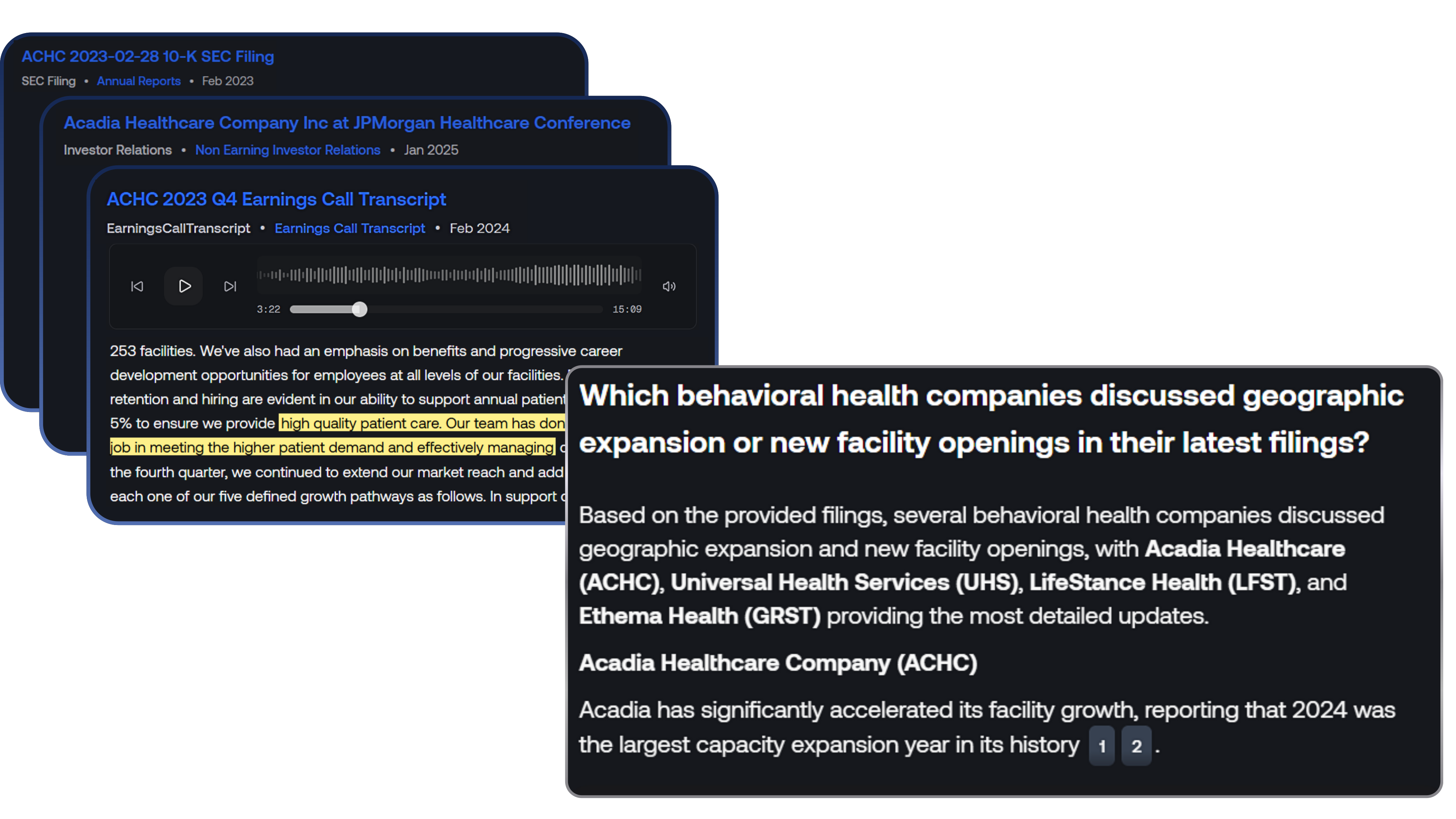
No Koyfin tier includes broker research or expert-call transcripts. The data under it is institutional, S&P Capital IQ for global fundamentals, estimates and valuation, Morningstar for funds, MT Newswires for news, but none of those houses sells a broker note or an expert call. AllMind carries both as built-in content classes inside what it counts as 6,800+ premium data sources: S&P, FactSet, LSEG and MSCI data; broker research; Expert Insights; global investor-relations data; live news from thousands of sources; alternative data; and live earnings and financials available within minutes, across 40+ exchange and venue feeds.
Expert Insights ships in the seat, which is what lets an analyst read an expert-call transcript without the desk carrying its own expert-network contract. Aftermarket Research is included on a provider-specific delay that varies by broker and report; only publication-time embargoed notes require the firm’s RMS entitlement. Around all of it sit entitlements set per user, which agents inherit and can never widen, with every access logged.
Where Koyfin is strong
Koyfin earned its following the slow way, and its users rate it higher than most. Publicly reported, relayed through Koyfin’s own pages rather than opened at source: the 2025 Kitces AdvisorTech Study rated it 9 out of 10 for satisfaction and value, the highest in its Investment Research & Analytics category, and G2’s Winter 2026 report is described as placing it first in Financial Analytics at 4.8 out of 5. The company says more than 50,000 advisors and 500,000 investors use it, stated July 27 2026, though its own blog said 30,000 in March.
It got there on $3M of seed capital raised in 2019, three years after Rob Koyfman founded it following fifteen years on Wall Street, with a first product in 2018 and no headline round or valuation announced since. The feeds underneath are institutional: S&P Capital IQ, Morningstar and MT Newswires, real institutional data at a retail price. And it publishes its price, which in this set is rare enough to count as a feature.
One screen for watching the market, one system for doing the research
AllMind
The AI research system for institutional investors
AllMind keeps a financial ontology: each company sits next to the suppliers and customers it depends on, the estimates and filings that describe it, and whatever the firm itself has written about it, and agents run across those edges.
One question can pull EDGAR and SEDAR filings, entitled broker research, Expert Insights transcripts, estimates and the firm’s internal tables in a single pass, and the run is allowed to take minutes or hours. What comes out is a document, not a dashboard tile.
Koyfin
The low-cost market-data and advisor terminal
Koyfin is a self-serve terminal built around charts, dashboards, screening and company fundamentals, with an advisor layer on top. It states coverage of over 80,000 companies worldwide, sourced from S&P Capital IQ, Morningstar and MT Newswires among others it names.
Its advisor tiers add client portfolios, model portfolios and branded proposals, kept current by custodian and portfolio-management integrations. There is no API, which Koyfin explains on its FAQ as a restriction imposed by its data providers, and the only AI-labeled feature its help center documents is transcript summaries.
What each one is good at, and what it costs you
AllMind
- Ontology traversal across companies, suppliers, customers, estimates and filings
- Snowflake, Databricks and S3 connected by scoped IAM role and queried in place
- Aftermarket Research included on a provider-specific delay, publication-time research available through firm RMS entitlements, and Expert Insights built in
- Excel models with live formulas, Word memos, decks from 20+ investment-bank templates
- Per-user entitlements that agents inherit and can never widen, every access logged
- SOC 2 Type II certified November 2025, no training on customer data, zero retention at model vendors
- No self-serve checkout and no monthly plan; pricing runs through a sales conversation
- Not a live trading or execution terminal, so order entry and execution sit elsewhere
- ISO 27001 certification is targeted for Q1 2027
- Deliverables land in a supplied template, so a bespoke house format still needs a formatting pass
Koyfin
- Published list price, $0 to $299 a month billed annually, with a working free plan
- Self-serve signup, no sales call and no procurement cycle
- Full transcript history and advanced transcript search from the $39 Plus tier
- Client portfolios, model portfolios and branded proposals metered at 10 or 200 a month
- Eight custodian and portfolio-management integrations, refreshed daily by Daily Sync
- Mutual funds, US SMAs, custodial aggregation, and self-serve portfolio tools
- No API and no Excel integration; Koyfin cites its data providers’ restrictions for both
- No AI assistant, chat or agent; transcript summaries are the only AI-labeled feature
- No broker research, expert-call transcripts or route into the firm’s own data
- Transcript depth stated two ways on its own site: 50 years, and back to 2004
What AllMind and Koyfin actually cost
AllMind
Quote-based, with no self-serve checkout
AllMind does not publish list pricing and has no monthly plan, so there is no way to buy it the way you buy a Koyfin seat. The conversation covers which AllMind-licensed dataset classes and package rights are enabled, which internal systems connect, whether publication-time RMS access is added, and how many governed users sit on it. That is a real disadvantage for an individual buyer.
- List price
- Not published
- How it is sold
- Per-firm quote through sales
- Monthly plan
- None
- Free tier
- None. Evaluation runs through a demo
Koyfin
Five published tiers, and a free plan that works
Every figure below comes from Koyfin’s own pricing page, with the five headline prices repeated on its machine-readable pricing page stamped July 27 2026. Both were re-checked on August 30 2026. The page opens on its annual toggle, so those headline prices are the annual-billed rates and the higher month-to-month rates only appear once you flip the switch.
- Month to month, Plus through Advisor Pro
- $49, $110, $239 and $349
- Small-firm discount
- Offered to advisory firms under $100m AUM, amount not published
What changes the quote
Koyfin’s ladder charges for content first, then for ceilings, then for the advisory workflow. Free gives two years of financials and a 45-day transcript window on a three-day delay. $39 takes financials and estimates to ten years and adds filings, premium news, full transcript history and advanced transcript search. $79 mostly raises limits: formulas and data series unlimited, alerts to 500. $209 and $299 buy client portfolios, model portfolios, branded proposals metered at 10 and 200 a month, plus custodian connections Daily Sync refreshes.
No usage charges and no feeds to license, because Koyfin does not resell its data through an API. AllMind’s cost arrives as a per-firm quote.
One reading trap worth naming: Koyfin’s pricing page opens on the annual toggle, so the $39 to $299 you see are the annual-billed rates. The month-to-month ladder of $49, $110, $239 and $349 sits behind the monthly switch, and the gap between the two is what “save up to 30%” measures. No annual total is printed on that page, so the $468 figure above is Koyfin’s own arithmetic on its blog rather than a price it lists.
Which one you want, task by task
We run a two-person RIA and send branded client proposals off custodian data every quarter.
Koyfin’s advisor tiers were built for exactly this: client portfolios, model portfolios, up to 200 branded reports a month, PDF broker-statement upload, and eight custodian and portfolio-management integrations kept current by Daily Sync, five on Advisor Core and all eight on Advisor Pro. AllMind builds no client-facing reports and connects to no custodians.
I need our internal model, three broker notes and an expert call read together, ending in an IC memo.
The deciding mechanism is the join: a Snowflake, Databricks or S3 connection queried in place next to entitled broker research and Expert Insights, then a memo drafted into a supplied template with every figure traceable to its passage. Koyfin carries none of those content classes.
I want ten years of revenue growth against forward multiple on forty names by Monday, with no budget approval.
Koyfin’s Plus and Premium tiers, $39 and $79 a month billed annually, cover ten years of financials and estimates plus the charting and screening to get there, and the plan is bought on the page. AllMind has no self-serve checkout and no monthly plan.
We track guidance changes across a 150-name coverage list each earnings season, and compliance wants a record of who saw what.
AllMind states that a single automation can cover up to 200 companies and deliver as Word or PDF. Entitlements are set per user, every agent run inherits them and none can widen them, and each access is logged. Koyfin’s nearest equivalent is an email alert and a manual read.
Our two analysts already pay for Koyfin and now want the research work automated without losing the dashboard.
At $39 to $299 a month billed annually, nothing forces a cancellation. Koyfin keeps the watchlists, charts and screens; AllMind takes the reading across sources, the internal-data join and the deliverable. The overlap is thinner than the shared word terminal suggests.
AllMind and Koyfin are bought for different halves of the same week: the hours spent reading, joining and writing, or the minutes spent watching, screening and charting.
AllMind’s mechanism is an ontology that agents traverse, entitled broker research and Expert Insights in the same seat as the firm’s own warehouse data, and a run that ends in a model, a memo or a deck under per-user entitlements, every access logged.
Koyfin’s mechanism is a published price, a free tier, a fast screen and an advisory reporting workflow. If the constraint is finding the number, Koyfin is enough, at less than an hour of analyst time. If it is everything after the number, that is AllMind.
AllMind vs Koyfin, answered
Koyfin runs $0 to $299 a month billed annually across five published tiers, while AllMind is quote-based and publishes no price. Koyfin’s ladder is Free, Plus at $39, Premium at $79, Advisor Core at $209 and Advisor Pro at $299; month to month those become $49, $110, $239 and $349. Advisory firms under $100m get a discount Koyfin does not size.
AllMind has no monthly plan and nothing to check out online, a genuine disadvantage for an individual buyer. The two are not like-for-like: Koyfin’s ladder buys content depth and an advisory reporting process, an AllMind quote buys entitled content and connections into the firm’s own systems.
See AllMind on your own coverage
Join leading hedge funds and institutional investors who trust AllMind.Join leading hedge funds and institutional investors who trust AllMind to accelerate their research and analysis.